Agadir Beaches: A Local's Guide from Anza to Inezgane
An honest map of every beach in and around Agadir — the corniche, the surf coast from Anza to Imourane, and the wild estuary south of the airport. Pick the right one.
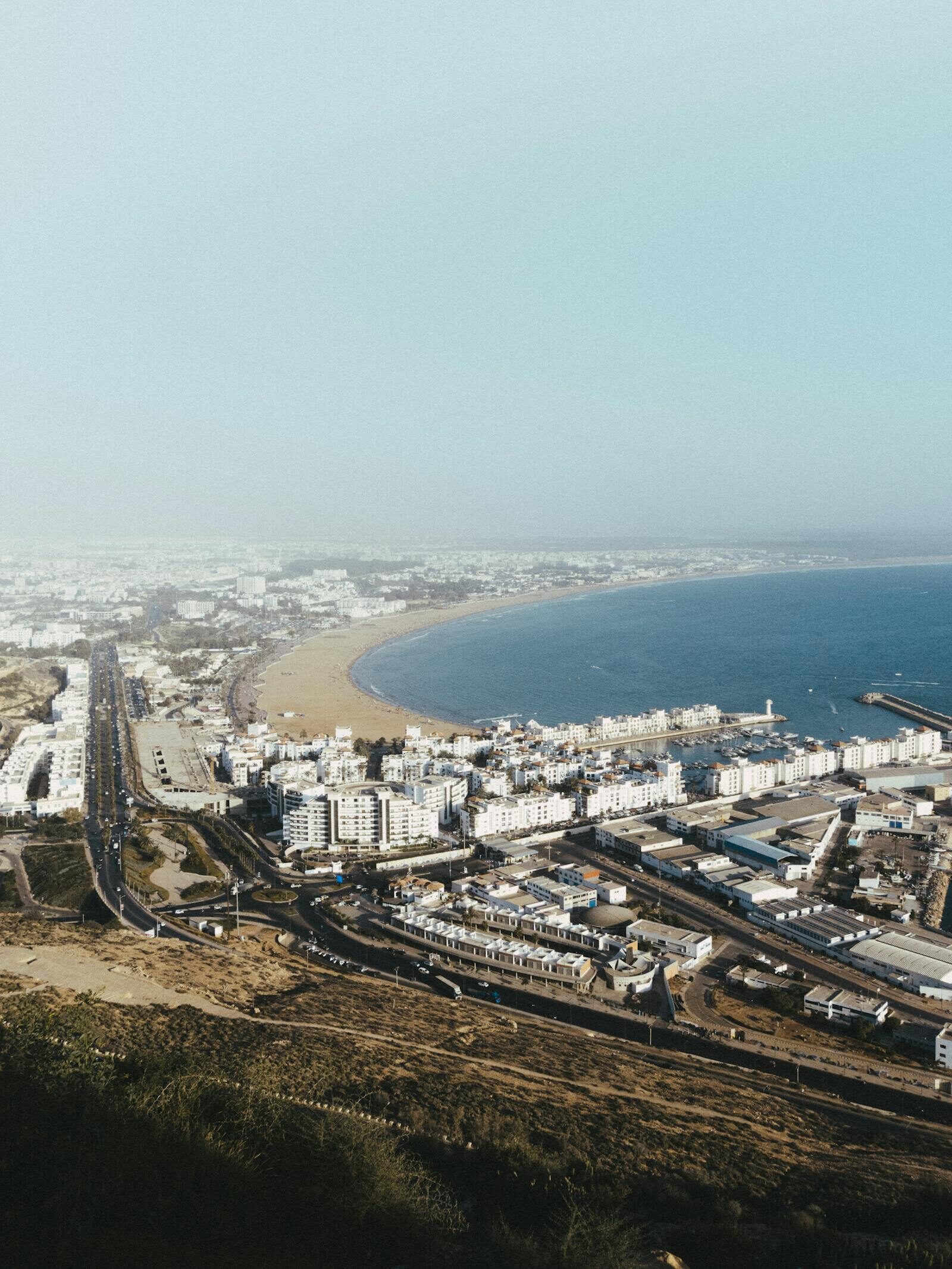
Agadir Has One Famous Beach. It Has Six Different Beaches.
The short answer: most people mean one thing when they say “Agadir beach” — the long sweep of pale sand that runs the city’s Atlantic front, walled by hotels, fronted by a six-kilometre promenade. That’s the one in the postcards. It is not the only beach within an easy taxi ride of the corniche, and depending on what kind of day you want, it may not even be the right one.
What follows is a working map of the coast from Anza in the north to the Souss estuary in the south. We’ve put the calm, family-friendly stuff at one end of the spectrum and the wave-battered, surfboard-only end at the other. Pick honestly.
The Main Beach: Agadir Bay
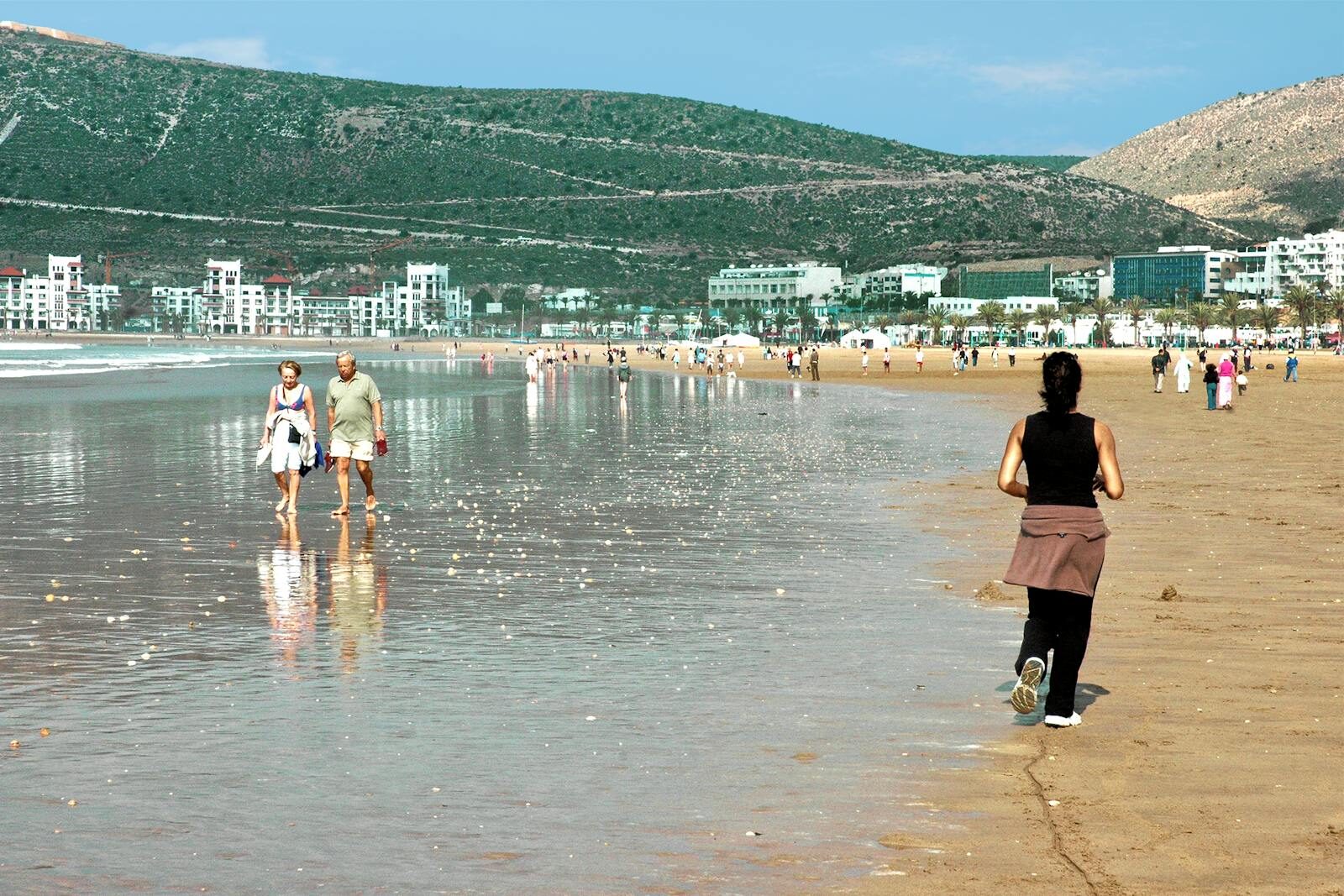
Six kilometres of pale sand, gentle gradient, lifeguarded summer through October, sheltered from Atlantic swell by the curve of the bay. Walled in on the landward side by hotels and the Corniche promenade, which is genuinely walkable end-to-end and well-lit at night. The whole stretch is part of a planned 1960s rebuild of the city after the earthquake — nothing here predates that, including the beach culture.
What it’s for: swimming with kids, sunbathing without surveillance theatre, long evening walks. The water is calm by Atlantic standards — Agadir Bay is sheltered by the Anti-Atlas hills to the south, so the heavy swell that hammers the surf coast north of town arrives here as gentle lapping. The lifeguard flag system is taken seriously; on red-flag days the beach actually empties.
What it’s not for: anyone hoping for “wild Morocco.” This is a developed European-style beach resort coastline. Plastic loungers, parasol rentals, camel and pony rides, men selling sunglasses on rotation. Plenty of cafés to retreat into when the sun gets serious — the Marina end has the better ones.
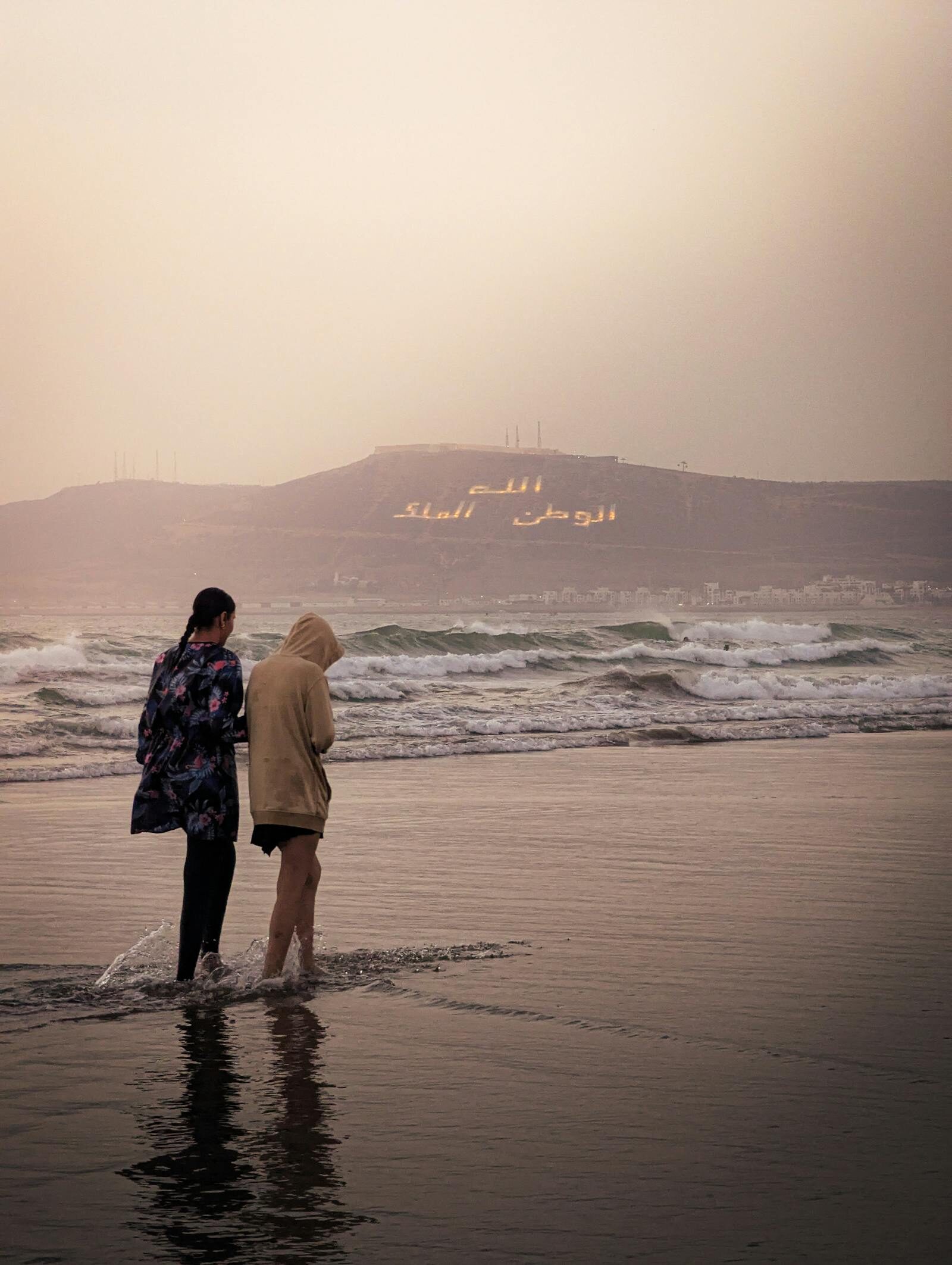
Quiet windows: before 10am, and the hour before sunset. Avoid the central section on Sunday afternoons in summer — the local crowd doubles, and the parasol density approaches one per square metre.
Anza: Surf Inside City Limits
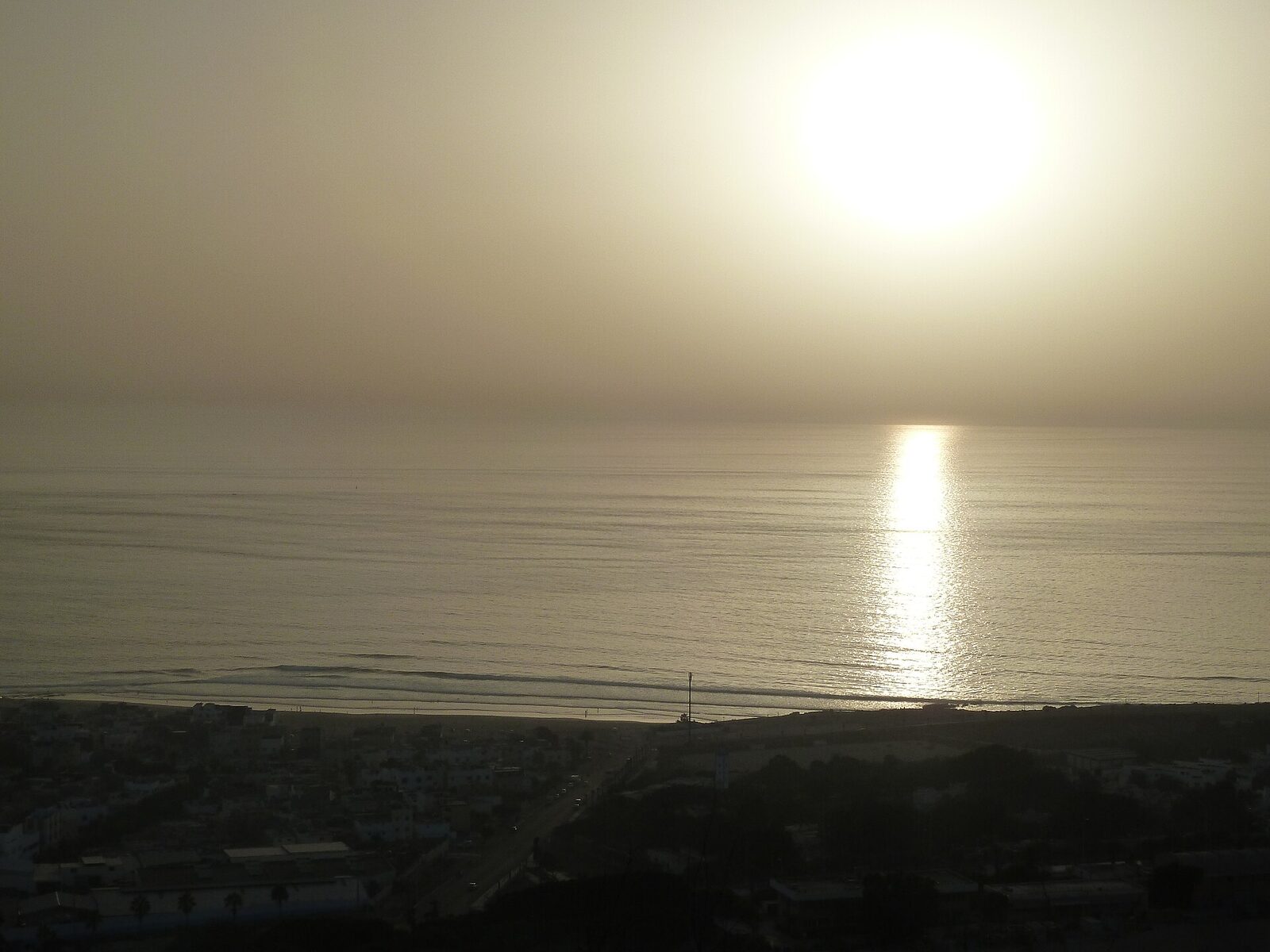
Ten minutes north of the Marina by car (the coast road is one continuous shoreline, no real boundary) the resort thins and Anza begins. The sand turns from pale to almost black — Anza is a volcanic beach, and the colour is real, not a trick of wet sand — and the waves arrive properly. There are no lifeguards. There are surfers in the water from first light.
Anza Beach is for learning. Half a dozen surf schools cluster on the road behind it; the wave is forgiving in two-to-four-foot swells and punishes in anything bigger. Sunset photos are spectacular precisely because the cliffs frame the bay and the hotel wall ends here.
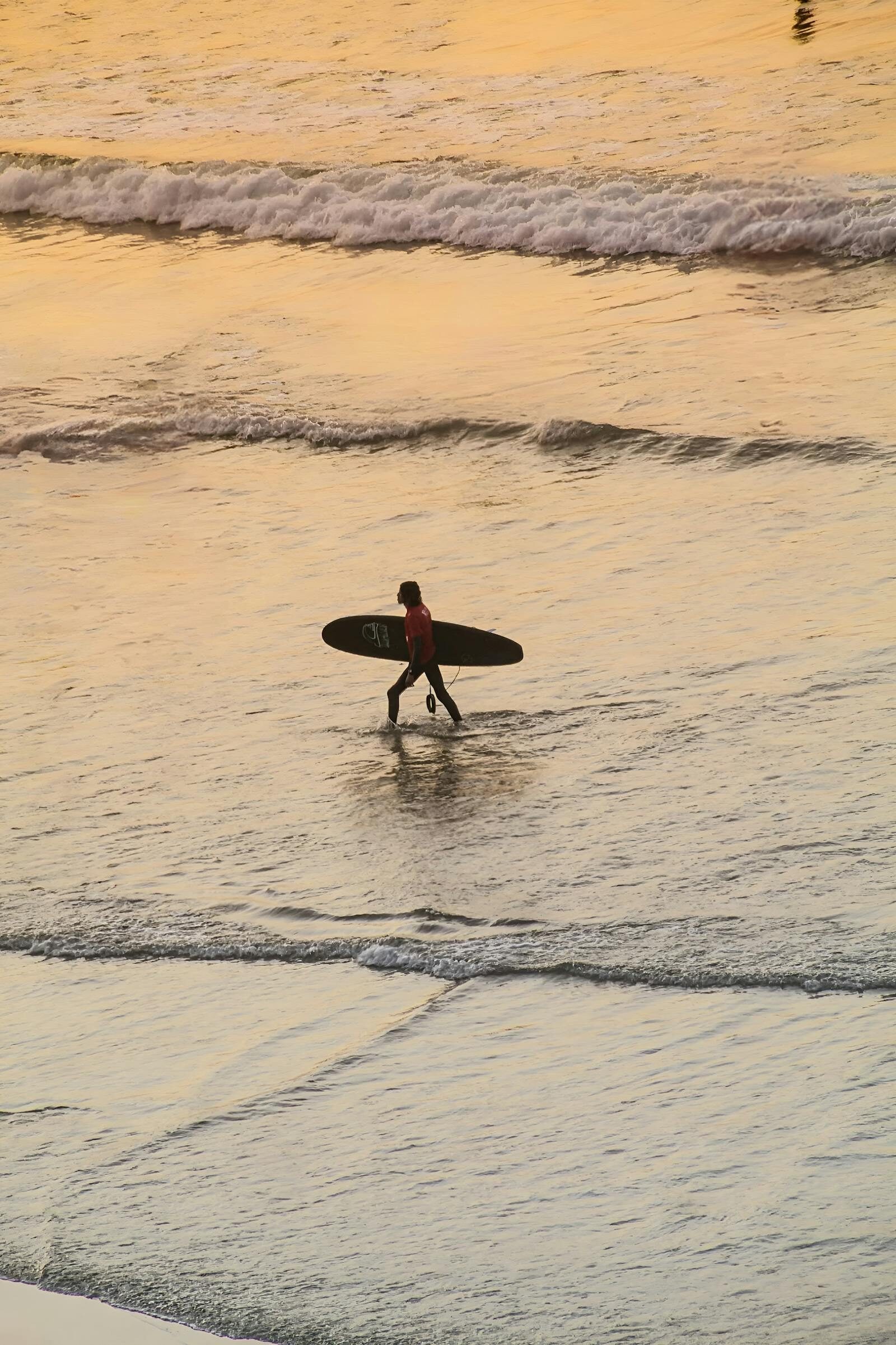
Don’t bring small children to swim. Don’t expect a row of cafés — there are a few, and they cater to surfers, not to honeymoon couples. Bring water shoes if the sand is hot.
Taghazout Bay: Tamraght, Taghazout Village, Imourane
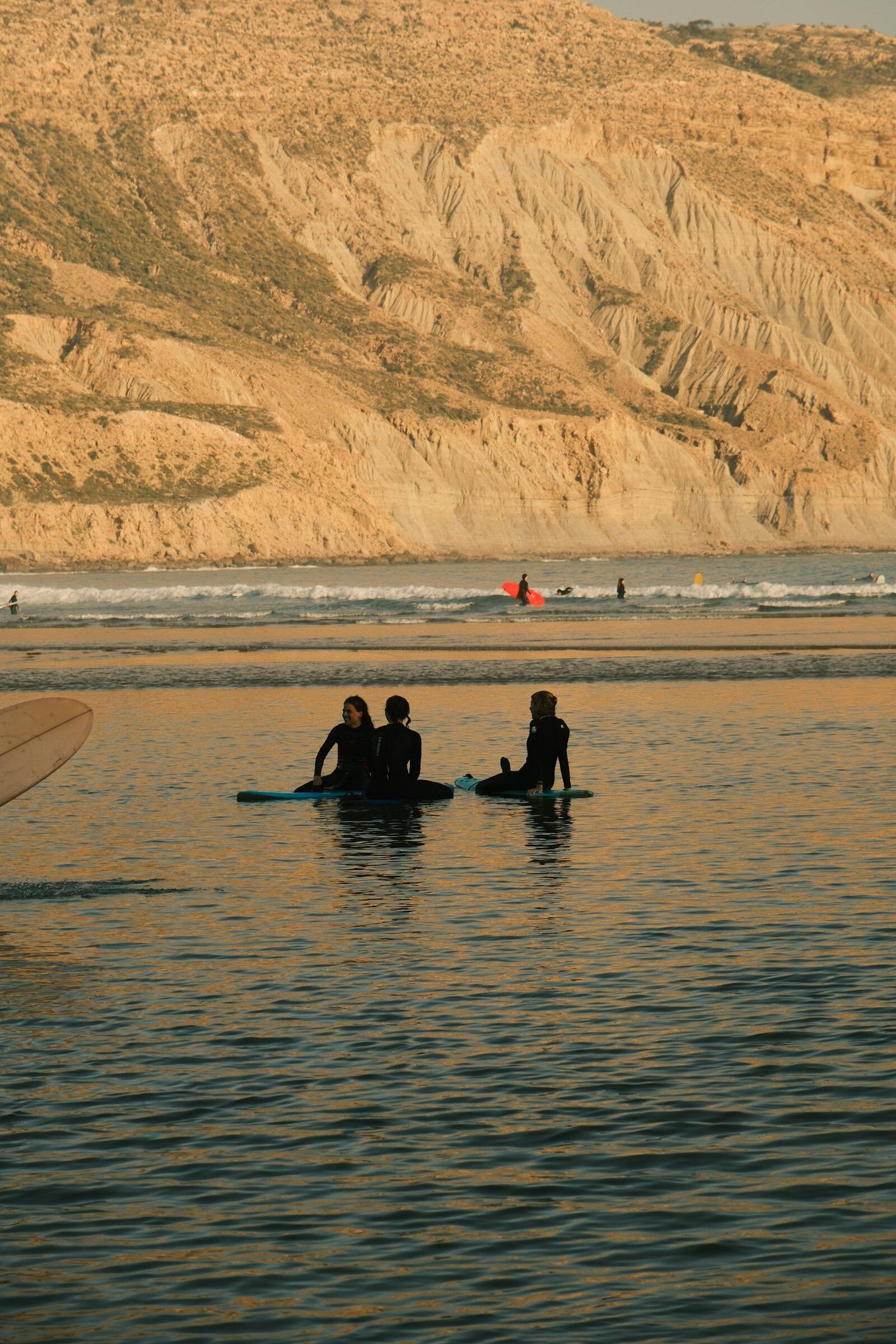
Twenty to thirty minutes north of central Agadir, depending on traffic and which beach you stop at. This is the wave coast — the reason surfers from Portugal, Hossegor, and the UK winter here from October to March. Every cove has a different break: Banana, Hash Point, Devil’s Rock, Killer Point. Wave size builds as you go north.
Tamraght beach is the gentlest of the cluster — wider, softer, less crowded than Taghazout village itself, easier for beginners to walk a board into the lineup. Several of the surf hostels we cover under where to stay in Agadir, Taghazout and Tamraght sit a five-minute walk inland.
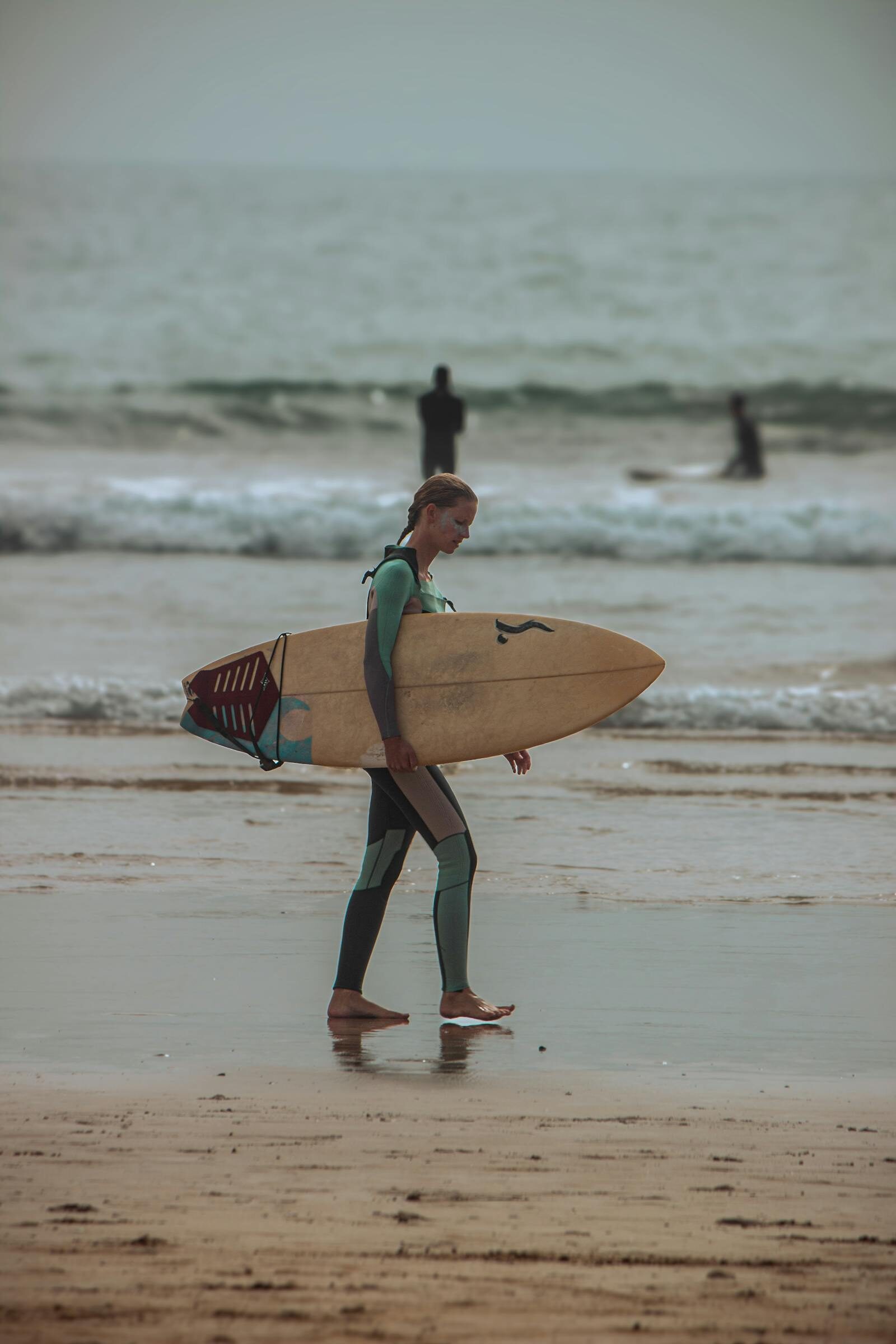
Taghazout village beach is the busy one. It’s the one in the surf-magazine spreads. It can be brilliant — or it can be a logjam of foam boards in front of a single peeling right-hander. Go early or go to a flank.
Imourane and Imsouane further north get progressively less developed; Imsouane in particular has a long mellow point break that’s been a longboarder’s secret for years, and isn’t really “near Agadir” anymore (an hour each way).
For a full breakdown of where to base yourself for surfing, see our piece on staying in Taghazout vs Agadir. For a Taghazout-specific deep guide covering each wave by name and the luxury Taghazout Bay resort comparison, the independent Taghazoutcamp guide goes further than we do on the surf-village side.
Inezgane and the Souss Estuary: The Wild South
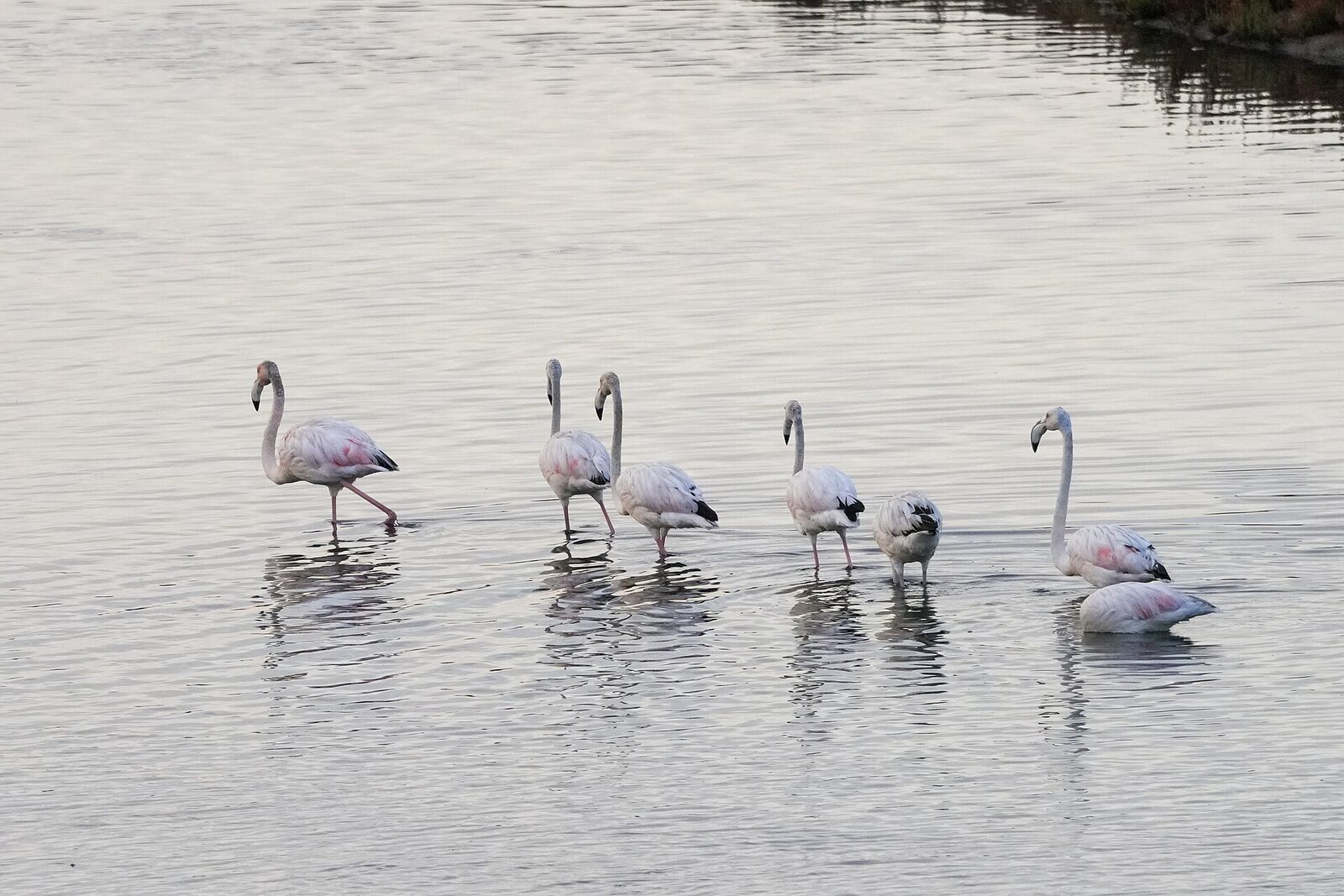
Drive twenty minutes south of central Agadir past the airport and you reach the mouth of the Souss river, where it meets the Atlantic at the edge of the Souss-Massa National Park. The beaches here are wild in a specific sense: undeveloped, often deserted on weekdays, with the bird-rich estuary behind them. Flamingos in winter. No facilities. No lifeguards. Currents that move quickly.
What it’s for: photographers, walkers, birders, anyone who wants empty sand and is willing to bring their own water. Pair a visit with the bird hides in the national park.
What it’s not for: sunbathing, swimming with anyone under teen age, women travelling solo who’d rather not be the only person in view. The southern bank is the actively used edge of the national park; the northern bank, closer to Inezgane town, is rougher and unmonitored.
Practical Notes
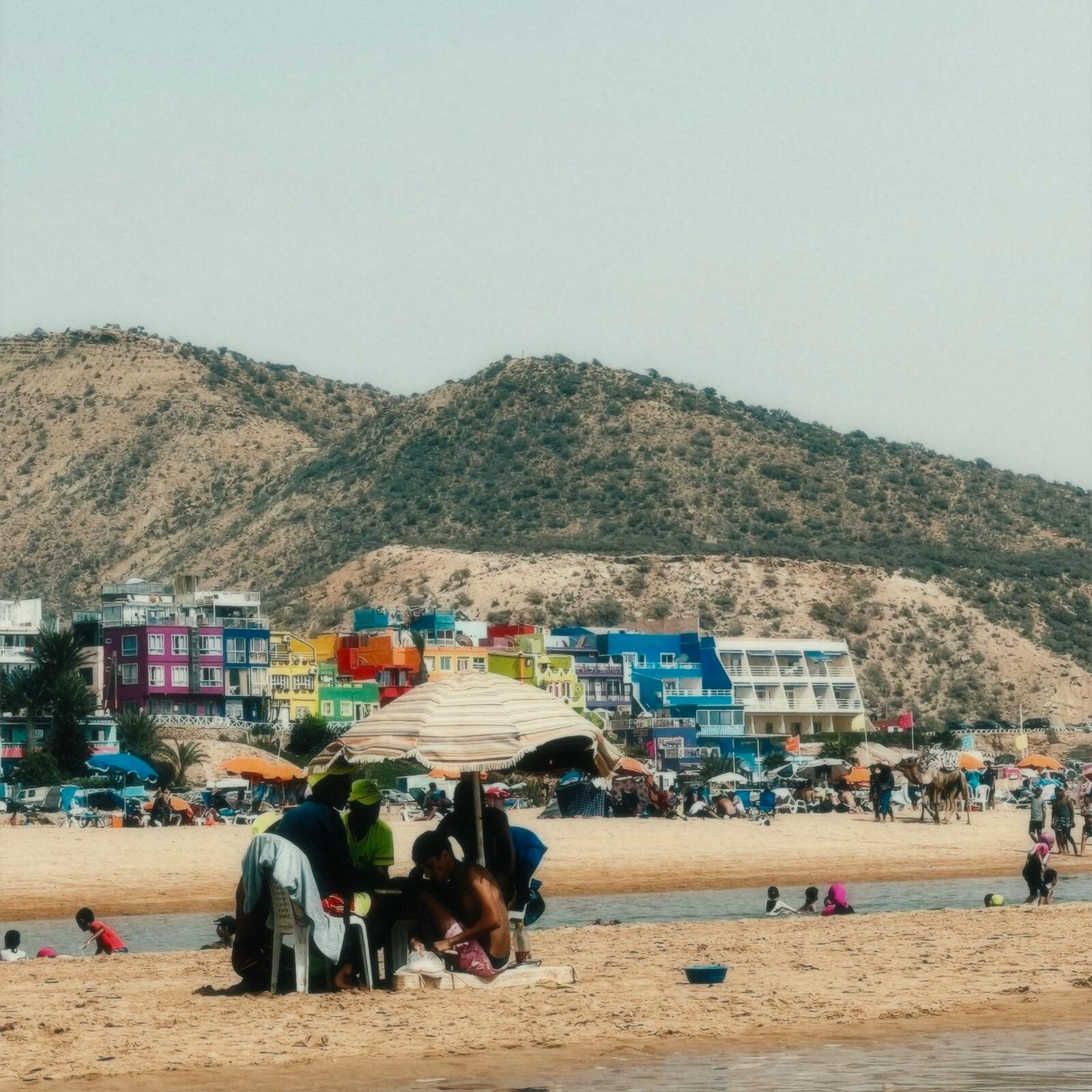
Modesty. On the main Agadir bay, bikinis and one-pieces are normal among foreign visitors. Local Moroccan families lean conservative — long sleeves and headscarves are common on the same sand. Both coexist without friction. On Anza and the surf villages, the foreign-surfer norm dominates. On the southern wild beaches, you’re more visible and modesty is more comfortable.
Sun. Atlantic sun is deceptive. The breeze keeps you cool while the UV does its work. Reapply more often than you think; bring SPF 50 if you have any olive doubt.
Hydration and food. The main beach has hundreds of cafés. Anza has a handful. Tamraght and Taghazout have a small village’s worth. South of the airport: bring water. A bottle of mineral water is 3–5 dirhams from any cold-cabinet shop; the beach vendors charge double.
Best time to be on any of them: the hour before sunset, for the light. The middle of the day from June to September is harsher than the brochure suggests. For a full month-by-month breakdown, see the best time to visit Agadir.
Which Beach for Which Day?
- First day with kids, want to swim: Agadir Bay (main beach), Marina end.
- First-time surf lesson: Anza or Tamraght.
- Photography / wild atmosphere: Souss estuary, ideally late afternoon.
- Evening walk: the corniche promenade end-to-end — two hours at a stroll, lit, safe, lined with cafés.
- Surfers who already know what they’re doing: Taghazout village, but the better waves are usually a short walk in either direction.
- Sunset: Anza (cliffs frame the sun), or the western end of the main beach.
There isn’t a bad answer. There is a wrong one for what you actually came for. Pick honestly.
Keep reading
 practical
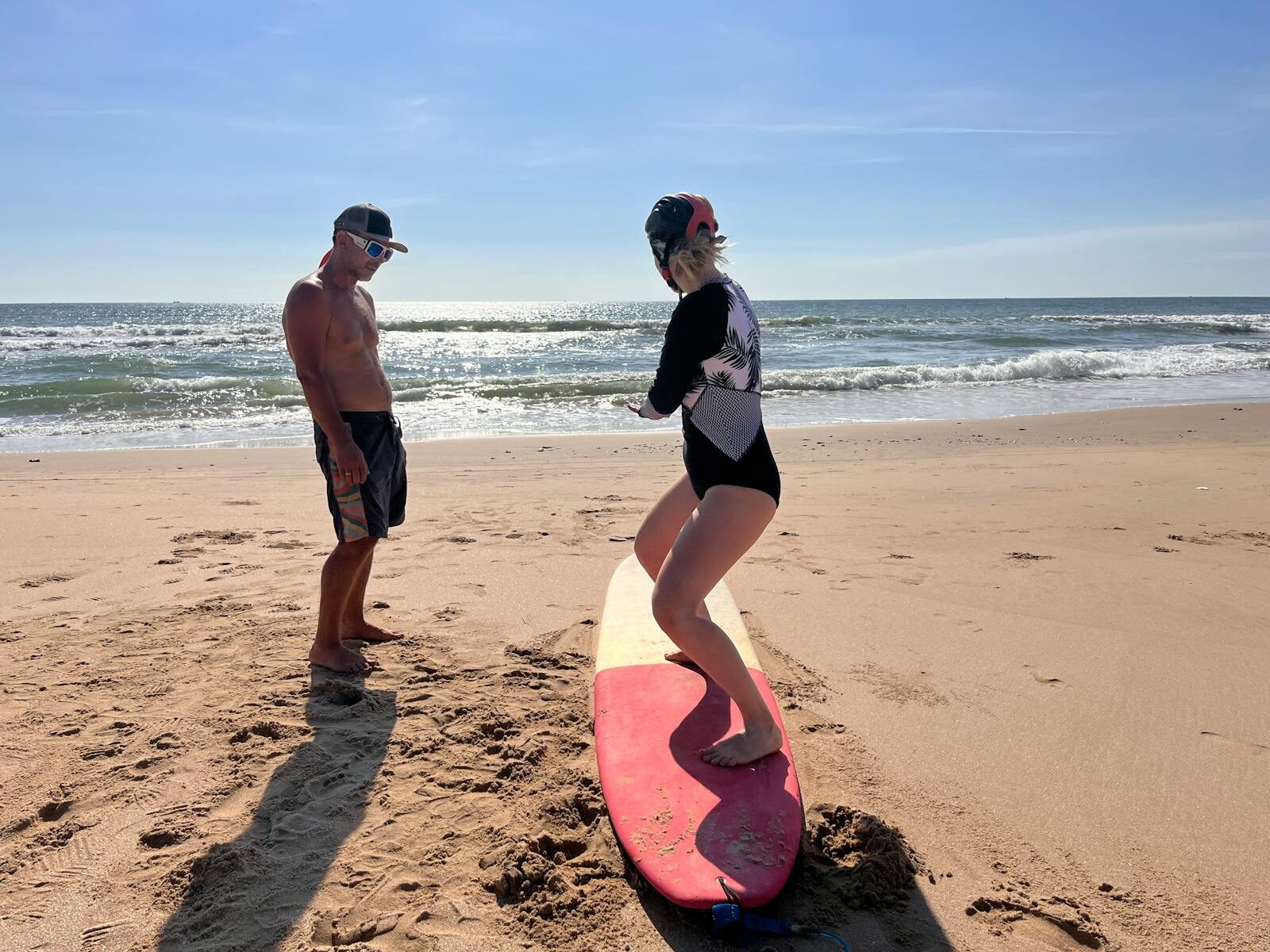
Surfing for Beginners in Morocco: Taghazout's Honest Reality 2026
A first-timer's honest guide to learning to surf in Morocco. The right breaks, the right week, the realistic costs, the surf-camps that actually teach beginners — without the brochure gloss.
 comparison
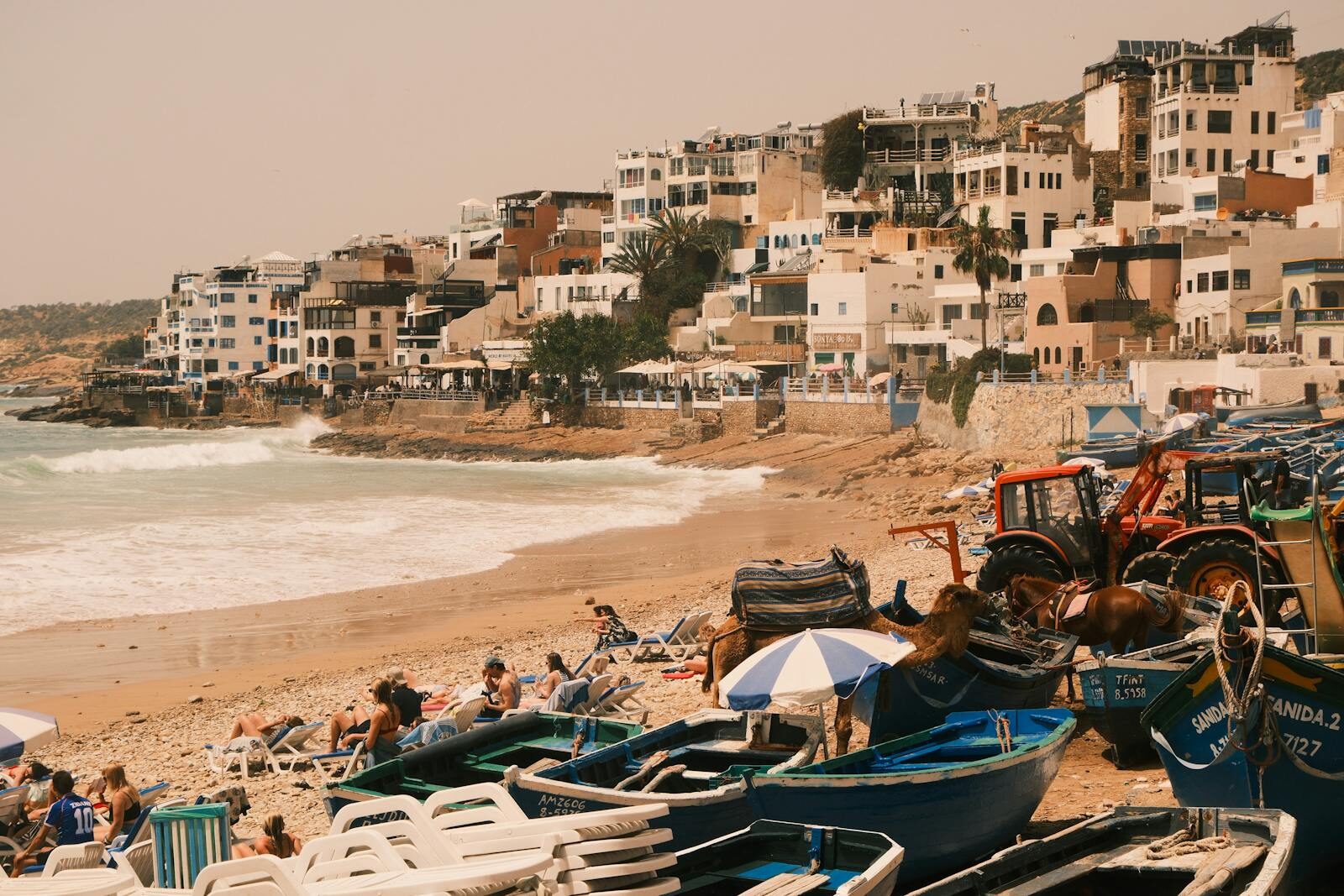
Taghazout vs Tamraght 2026: Where Should You Stay for Surfing?
An honest comparison of Taghazout village and Tamraght for a surf trip in 2026 — wave access, accommodation, food, vibe, cost, and getting around. Pick the right one.
 seasonal
Surfing in Taghazout by Season: When to Go for Your Level 2026
When to surf Taghazout depends on your level. An honest seasonal guide — winter for advanced surfers, summer for beginners, and shoulder months for the rest of us. Water temps, wave size, wetsuit thickness.