Mister Cook Hay El Mohammadi Agadir Review 2026: The Sandwich Worth the Detour
An honest review of Mister Cook in Hay El Mohammadi, Agadir — what to order, what the dirhams get you, how it differs from the central branch, and why locals queue at lunch.
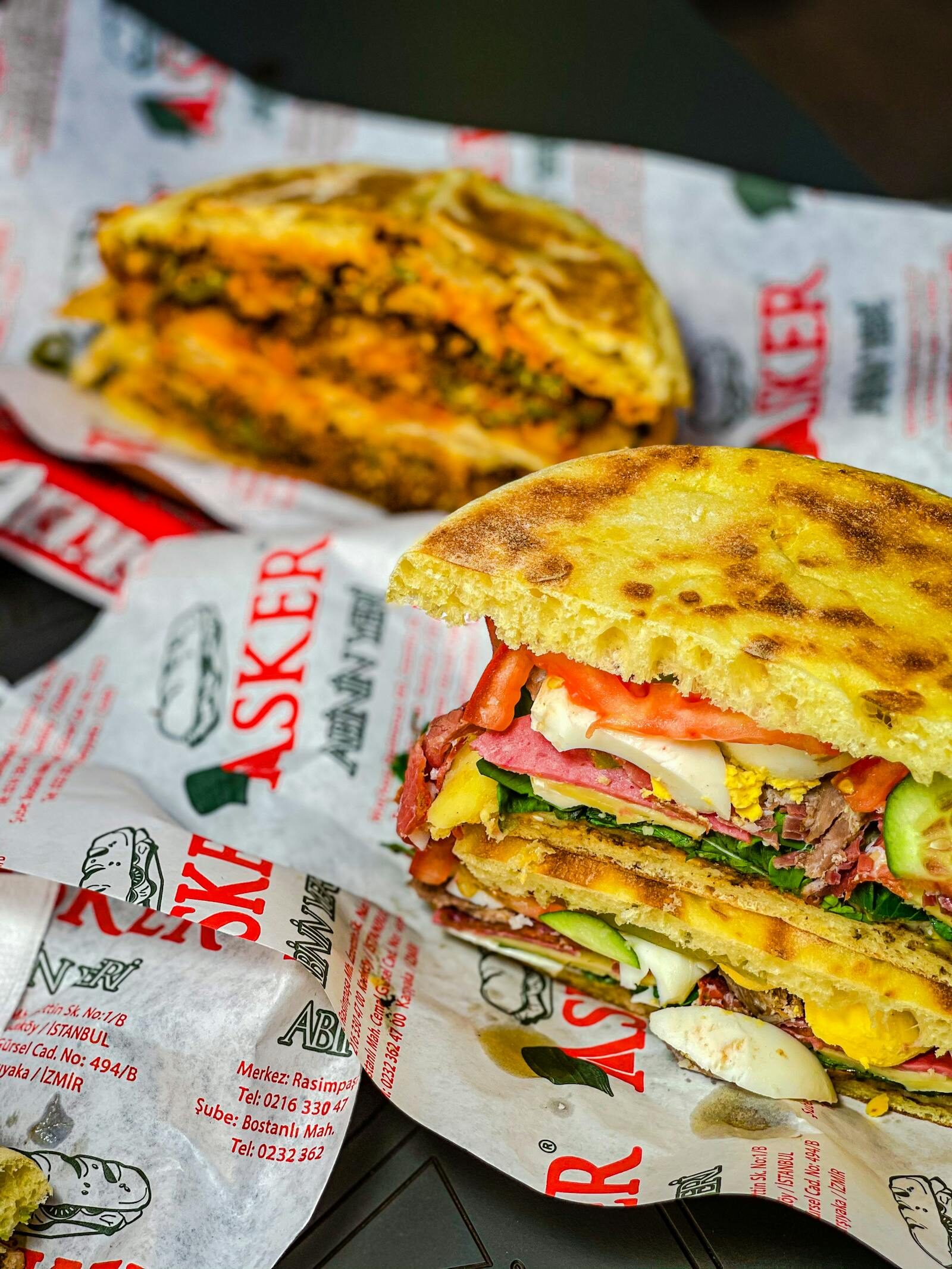
What Mister Cook Hay El Mohammadi Actually Is
First, the disambiguation, because it matters: Mister Cook Hay El Mohammadi is not the central Mister Cook on the bay. The bay branch — the one most tourists hit, the one we covered in our Mister Cook central review — sits on Paul Agadir Bay near the corniche restaurants. This one is fifteen minutes inland by petit taxi, in the working-class district of Hay Mohammadi, north of the centre. Different building, different street, different crowd.
The two branches share a name, a logo, and roughly the same menu, but they are not the same restaurant. The food is similar. The room is not. The clientele is not. The case for going to the Hay Mohammadi branch is about everything that surrounds the food, not just what’s on the plate.
The Short Verdict
Go if you want the version of Mister Cook that feels embedded in the neighbourhood instead of staged for the seafront. Go if you want to eat where Agadirois eat at lunchtime, on a counter receipt of forty or fifty dirhams. Go if you’re staying north and don’t want to taxi all the way down to the bay just for a sandwich.
Skip if you want a sit-down meal with table service and a long menu — the central branch on Paul Agadir Bay is closer to that brief. Skip if you can’t handle a queue at one o’clock, plastic forks, and the cheerful chaos of a kitchen at full lunch tilt. Skip if you came to Agadir for fine dining; our best-restaurants guide for 2026 is the right page for that.
Most people land somewhere in the middle. The rest of this post is for them.
The Menu, Honestly
Mister Cook is, structurally, a Moroccan fast-food sandwich shop with a grill. The Hay Mohammadi branch keeps the same family of dishes as the central one — tacos, sandwiches, grilled plates — without the side-menu padding that the bigger central premises can afford to carry.
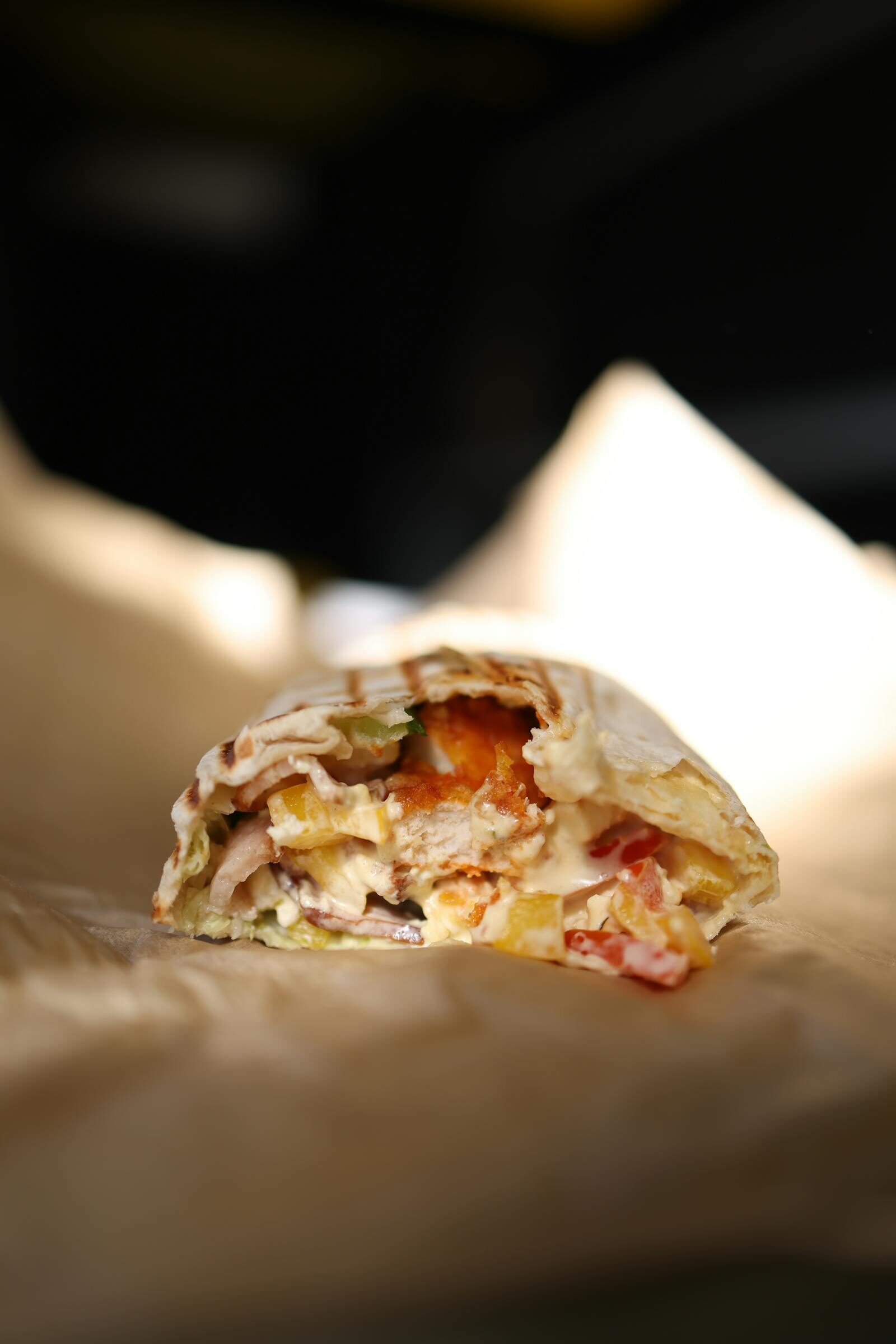
The Tacos Duo is what most regulars order. Two fillings — chicken curry and steak haché — wrapped with melted cheese, fries, and sauce in a tortilla pressed and toasted on the grill. It comes out hot, sealed, dense, and entirely the wrong size for one person, which doesn’t stop anyone from finishing it. Around 45 to 55 dh at time of writing.
The MixMax is the plate version: a mixed grill of chicken, kefta, sometimes lamb, with rice, fries, salad, and bread. Around 60 to 80 dh, depending on what’s on the grill that day.
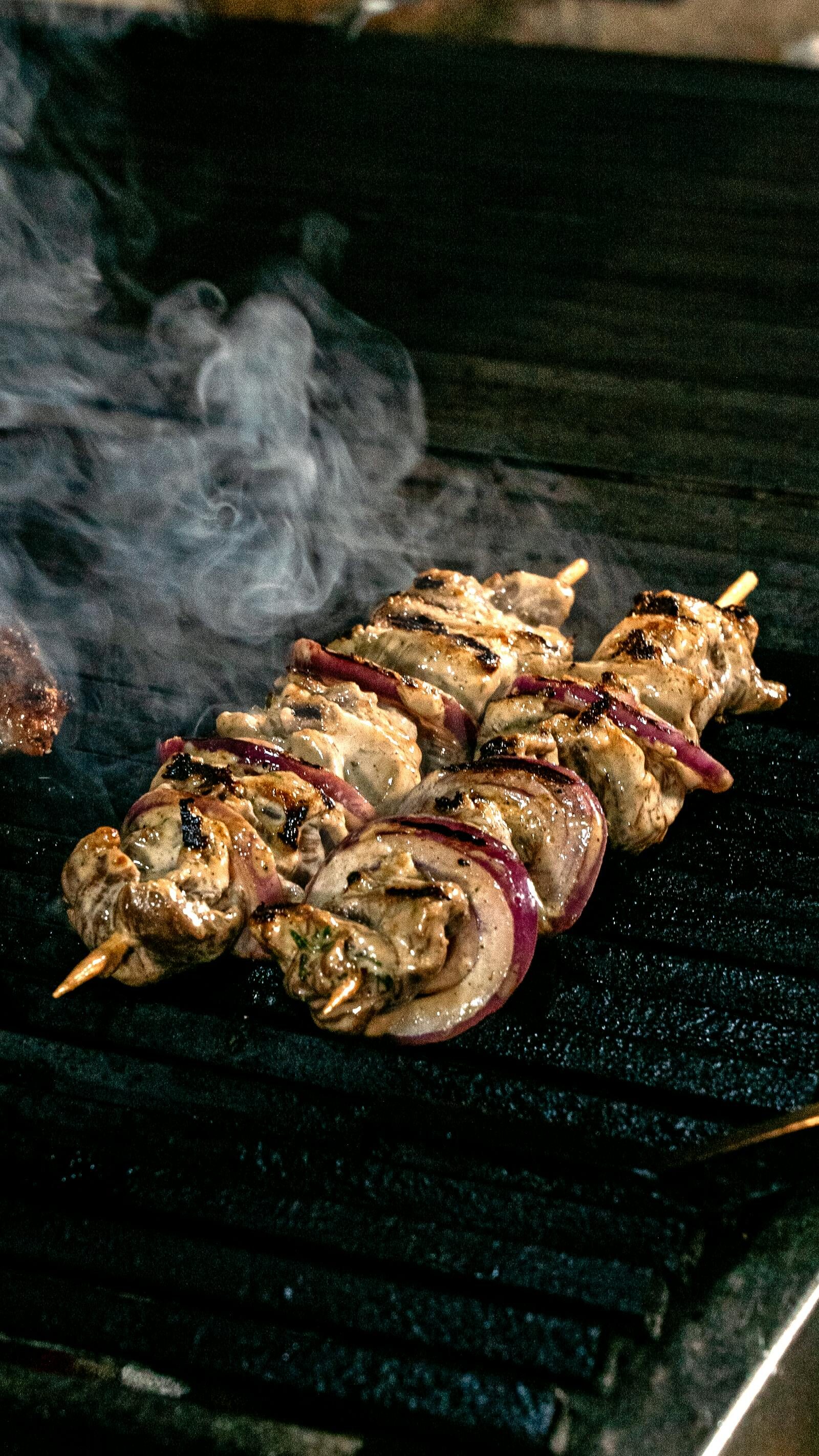
The grilled-chicken half plate is the budget play. Half a chicken — sometimes a quarter at the lower price — comes off the grill with rice, fries, a small salad of olives, cucumber and tomato, a tomato or harissa-ish sauce, and a piece of bread that tastes like it came from a neighbourhood bakery rather than a chain supplier. Around 35 to 50 dh for the half, less for the quarter. This is the dish that the visitor who left a five-star review for the chicken bap was eating, and it’s the dish we’d point at if you want one thing that tells you what the place is.
The crispy taco (effectively a fried-chicken wrap) is the indulgence. Fried chicken, fries, melted cheese, sauces, sealed in a tortilla and crisped on the grill. Around 50 to 60 dh. Adequately greasy. It’s not pretending to be light.
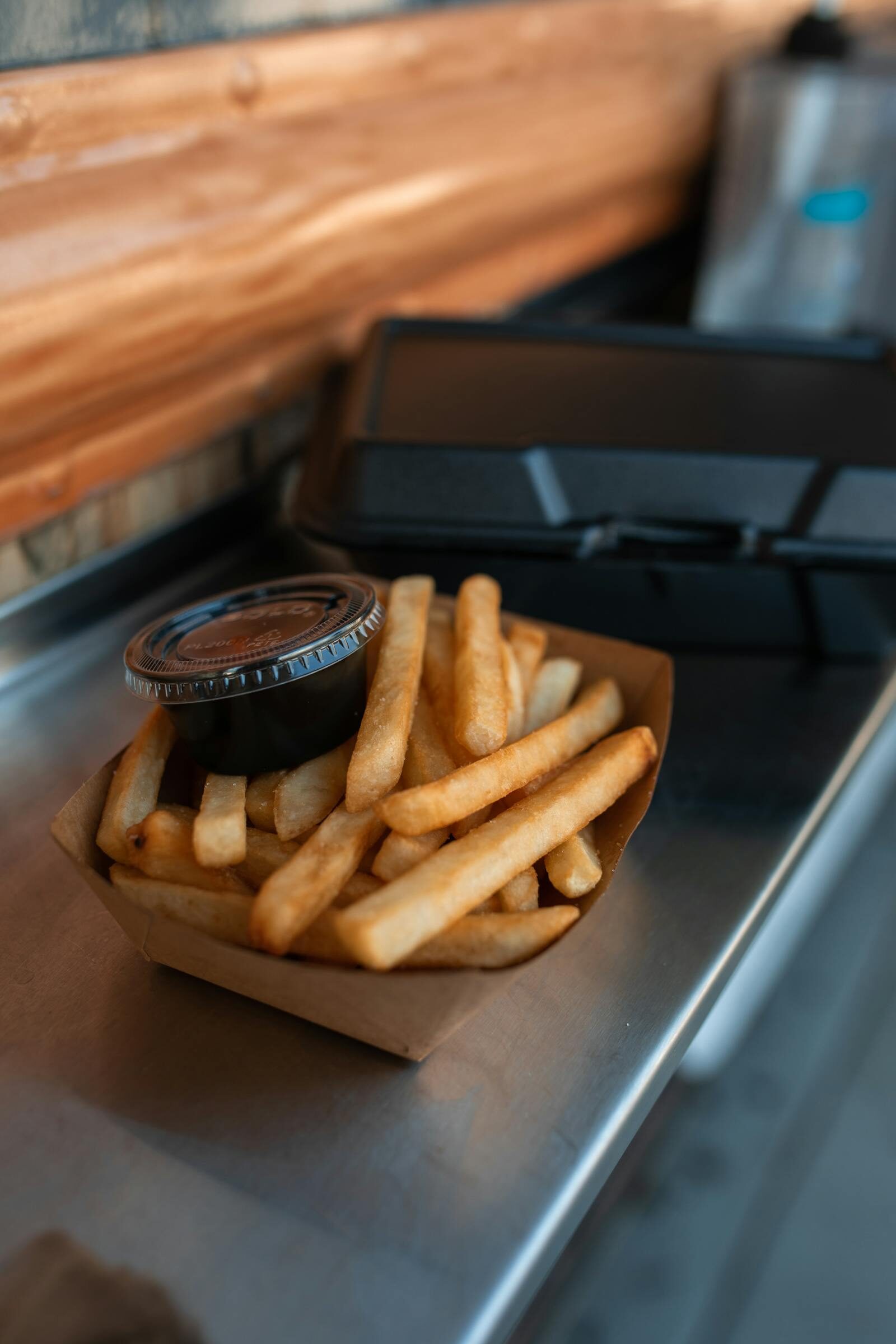
Fries on the side. Worth its own line because they’re correctly cooked — hot, crisp, not the soft pile that some Mister Cook reviewers have complained about elsewhere. The branch keeps the oil moving at lunchtime, so what comes out at one o’clock is what it should be. By four in the afternoon, between the rushes, your odds are lower; this is the honest pattern of a high-volume Moroccan sandwich shop.
Drinks — fresh juice (the mango is the one to ask for; chunks not strain), or a bottle of soft. Tea isn’t really their thing; if you want mint tea after lunch, walk to one of the cafés down the boulevard. There’s always one twenty metres away.
What’s not on the menu: tagine, couscous, anything you’d cook for an hour. This is a counter-and-grill operation. It does the things it does, and it doesn’t try to be a restaurant it isn’t.
What Makes the Hay Mohammadi Branch Different
The central Mister Cook on the bay is designed to be entered by someone who has just walked off the corniche. The interior is brighter, the menu boards are translated four ways, the staff are used to explaining what a kefta is to a Belgian family on day one of holiday. None of that is a criticism — it’s sensible adaptation to the customer in front of you. We covered the trade-offs in the Mister Cook central review.
The Hay Mohammadi branch is the one for the people who live ten minutes’ walk away. The menu boards are in Arabic and French. The order line at quarter past one is a mix of construction workers on their break, teenagers from the lycée up the road, women with their kids, a delivery driver waiting on a stack of takeaways. It’s the texture of a working-class district at lunch — the restaurant exists inside it rather than performing it.
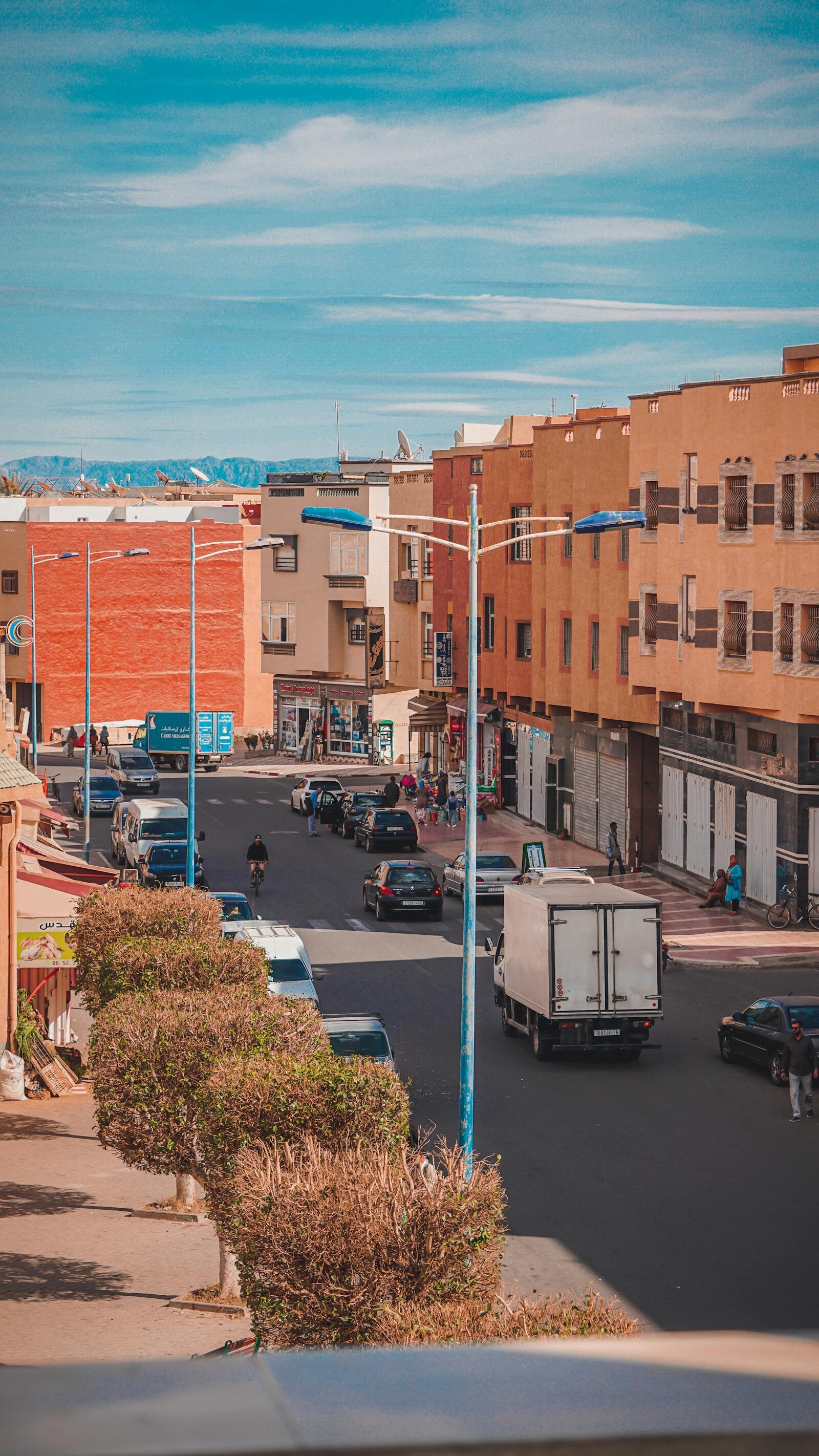
Three concrete differences for the visitor:
The kitchen is closer. You can see the grill from the queue. You can watch your kefta go on, come off, get wrapped. There’s no service line buffering you from the cook. That’s intimacy by accident, and it changes how the meal feels even before you’ve tasted anything.
The prices are slightly tighter. Not by a huge margin — both branches are clearly the same operation — but the Hay Mohammadi sandwiches tend to land a few dirhams below their bay-branch equivalents. It adds up if you’re feeding three.
The crowd corrects the menu. Locals know what’s good at this branch on this day. If the kefta is moving fast, it’s moving fast for a reason. If nobody is ordering the seafood option, take the hint. At the central branch, with a tourist crowd ordering down the menu more or less at random, the feedback loop is weaker.
The Grill, the Smoke, the Lunch Rush
Between roughly 12:30 and 2:30, the Hay Mohammadi branch is at full capacity, and the grill — the heart of the place — is running hard. Charcoal, not gas. Kefta skewers, chicken halves, the occasional lamb chop laid alongside.
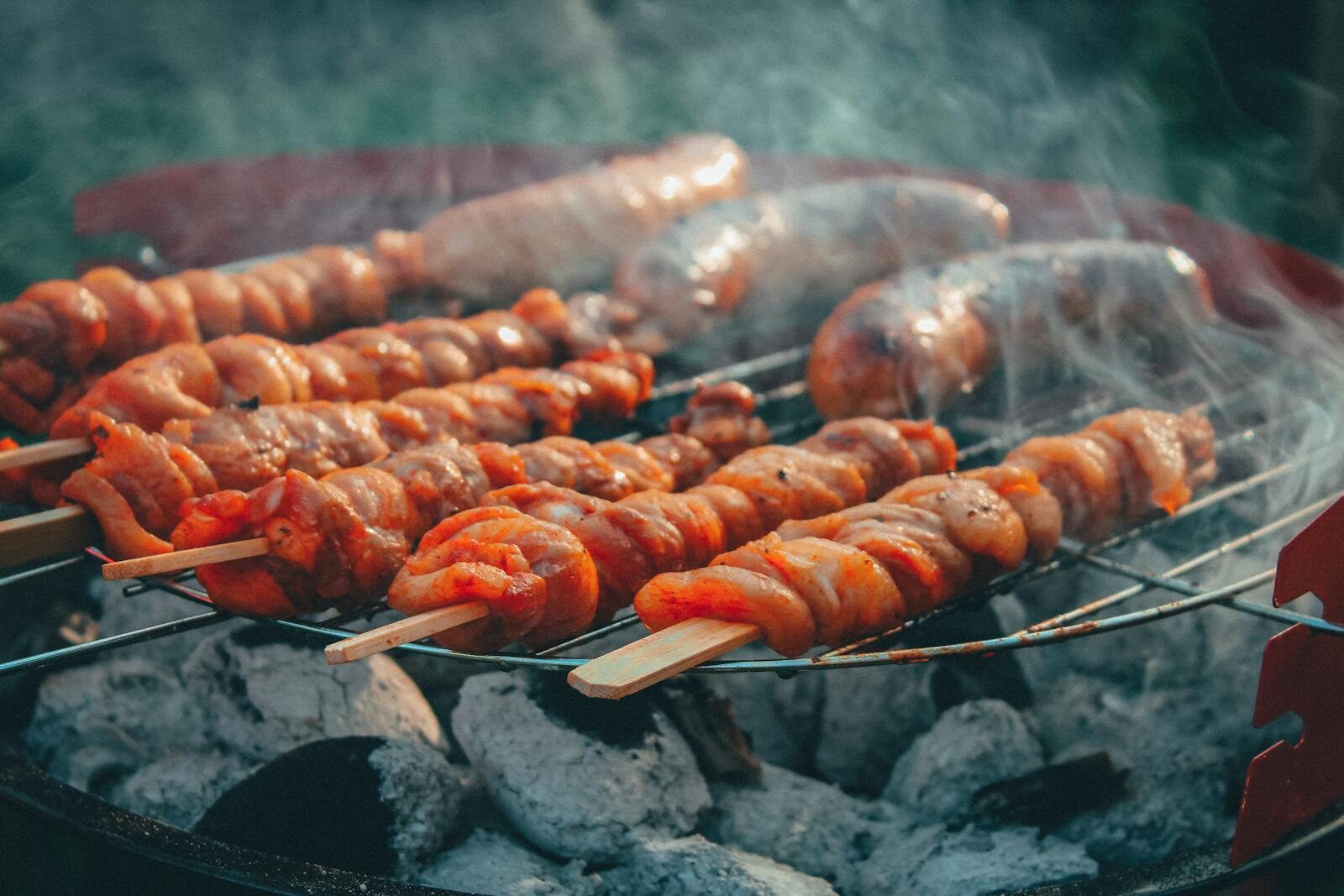
Watching it is half the reason to come at lunchtime rather than off-peak. The grill man — different on different shifts, but always one man at the bar — works a rhythm: lay, turn, brush, pull, plate, repeat. He isn’t fussy; he’s accurate. What goes on at 12:45 comes off at 12:53 looking like it should. There’s a small competence on display that the central branch’s higher-spec premises can sometimes hide.
The counter behind the till is its own choreography. Sandwiches wrapped in paper, marked with marker, slid across to the customer; tacos sealed on the press; fries scooped into paper cones; orange juice poured. Three or four people work at a small bar in a tightly defined sequence.
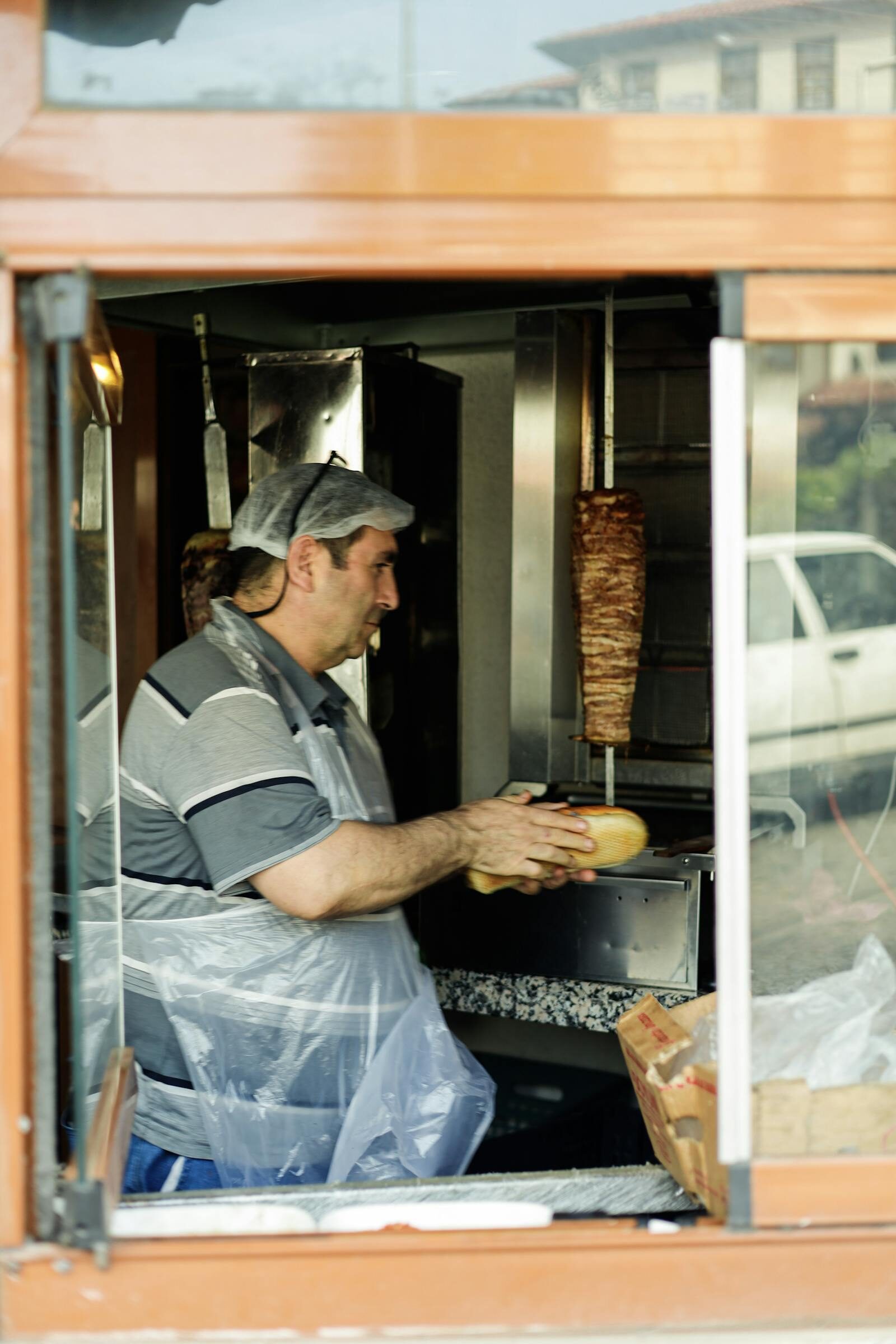
Honest warning: this is also when the cracks show. The same volume that makes the kitchen feel alive is the volume that occasionally lets a plate of chicken sit on the pass for two minutes longer than it should. A handful of Google reviews mention room-temperature dishes after a long wait — we believe them. The fix is not to come at 1:15 expecting silver service; come at 12:15, or at 2:45, and the chances of a perfect plate go up. The food itself, when it lands hot, is honestly good. The risk you take is operational, not culinary.
How to Order Without Looking Lost
Counter-first. You queue, you order at the till in French or darija, you pay, you take a ticket, you stand to one side, your number is called, you collect. No table service in the Western sense.
- Cash is easier. Card sometimes works, sometimes the machine is “down” for the day. 100 dh in mixed notes covers most orders for two.
- Order in French and you’ll be understood. “Un tacos duo, une demi-poulet, deux jus orange, s’il vous plaît.” Numbers and items, nothing fancy.
- Eat in or take away. A handful of stools and a couple of tables inside, plus informal eat-on-the-pavement. For a real sit-down, take it to one of the cafés a block over with a tea.
- Sauces are on the counter. Harissa, mayo, ketchup, a green chermoula-ish thing depending on the day. Try the green sauce on the chicken; it’s quietly the best thing on the bench.
Who It’s Genuinely Good For
Anyone staying north of the centre. The Hay Mohammadi area is a fifteen- to twenty-minute walk from the upper hotel cluster and a five-minute petit taxi from anywhere in the north of town. If you’re not on the corniche, this is your closer Mister Cook by some margin.
Travellers tired of polished food. After two or three nights of hotel restaurants and corniche prices, a 50-dh half-chicken at a counter you can see into is a recalibration. It tastes more like the country you’re in.
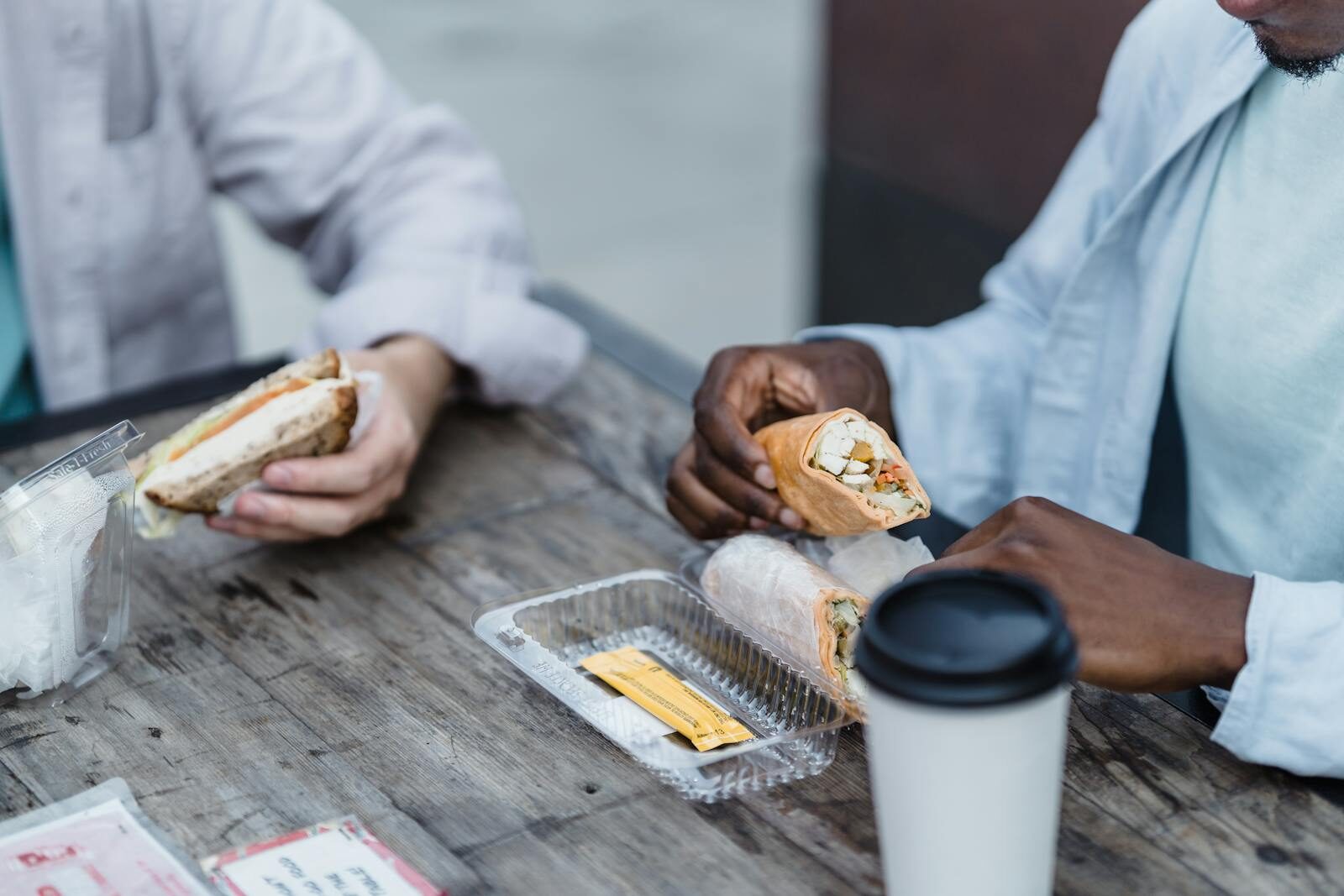
Budget-conscious eaters. Two people can eat properly here for 100 dirhams. That’s hard to match within walking distance of central Agadir at this quality. Our cheap-eats roundup for 2026 has the full map of the city under that line, but this branch is in the top three.
Solo travellers. A counter is friendlier to a single diner than a tablecloth-and-candlelight restaurant. You order, you eat, you leave, nobody minds, nobody is trying to convert you into a two-top.
Who Should Skip It
Anyone wanting a real sit-down dinner. There aren’t enough tables, and the room isn’t built for lingering. For an actual meal with friends, the central Mister Cook on the bay seats more comfortably, or look at Frank’s Burgers on Avenue des FAR or Frank’s Burgers Sonaba — both are casual but with proper seating.
The food-photography crowd. Fluorescent light, paper wrap, plastic forks. Aesthetically, it isn’t built for the camera. If your plan is a tagged grid shot, the bay-side terraces will work harder for you.
Anyone uncomfortable in a working-class neighbourhood. This isn’t a tourist district. Hay Mohammadi is not unsafe — it’s an ordinary, lived-in part of Agadir — but it’s a part of the city where the visitors are outnumbered by the residents. If that’s not the texture of trip you wanted, the corniche has the version of Agadir built for you.
Anyone counting calories with precision. The food is good. It is also fried, wrapped, sauced, and not what we’d call light. A Mister Cook lunch is a 700-to-900-calorie occasion. Lean into it or eat somewhere else.
The Comparison You’re Probably Doing in Your Head
Mister Cook Hay El Mohammadi vs. Mister Cook central. Same operation, two different rooms. Pick by location: if you’re on the corniche, the central is closer; if you’re north, this is. The central is brighter and gentler; this one is faster and more textured. Food quality is broadly comparable; the kitchen rhythm at Hay Mohammadi is, in our experience, a little tighter at peak.
Mister Cook vs. burgers and food courts. Want a burger and a chair? Frank’s on Avenue des FAR or Frank’s at Sonaba. Feeding a group of mixed appetites? Food Yard wins on choice. Mister Cook wins when you want a Moroccan grilled-chicken plate or a stuffed tacos and you’re happy eating fast.
Getting There, When to Go
Address: Magazin N°01, Immeuble 103, Résidence Islane GH16, Hay Mohammadi, Agadir 80000. Phone (last published number): 05 28 22 23 23.
From the corniche: a petit taxi from the Marina end is around 15 to 20 dirhams and ten minutes in normal traffic. Tell the driver “Mister Cook, Hay Mohammadi” — not “Mister Cook” alone, which will land you at the central branch. From Souk El Had, it’s a five-minute taxi or a twenty-minute walk through the residential blocks.
Best time: 12:00 to 12:30 for the start of the lunch service, when the grill is hot and the queue is short. Or 7:30 to 9:00pm for the quieter evening service. Avoid 1:00 to 2:00pm at the peak, when the wait can run to fifteen minutes plus another ten for the food, and kitchen pressure is when quality control thins. Ramadan opening hours shift heavily — the branch typically opens after iftar and runs late. Confirm by phone.
One Last Honest Thing
Mister Cook Hay El Mohammadi is not a hidden gem. It is — at 4.7 stars, on hundreds of Google reviews — entirely findable, entirely known, entirely fine with being a popular sandwich shop in a working district. What it offers the visitor isn’t novelty; it’s proportion. The portions are honest. The grill is honest. The prices are honest. The crowd is the actual crowd, not the version assembled for the corniche.
If you came to Agadir for the seafront and the buffet, the central Mister Cook was designed for you. If you came to eat where the city actually eats — kitchen ten feet away, grill man calling your number in Arabic — the Hay Mohammadi branch is the sandwich worth the detour.
Twelve fifteen, a tacos duo and a half-chicken, two orange juices, eighty-five dirhams the lot, eaten in twenty minutes. That’s the version of Mister Cook that earns its loyal following.
Keep reading
 practical
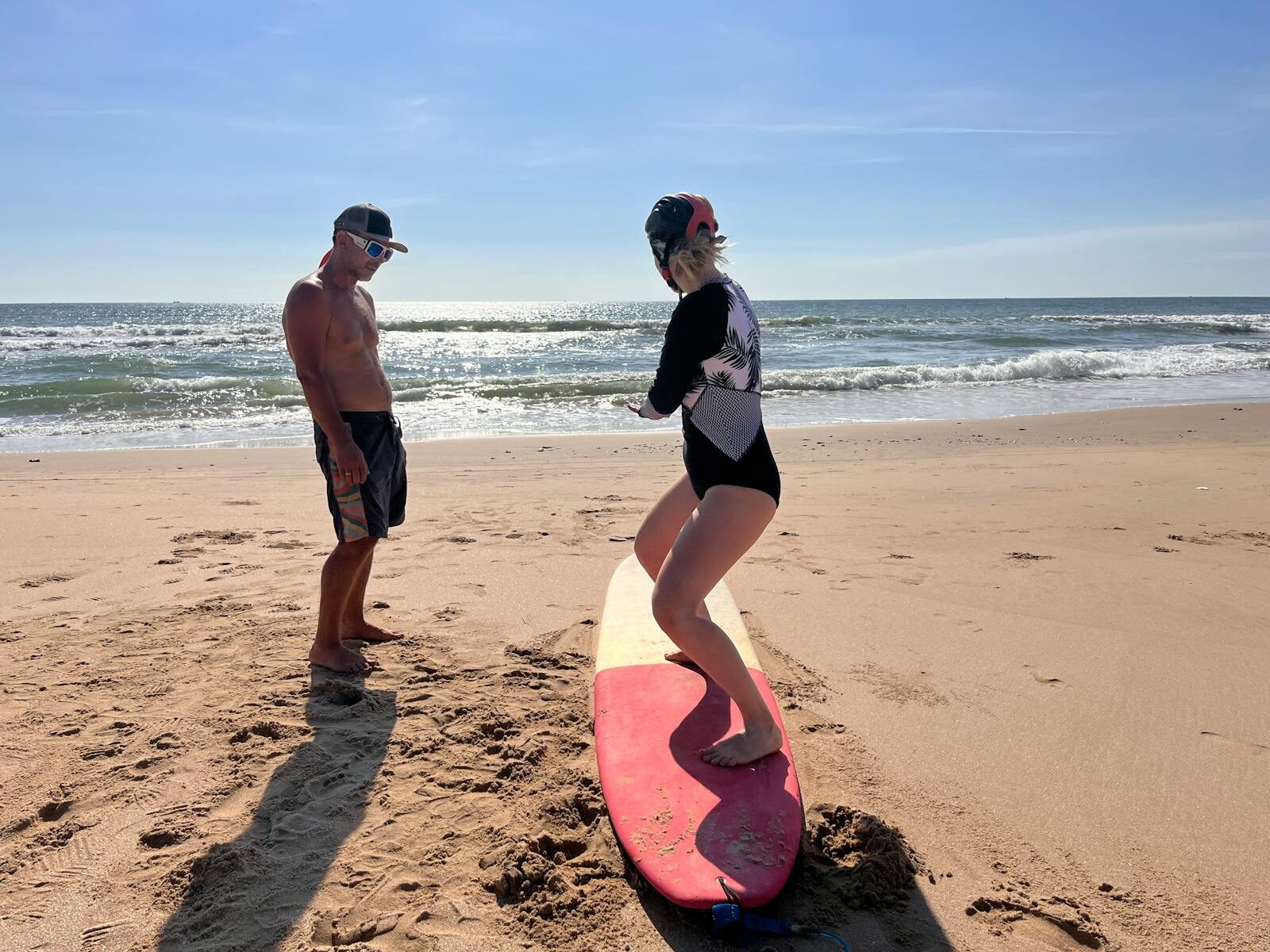
Surfing for Beginners in Morocco: Taghazout's Honest Reality 2026
A first-timer's honest guide to learning to surf in Morocco. The right breaks, the right week, the realistic costs, the surf-camps that actually teach beginners — without the brochure gloss.
 comparison
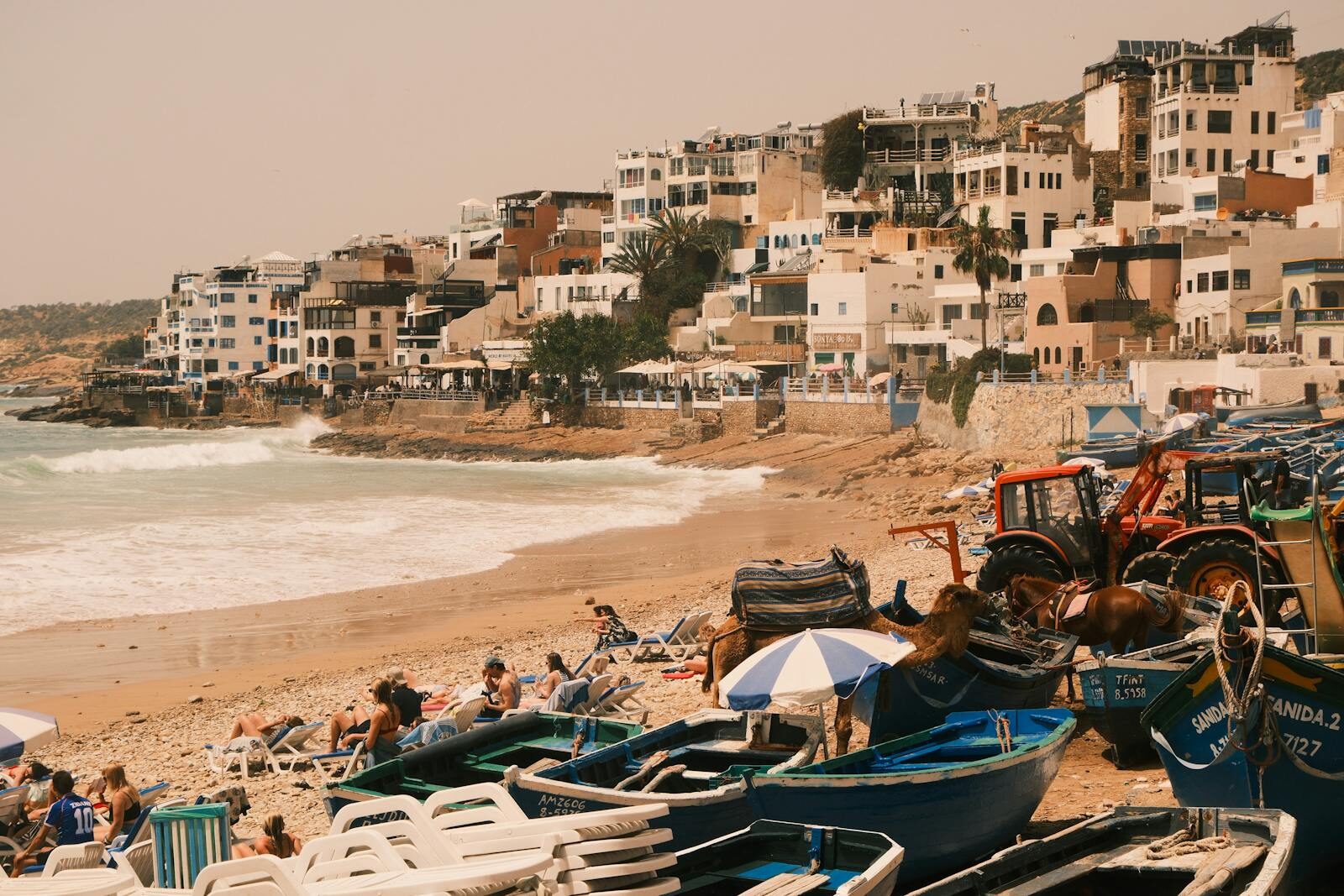
Taghazout vs Tamraght 2026: Where Should You Stay for Surfing?
An honest comparison of Taghazout village and Tamraght for a surf trip in 2026 — wave access, accommodation, food, vibe, cost, and getting around. Pick the right one.
 seasonal
Surfing in Taghazout by Season: When to Go for Your Level 2026
When to surf Taghazout depends on your level. An honest seasonal guide — winter for advanced surfers, summer for beginners, and shoulder months for the rest of us. Water temps, wave size, wetsuit thickness.