Surfing for Beginners in Morocco: Taghazout's Honest Reality 2026
A first-timer's honest guide to learning to surf in Morocco. The right breaks, the right week, the realistic costs, the surf-camps that actually teach beginners — without the brochure gloss.
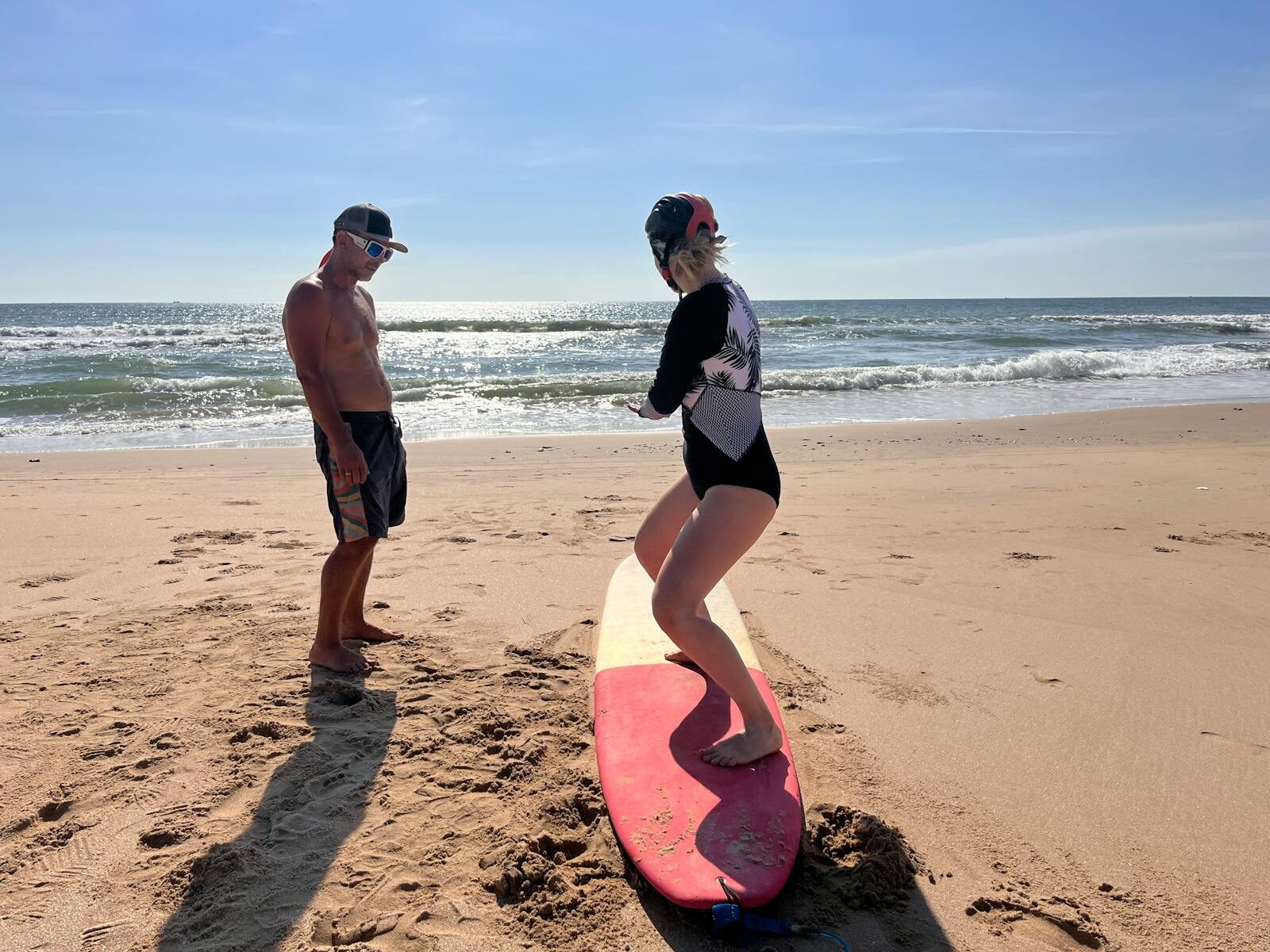
Taghazout Is Where Many People Learn to Surf. It’s Not the Easiest Place — Here’s Why That’s a Good Thing.
The Atlantic coast north of Agadir forces you to take the sport seriously. The water is cold enough for a wetsuit nine months of the year. The headline waves — Anchor Point, Killer Point, Boilers — are reef breaks that punish anyone in the wrong spot. The lineup at the famous spots is full of Portuguese, French, and British surfers who came here precisely because the waves are big.
And yet every November to March, hundreds of beginners arrive in Taghazout, Tamraght, and the surf villages of the Taghazout Bay coastline and learn to surf for the first time. They do this safely, cheaply by Western standards, and reasonably quickly. The trick is knowing where they actually learn — which is almost never the beach the magazine spreads are shot at.
This is the honest version of how surfing for beginners in Morocco works in 2026. Dirham costs, camps named, breaks specified, and the bits the brochure leaves out.
Is Taghazout Actually Good for Beginners?
Honest answer: yes — but only at the right breaks, in the right season, with the right school.
The Taghazout area has roughly a dozen named surf spots over twelve kilometres of coast. Two or three are beginner-friendly. The rest are not. The beginner-friendly ones are very good — long, mellow, sandy-bottom waves where falling off is a non-event. “Taghazout the village” itself is not one of them; its famous point break is a right-hand reef wave with a busy lineup. First-timers shouldn’t be there.
Beginners learn on sand-bottom beach breaks a few kilometres in either direction — mostly Tamraght beach (also called Crocodile Beach or Aftas) and Banana Beach, the long mellow stretch between Tamraght and Aourir. Both have soft whitewash to practice pop-ups on, no rocks underfoot, and enough space that you’re not paddling into traffic.
The wider where-to-surf-in-Taghazout breakdown covers every break by name. For first-timers you only need three: Tamraght beach, Banana, and (when conditions are very small) Taghazout village beach itself.
The other honest thing: timing matters. Atlantic winter (November–March) is the famous surf season, brilliant for intermediate-and-up. For absolute beginners, shoulder season (April–June and September–October) is gentler — smaller swells, warmer water, less crowded lineups. See the surfing-Taghazout-by-season guide for month-by-month detail. Arriving as a first-timer in mid-January is not the move; the waves are at their biggest, and you’ll spend more time being washed than surfing.
Where Beginners Actually Surf
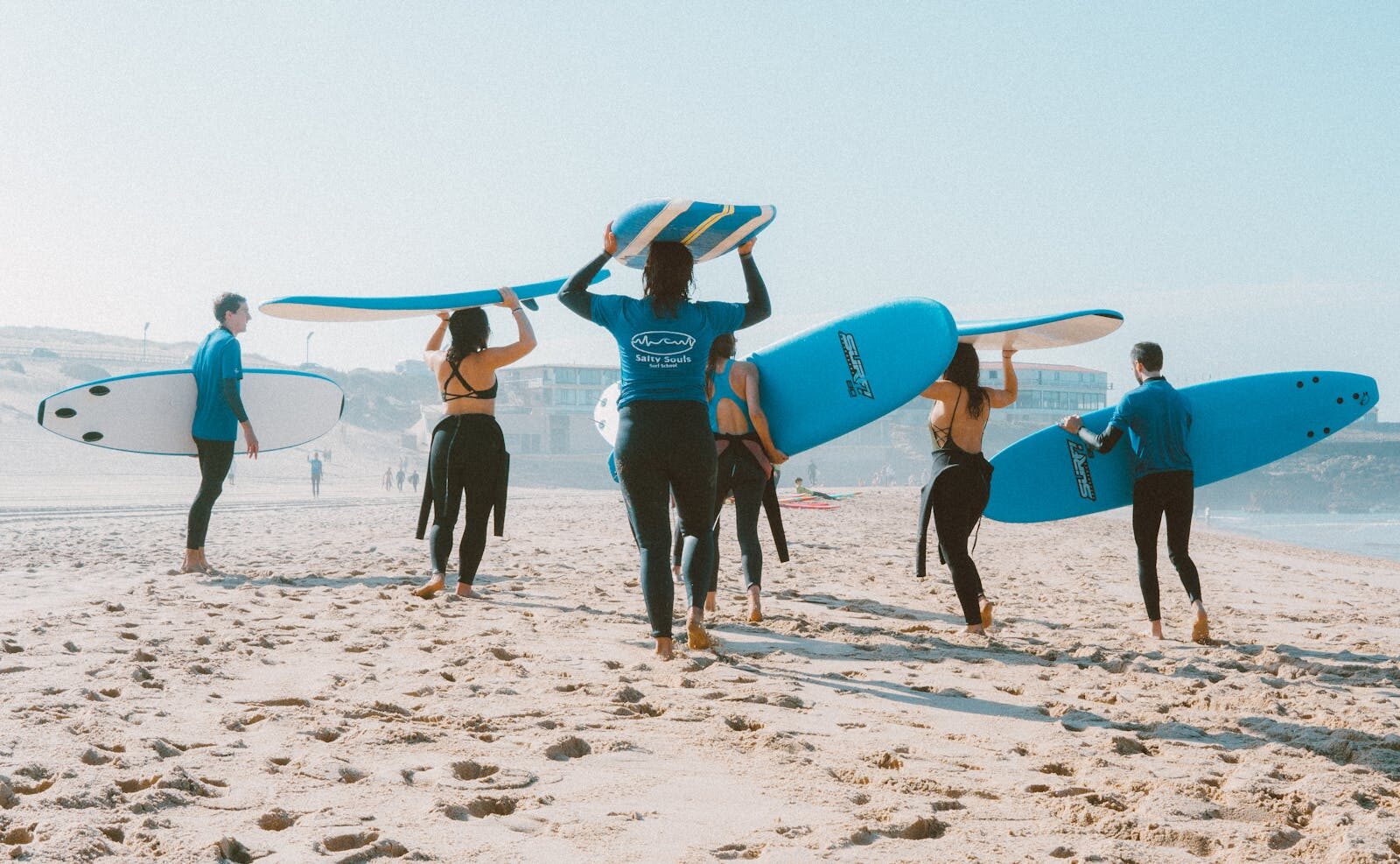
Days one through three, almost every school takes its beginners to Tamraght beach. The wave breaks well offshore from a wide sandy beach with no reef, the whitewash rolls in for fifty or sixty metres, and there’s enough room for ten students from one school and five from another without anyone running anyone over. This is where you’ll learn to pop up.
Days four through seven, depending on conditions, schools rotate to Banana Beach (slightly bigger waves, longer ride, still beach break) or to Aourir / Devil’s Rock on the southern flank. Some weeks the swell drops and everyone goes back to Tamraght. The Atlantic doesn’t read the lesson plan.
Anza beach, at the southern end of the surf coast inside Agadir’s city limits, is the other common beginner spot — black-sand, volcanic, forgiving in small swells. Half a dozen schools cluster behind it. If you’re staying in Agadir city rather than Taghazout, Anza is your default.
Where beginners shouldn’t be: Anchor Point, Killer Point, La Source, Boilers, Mysteries. Those are the magazine waves — reef breaks, tight lineups. Dropping in on someone who’s travelled from Hossegor for a swell is the fastest way to make yourself unwelcome in the water.
Choosing a Surf School or Camp
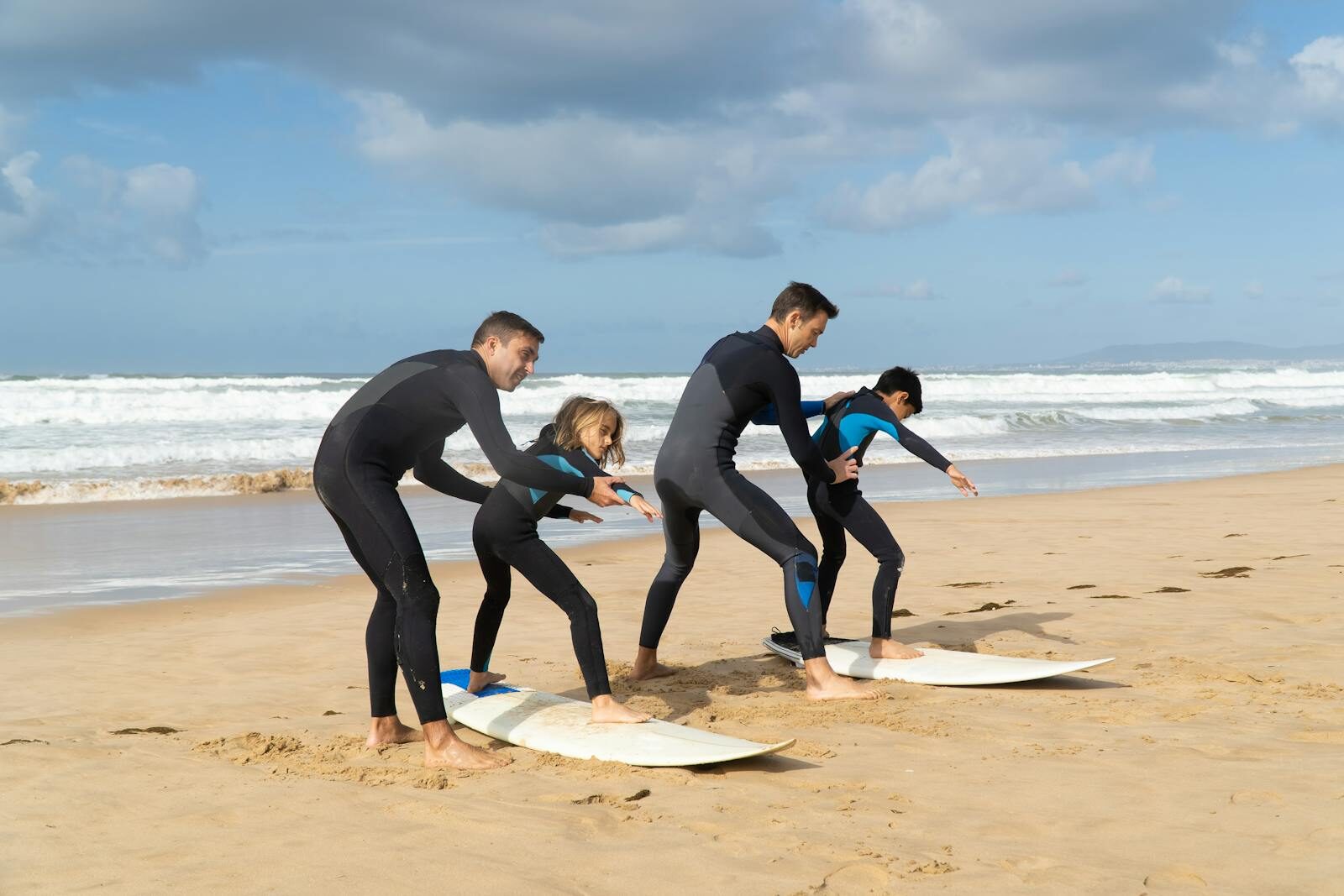
Here’s the part most “where to surf in Morocco” articles dance around: every camp is a commercial business, and every homepage says broadly the same thing — small groups, qualified instructors, all levels welcome, yoga included, free airport pickup. The differences that matter aren’t the ones the homepages emphasise.
What actually matters for a beginner:
- Instructor-to-student ratio. Anything worse than 1:6 is too many. 1:4 is good. Genuine private (1:1 or 1:2) is best but doubles the cost. Ask explicitly, in writing, before booking — the marketing copy will say “small groups” without specifying.
- Lesson hours per day. Most camps offer two two-hour sessions, morning and afternoon. A few only deliver one session and call the rest “free surf with board rental.” Know what you’re paying for.
- Board progression. Day one and two on a 9-foot soft-top foam board is correct. If by day five you’re still on the same beginner board because they don’t have anything between it and a 6-foot shortboard, the school is undersized for genuine progression.
- Backup plan for flat days. Atlantic swells drop. Good schools have a wind/swell plan — they drive you up to Imsouane, or south to Sidi Kaouki, or find a sheltered nook. Lesser ones cancel and refund a fraction.
- Beginner-only weeks. Some camps run mixed weeks (beginners and intermediates sharing instructors). Others run a dedicated beginner programme. The dedicated programmes are usually better paced for first-timers.
A handful of camps in our Taghazout surf-hostels and camps roundup lean explicitly beginner-friendly. The ones we’d send a first-timer to:
- We Surf Morocco — small operation, mostly beginner and intermediate weeks, classic Taghazout-village basing. Good for solo travellers who want a sociable house rather than a hotel.
- Surf Berbere — one of the longer-running camps in the village, with a structured beginner programme and the equipment range to progress you onto a fish board by week’s end.
- Maroc Surf Camp — runs a beginner-heavy roster with ISA-certified instructors and a clear day-by-day curriculum, which is exactly what an absolute first-timer needs.
- Hashpoint Surfcamp — Tamraght-based, which puts you a five-minute walk from the beginner beach. Less faff than commuting down from Taghazout village every morning.
- Taghazout Surfers Surf School — locally-owned, sensible lesson ratios, and the kind of place where the instructors actually surf with you after the lesson if conditions are good.
- Locals Taghazout Surfcamp — emphasis on the name. Moroccan-run, knows every reef and rip on the coast, and runs beginner weeks at a price that’s noticeably below the European-owned camps.
Two more that lean toward the yoga-and-surf combination — useful if you want recovery built into the week rather than bolted on — are Soul Surf House and Surf Coast Morocco Surf Yoga House.
For a second opinion focused specifically on Taghazout-village camps and the luxury Taghazout Bay end of the spectrum, the Taghazout-specific guide at Taghazoutcamp goes deeper into the individual-camp comparisons than we do.
Realistic Costs, Honestly
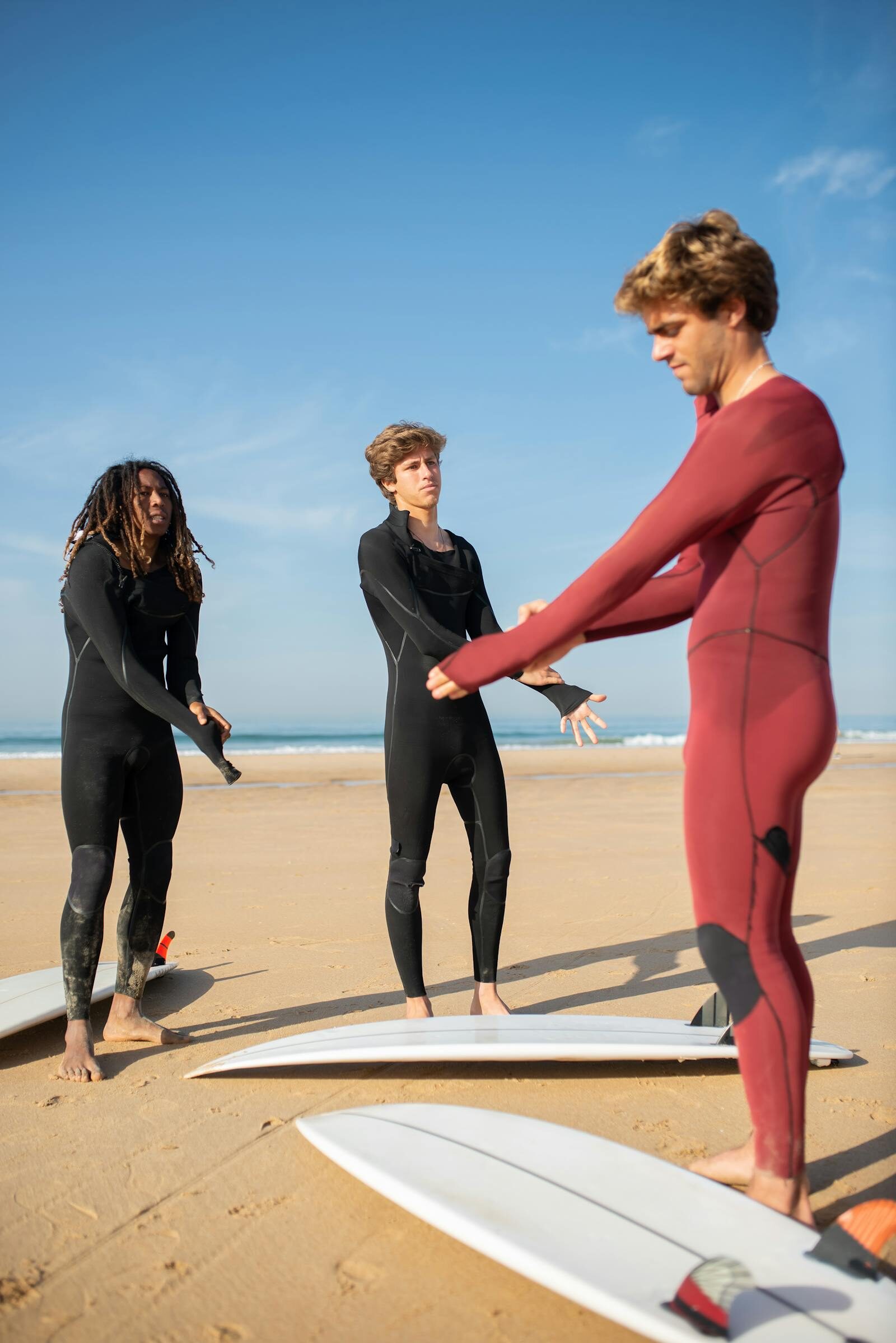
The “Morocco is cheap” framing is half-true for surfing. Boards and wetsuits are cheap. Instructor-led packages are normal European prices. Here’s the rough lay of the land in 2026, in Moroccan dirham (the conversion is roughly 10 MAD = €1, give or take):
- Daily board rental: 100–150 MAD per day for a soft-top, 150–250 MAD for a hard board. Often discounted to ~600 MAD/week.
- Wetsuit rental: 50–80 MAD per day, ~250 MAD per week.
- Single 2-hour group lesson: 250–400 MAD (€25–€40), board and wetsuit included. Group of 4–6.
- Half-day private lesson (1:1): 600–900 MAD.
- Full beginner week — surf camp package: typically 3,500–6,000 MAD per person for 7 nights, 5 days of two-session lessons, accommodation, breakfast, and most lunches. The cheaper end is hostel-style dorms; the higher end is small private rooms.
- Standalone 5-day surf course (no accommodation): 1,500–2,500 MAD if you’re staying somewhere separately.
- Add-on yoga: 60–100 MAD per drop-in class; usually included in full camp packages.
What pushes the cost up: airport transfers (the Agadir-airport-to-Taghazout transport guide explains how to skip the camp transfer fee), private rooms over dorms, single-supplement charges, and “premium” video coaching add-ons that not every beginner needs in week one.
What you can’t easily haggle on: lesson rates with established schools are largely fixed. You can sometimes negotiate independent guides (50–80 MAD/hour off the rate card) but a real school’s price is the price.
What to Bring vs Rent
Bring:
- Board shorts or a swimsuit. Worn under the wetsuit. Winter water is 16–18°C; rashguards or bikinis underneath stop chafing.
- A long-sleeve rashguard. Optional but recommended. Stops wetsuit rub on neck and underarms.
- Reef-safe sunscreen, SPF 50. Moroccan sun is harder than the brochure suggests, even on overcast winter days.
- Earplugs. Cold-water surfer’s ear is real after a hard week. Cheap silicone ones are fine.
- Flip-flops and a quick-dry towel. Camps usually provide a beach towel but microfibre packs smaller.
- A waterproof phone pouch. For the inevitable beach photos.
Don’t bring:
- A board. Every school provides them; airline excess for board bags is brutal, and local rentals are better than what you’d typically lug for a week.
- A wetsuit. Camps issue 3/2 or 4/3 suits to fit. Taghazout rental suits get heavy use and are replaced regularly.
- Hard-shoe surf booties unless you know you’ll need them. Beginner beaches are sandy; booties are for the rocky points.
Common Beginner Mistakes
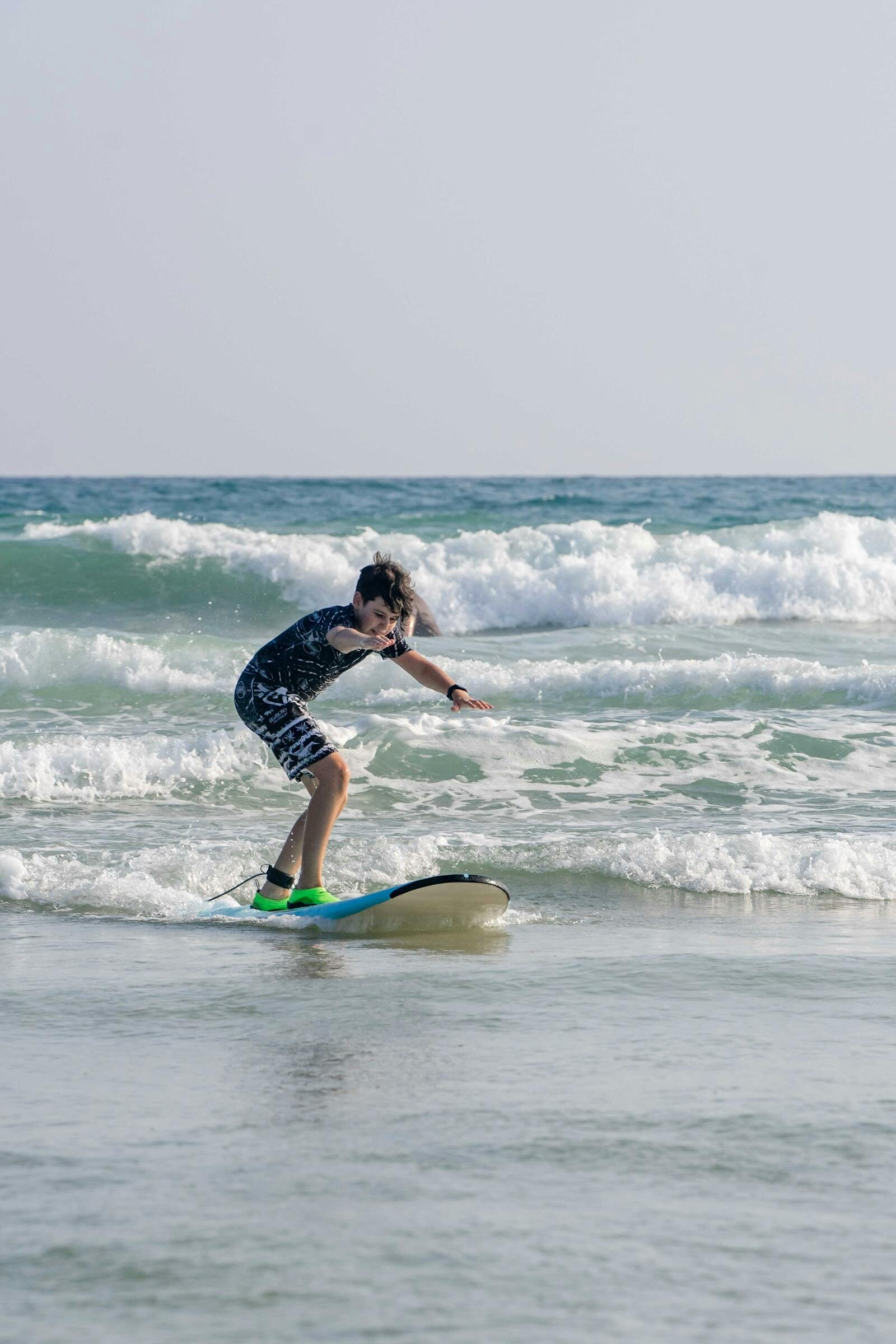
The pattern of beginner mistakes in Taghazout is consistent enough that every honest instructor will tell you the same five things on day one. The honest version:
Showing up to Anchor Point on day one. Don’t. The famous spots are not where you learn. The first time you paddle out at a point break should be after you can already pop up and ride a beach-break wave to shore — usually week two or three, not day one.
Ignoring rip currents. Atlantic beach breaks have rips. Not Pacific murder-rips, but they will tire you out fast. The day-one briefing covers this; pay attention. If you’re paddling and going nowhere, you’re in a rip. Paddle sideways (parallel to the beach) until it eases, then come in. Don’t fight it head-on.
Skipping the lesson on day one because “I’ll just rent a board first.” Common money-and-time waster. Floundering for a morning teaches almost nothing and exhausts you for the proper lesson later. Lesson first, rent second.
Booking the wrong week. Cold-water winter (December–February) is wrong for a first-timer chasing warm beach holidays. Waves are biggest, wind is colder, patience runs out by day three. April–June or September–October is the friendly first-timer window. Mid-winter is for people who already surf.
Treating the camp as just a hotel. Surf camps work best as sports retreats — early dinner, in bed by 10pm, two sessions a day, yoga to recover. The party-camp version exists, but going hard until 1am will cost you the next morning’s session.
What a First Week Actually Looks Like
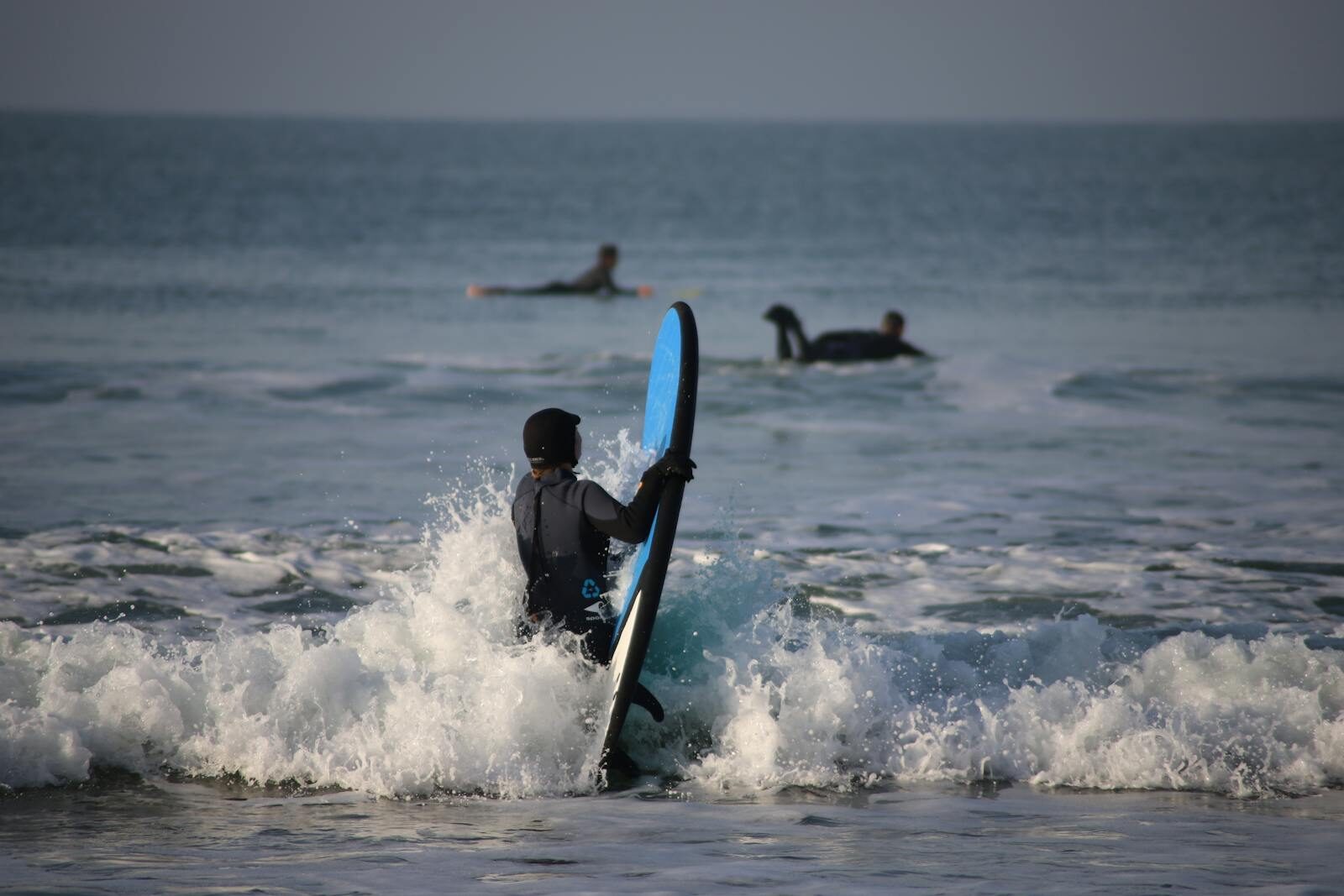
A realistic first-week progression, if you’ve never surfed before:
- Day 1. Two-hour beach session: how to lie on the board, how to paddle, the three-step pop-up, ocean awareness. Then thirty minutes in waist-deep whitewash, popping up on the foam-rolled board. You will fall constantly. This is correct.
- Day 2. Two sessions, both at Tamraght. Catching pushed whitewash on the soft-top, riding straight to the beach. By the afternoon you should ride a few waves all the way in standing up. If you don’t, the school adjusts.
- Day 3. Yoga or rest morning. Afternoon session: graduating from “instructor pushes you into the wave” to paddling yourself into the wave. This is the hard transition. Most people fail at it the first ten times.
- Day 4. Two sessions. First time turning — riding the wave at a slight angle along its face rather than straight to the beach. The point at which surfing starts to feel like a thing you’re doing rather than a thing happening to you.
- Day 5. Move to a slightly more challenging beach (Banana, or a different stretch of Tamraght) if conditions suit. Possibly a smaller board.
- Day 6. Free surf morning — you and the rental board, no instructor, applying what you’ve learned. Most camps have an instructor on the beach for safety.
- Day 7. Rest, recovery, travel. You leave able to ride a green wave to shore, which is the honest minimum for “I can surf.”
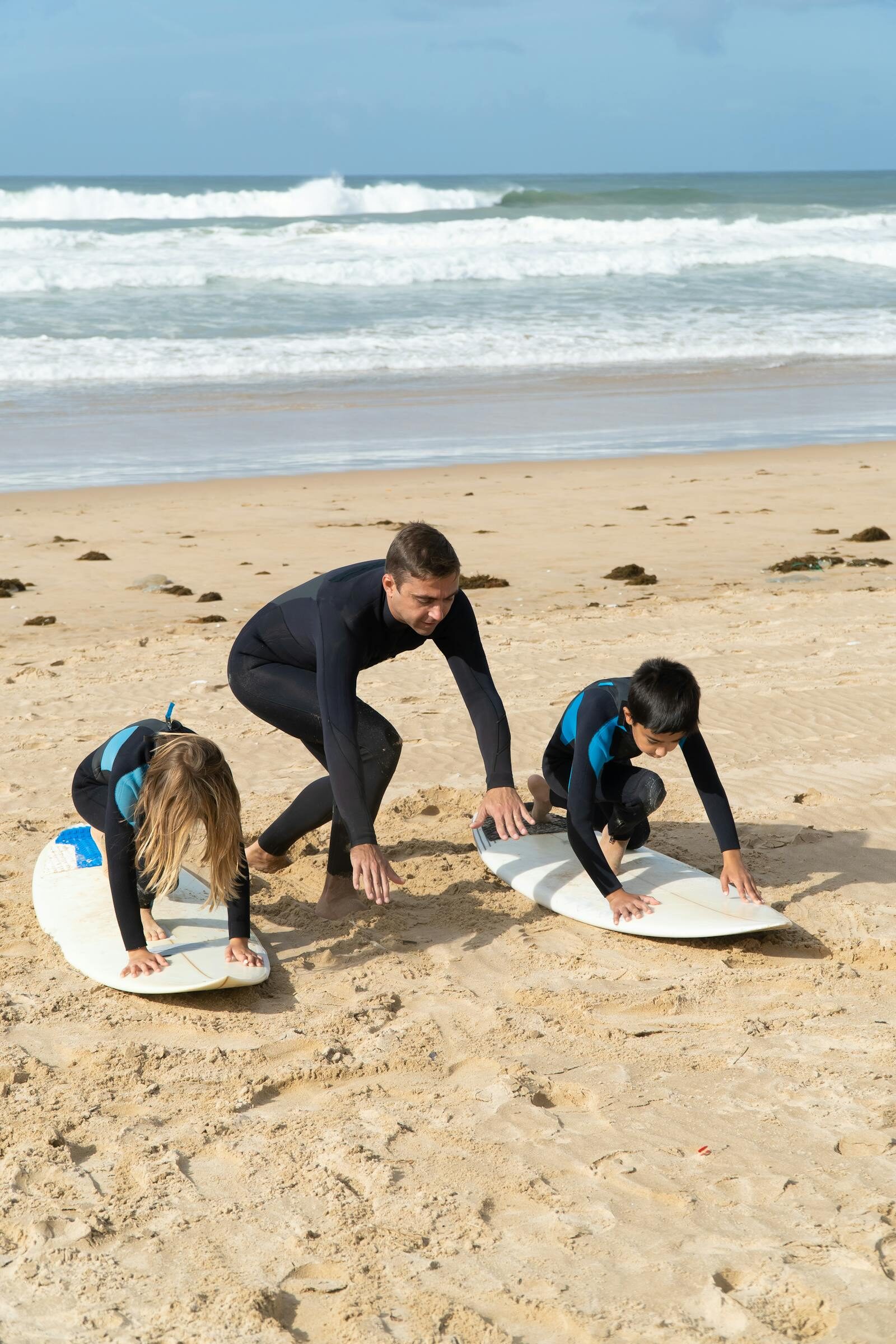
That progression assumes consistent conditions, a competent school, and you committing to two sessions per day. Cut any of those and the progression slows. If you skip days, that’s fine — you’re on holiday — but expect to plateau where you stopped.
After the Lesson: The Rest of the Day
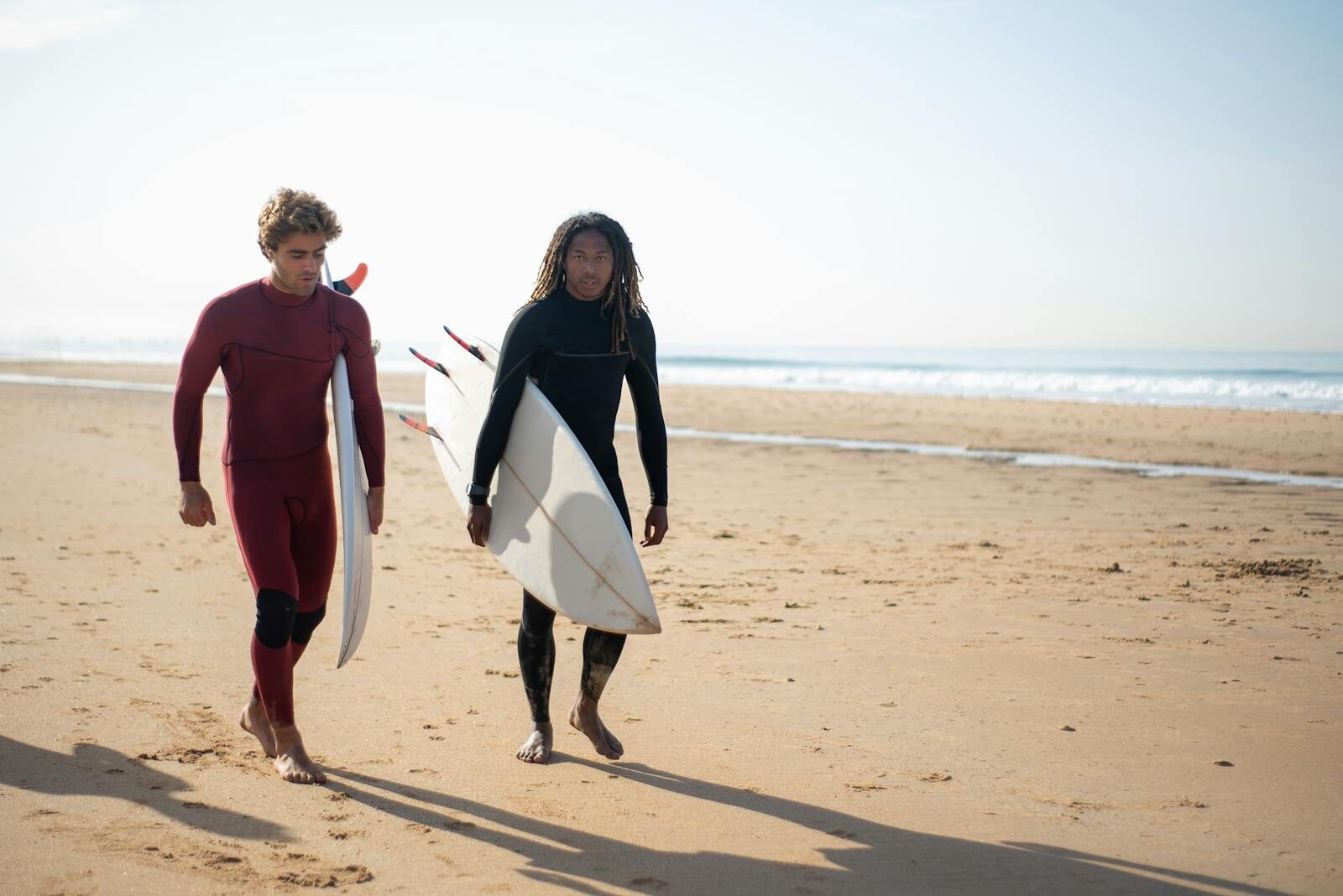
A surf-camp day has a shape. Morning session 8–10am or 9–11am. Lunch back at the camp or a café. Afternoon free or yoga. Second session 3–5pm. Sunset on the rooftop. Dinner. Bed.
The bits between sessions are what separates a good week from a great one. Walk the corniche if you’re near Agadir. Get a real Moroccan tea at one of the village cafés in Taghazout. If you’re in Tamraght, the village is small enough to know in two evenings.
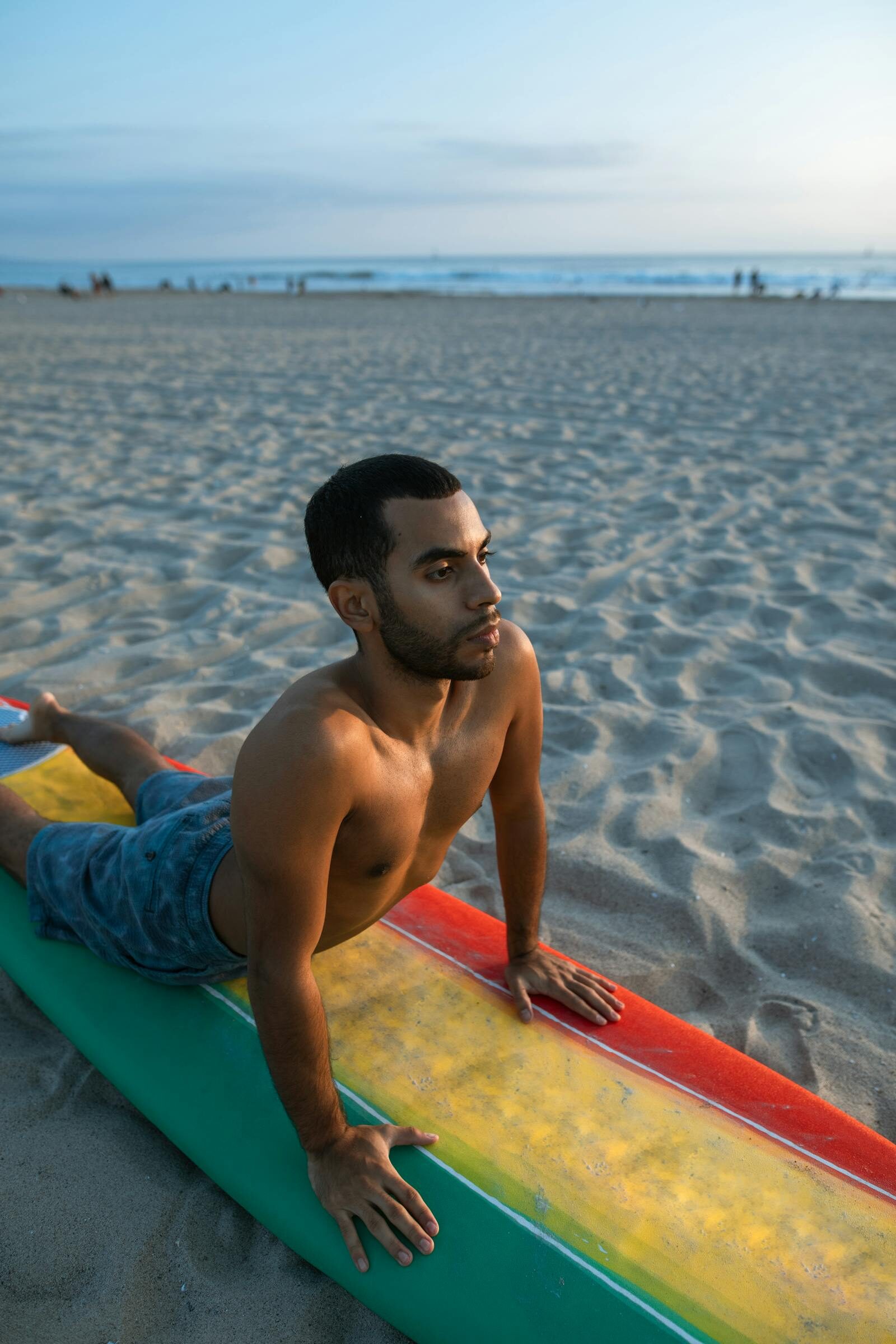
The yoga is not a marketing prop. After three hours of paddling, your shoulders and lower back will be wrecked. A thirty-minute stretch session compounds across the week — you’ll surf better on day five if you yoga on day three.
Where to Base Yourself
Taghazout village, Tamraght, or Agadir city itself — those are the three options. The Taghazout-vs-Tamraght breakdown goes into detail; the short version:
- Taghazout village. Liveliest, walkable, most cafés and surf shops. Slightly further from the beginner beach (15-minute walk or 10-dirham petit taxi to Tamraght).
- Tamraght. Quieter, smaller, right next to the beginner beach. Less evening life; better as a sports retreat.
- Agadir city (specifically Anza). Full hotel infrastructure, closer to the airport, daily commute to whichever break the school chooses. Our agadir-beaches local guide covers the Anza end.
For a structured first-timer trip, Tamraght is usually the right answer — short commute, beginner beach, enough quiet to rest.
One Last Honest Thing
The surf camps of Taghazout and Tamraght are commercial businesses. They’re not selling transcendence; they’re selling a week of instruction, a bed, food, and the camaraderie of twelve strangers falling off the same boards for seven days. That’s a real product. It’s worth what they charge.
What you do with it is on you. Show up rested, book the right week, take the day-one lesson seriously, and don’t paddle out at a wave that’s beyond you. The Atlantic here is gentler than its reputation in the beginner spots and exactly as serious as its reputation everywhere else. Knowing the difference is the lesson.
If, by the end of your week, you’ve ridden one green wave to shore — not whitewash, a real wave — then surfing has happened. That’s the threshold. Plenty of beginners cross it. Plenty don’t, and come back. Either is fine.
Pick honestly. Book the right place. Bring the rashguard.
Keep reading
 comparison
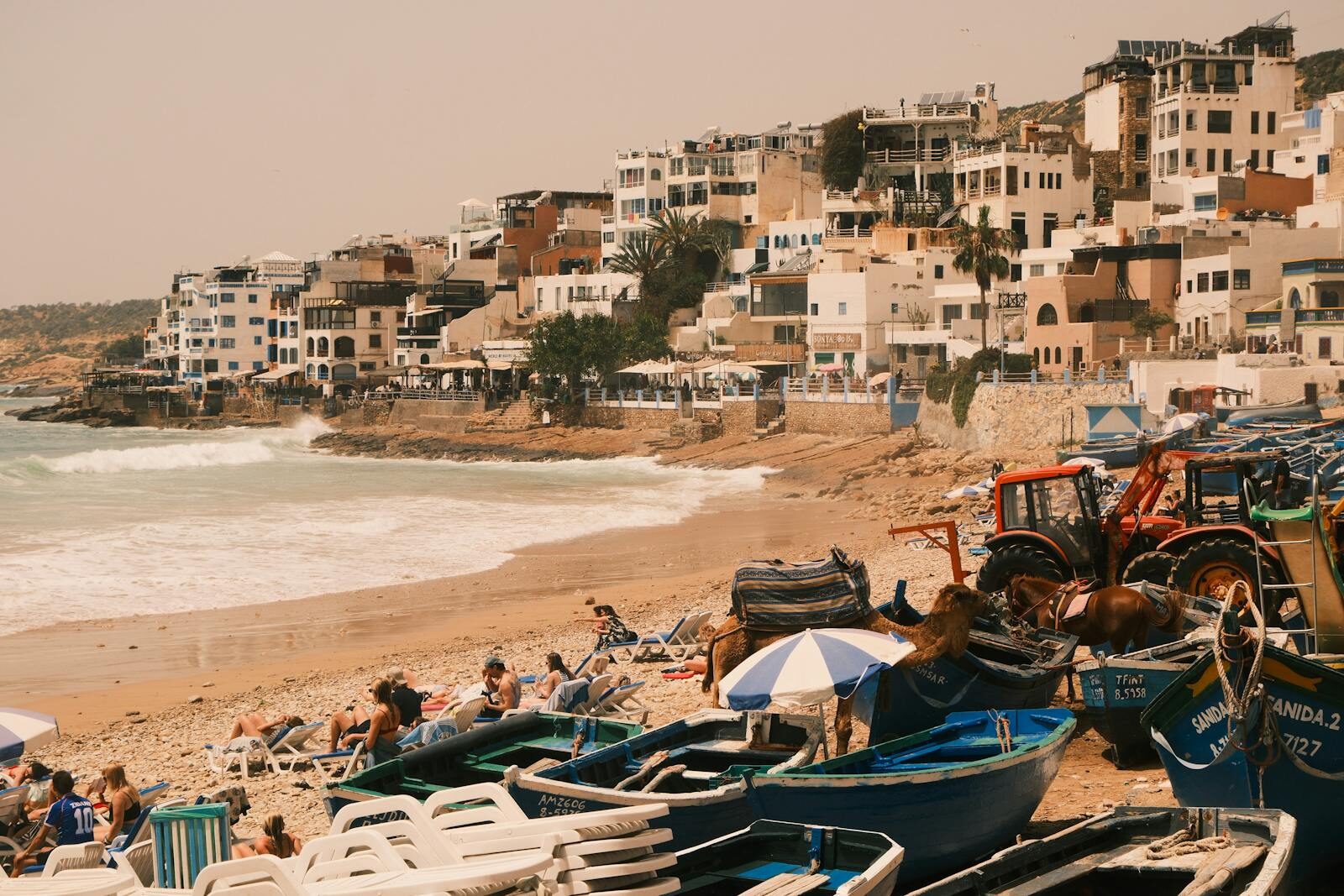
Taghazout vs Tamraght 2026: Where Should You Stay for Surfing?
An honest comparison of Taghazout village and Tamraght for a surf trip in 2026 — wave access, accommodation, food, vibe, cost, and getting around. Pick the right one.
 seasonal
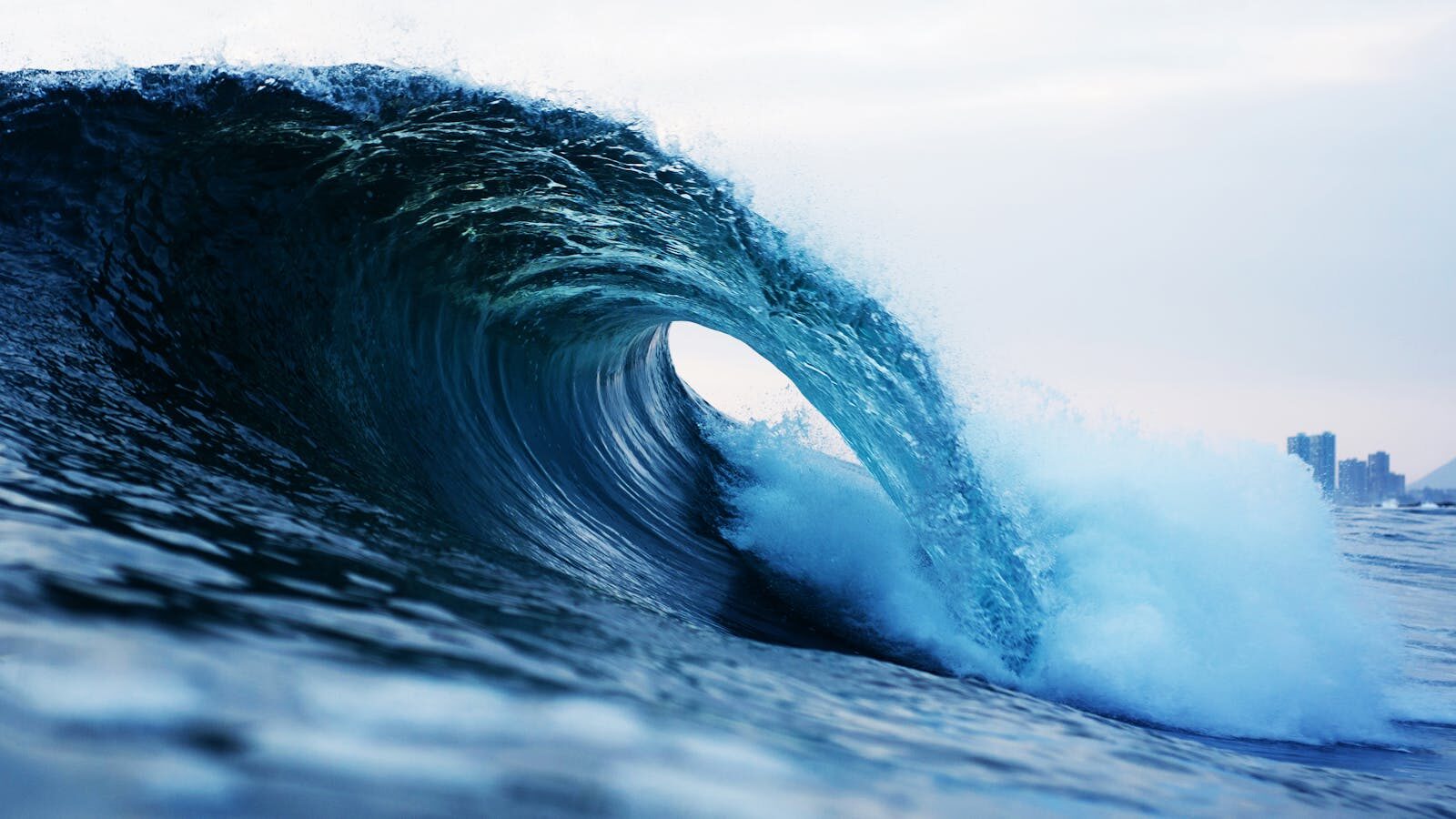
Surfing in Taghazout by Season: When to Go for Your Level 2026
When to surf Taghazout depends on your level. An honest seasonal guide — winter for advanced surfers, summer for beginners, and shoulder months for the rest of us. Water temps, wave size, wetsuit thickness.
 practical
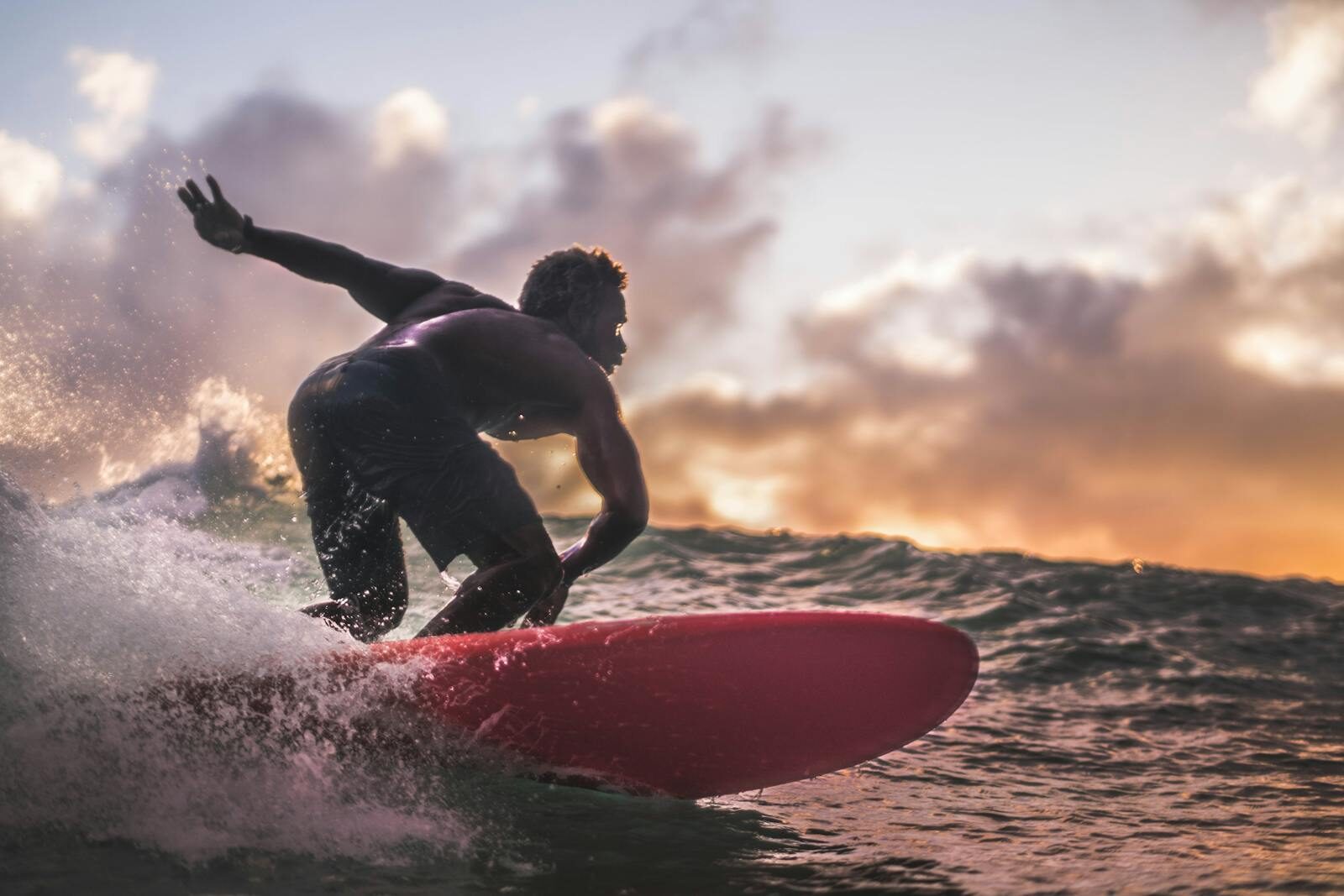
Where to Surf in Taghazout: Every Break Explained 2026
A working surfer's map of every named break between Anza and Imsouane — what each wave does, who it's for, when to skip it, and which board to bring. No hype.