Surfing in Taghazout by Season: When to Go for Your Level 2026
When to surf Taghazout depends on your level. An honest seasonal guide — winter for advanced surfers, summer for beginners, and shoulder months for the rest of us. Water temps, wave size, wetsuit thickness.
Taghazout Has a Winter Surf Reputation. Here’s the Honest Year-Round Picture.
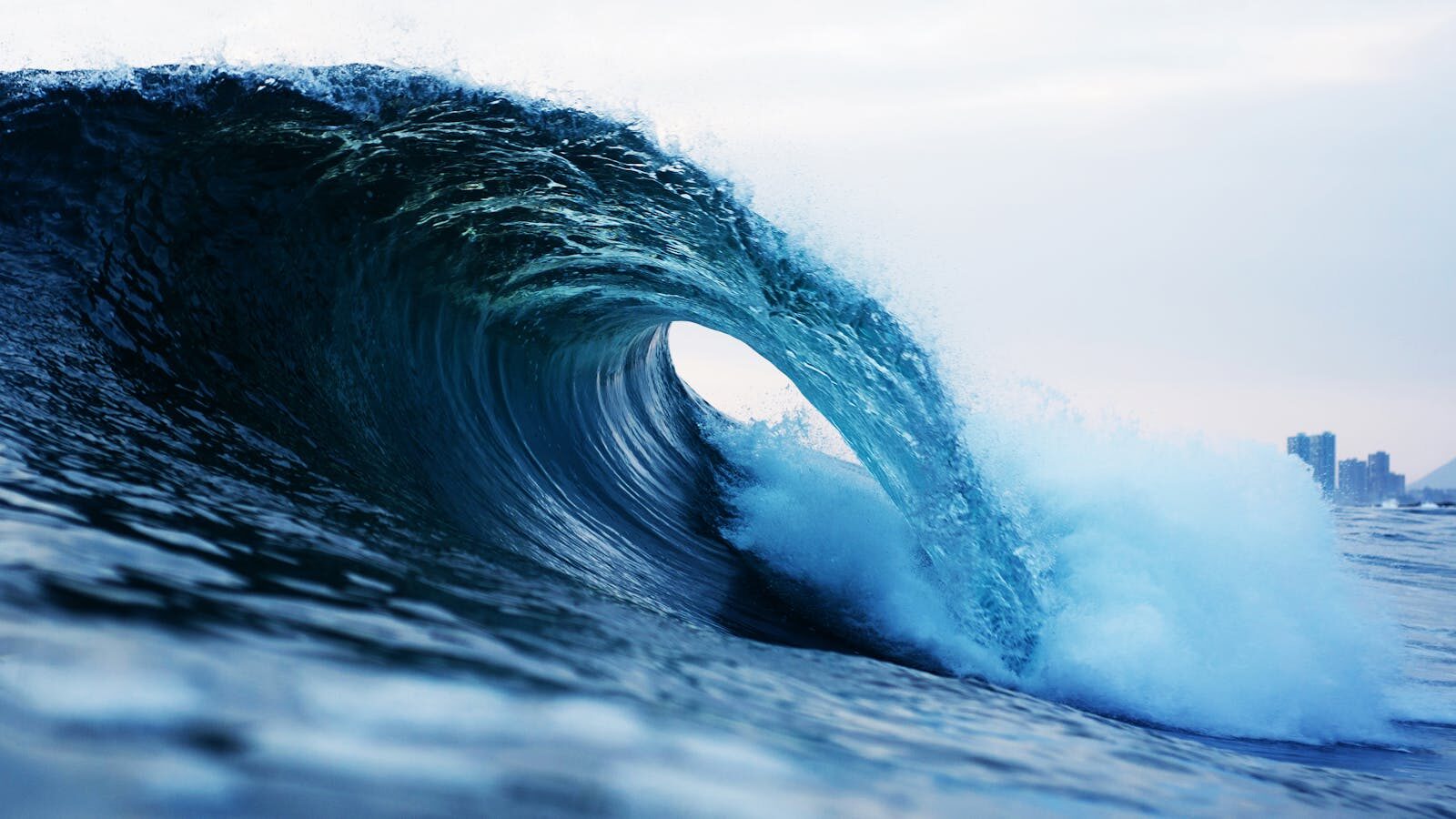
Taghazout’s reputation is built on its winter — the months from October to March when North Atlantic low-pressure systems send long-period swells down the coast of Portugal and Morocco, and the right-hand points around the village turn on. That’s the version of Taghazout that ends up in surf-magazine spreads. It’s accurate. It’s also incomplete.
The honest year-round picture is that Taghazout has four distinct seasons for a surfer, not two, and which one you want depends almost entirely on your level. Advanced surfers chase winter and accept the cold and the crowds. Beginners do better in summer, when the same coast that punishes intermediates in January serves up forgiving waist-high waves at the same beach breaks. Spring and autumn — the shoulder months — split the difference, and for a chunk of travelling surfers they’re the smartest call of the year.
What follows is a quarter-by-quarter breakdown of what to expect in the water, what to wear, and which level of surfer each window is actually for. We’ll hedge where the ocean refuses to cooperate with a calendar. We’ll be specific where we can.
Winter (October–March): The Famous Season
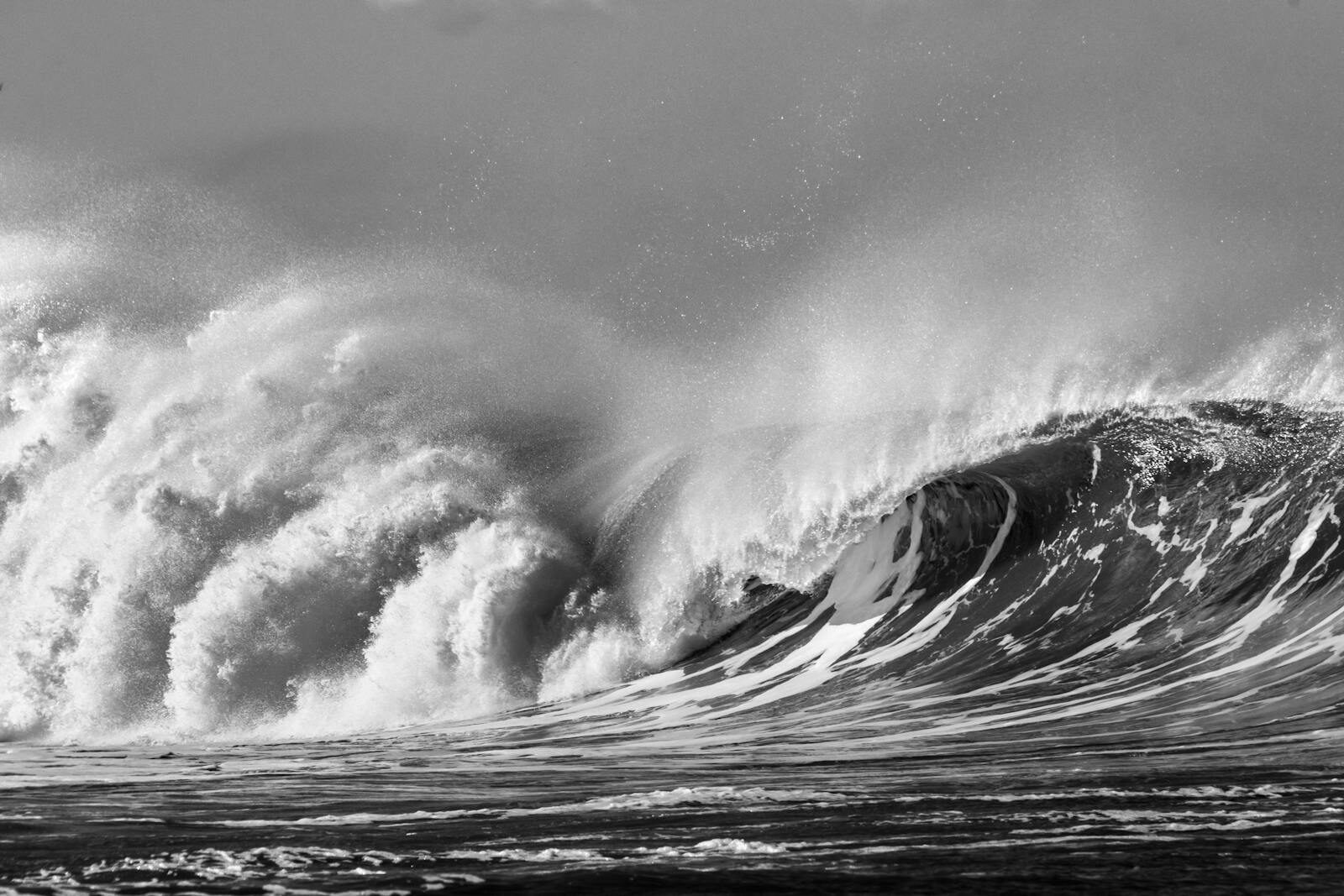
This is what people mean when they say “surf Morocco.” North-Atlantic depressions track south through the autumn, and by November the long-period groundswells start hitting the Moroccan coast with real consistency. Typical winter swells run four to eight feet, head-high to a couple of feet overhead, with regular pulses up to ten feet and the occasional XL swell that closes most of the points out and lights up the heavy reefs.
The point breaks come alive. Anchor Point, Killer Point, La Source, Boilers — the right-hand cobblestone-and-reef setups north of the village — go from flat or unsurfable in summer to working sessions in November, and they stay on through March. The wave at Anchor on a clean head-high day is the reason most foreign surfers book the trip in the first place.
Water temperature in winter sits around 16-18°C at sea level — Atlantic cold. The air is warmer than the water; offshore winds in the morning can feel sharper than the swimming temperature suggests. A 3/2 mm wetsuit is the right call from December through March. October and November you can sometimes get away with a 2 mm shorty for short sessions, but most regulars wear a 3/2 the whole winter.
Crowds are real. December through February is peak season — surf camps full, every guesthouse booked weeks ahead, and the better waves can have thirty surfers on them on a clean weekend morning. Weekday dawn patrol is your friend. If you’ve travelled across continents to surf Taghazout in winter and you’re not in the water by sunrise, you’re losing the calmest window of the day.
Honest qualifier: the forecast can’t tell you everything. A long-period swell from the right angle (W or NW, ideally 290-310°) wraps cleanly into the points; the same swell size from the wrong angle (too south, or too northwest with wind on it) closes everything out. Surfline and Magicseaweed help; the local surf-camp guides help more. Don’t book a four-day winter trip and expect every day to be Anchor at three feet overhead. Some days will be ten feet of unsurfable closeout. Some will be flat.
Spring (April–May): The Honest Shoulder
Spring is when the winter swells start to fade in frequency but the consistency is still there. Typical wave size: two to five feet, waist-high to head-high, with the occasional bigger pulse from a late North-Atlantic system. The water starts warming — 17-19°C by April, edging toward 20°C by late May — and most regulars step down to a 2 mm shorty or springsuit for the warmer mornings, keeping the 3/2 on hand for the cooler weeks.
The point breaks still work when a swell shows up, but the gaps between them get longer. You’ll get four good days and then three flat ones, or six clean sessions in a row and then a week of small wind-swell. For intermediate surfers, this is arguably the best window of the year — the waves are big enough to be interesting and small enough to be approachable, and the crowds drop sharply as the camp tours wind down. By late April the dawn lineup at Imourane that had thirty surfers in February might have eight.
Air temperature climbs into the low-to-mid-20s. The afternoon onshore winds start picking up — typical for spring transitions everywhere — which means morning sessions become the standard. We cover the broader seasonal context, including the trade-offs against the rest of Agadir’s calendar, in our best time to visit Agadir piece.
Summer (June–August): The Beginner’s Window
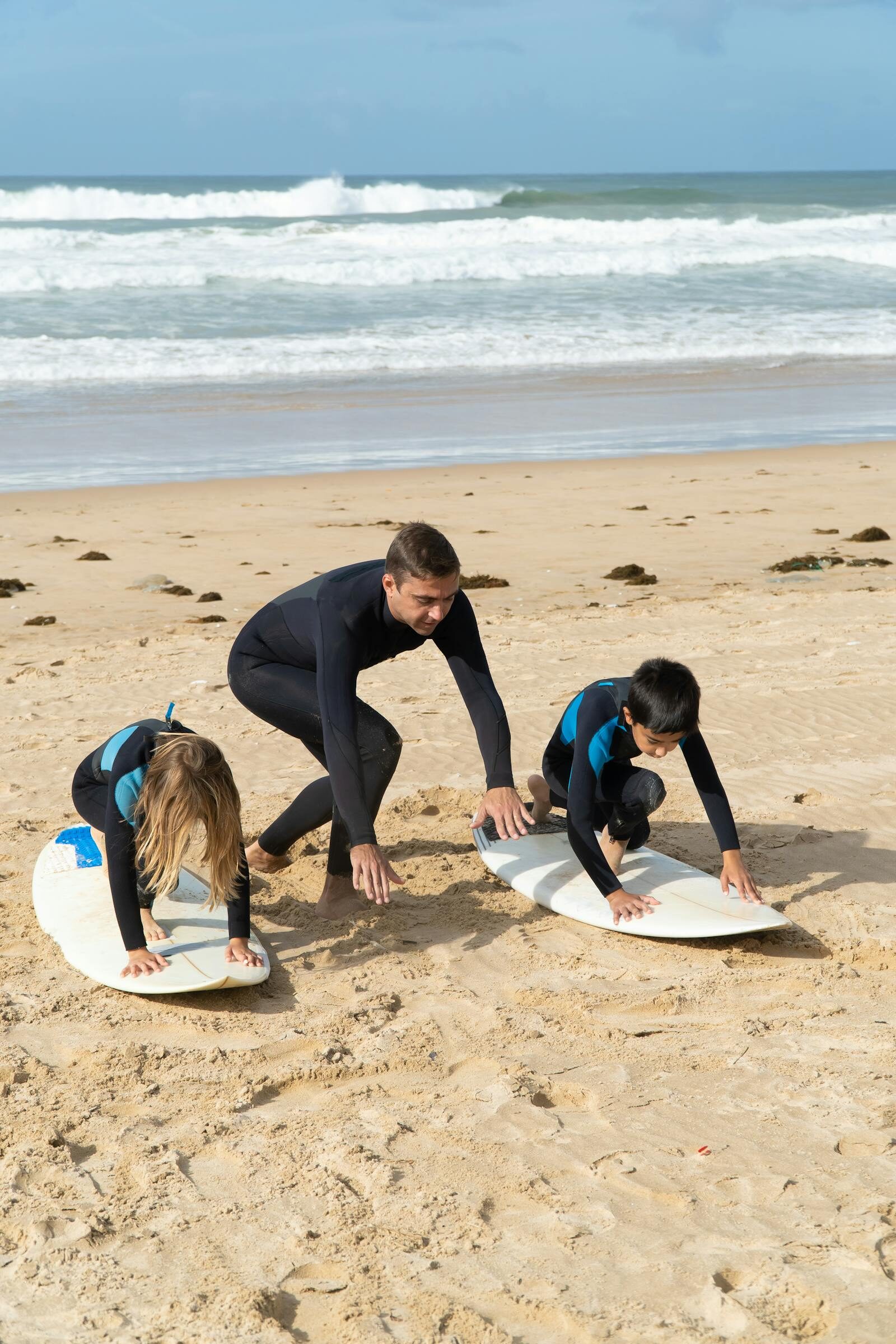
This is the season Taghazout’s reputation doesn’t talk about. Summer is small — North Atlantic swells weaken, the consistent groundswell that defines the winter goes away, and what’s left is mostly wind-swell from local systems and the occasional southern-hemisphere pulse wrapping in. Typical wave size: one to three feet, ankle-high to chest-high. Many days are below knee-high.
For an advanced surfer, this can be frustrating. For a beginner, it is genuinely close to ideal.
Water temperature climbs to 20-22°C through July and August. Most people surf in boardshorts or a bikini by midsummer; a 2 mm shorty for early mornings is overkill for most. The southern beach breaks — Tamraght, Devil’s Rock, the Croco Beach end — turn into long, gentle whitewater sections that are forgiving when you fall. Surf schools run their busiest months in summer for exactly this reason. The beginner’s honest guide to surfing in Morocco breaks down how to use this window.
The trade-offs: it gets hot. Inland highs hit 35-40°C in July; the coast stays cooler thanks to the Atlantic, but the dry summer sun is fierce and the wind is often onshore by 10am. Pack more sunblock than you think you need. We cover the broader summer-in-Agadir picture in our beaches guide.
Summer is also Ramadan in some years (the dates rotate roughly eleven days earlier each year on the Gregorian calendar — in 2026 Ramadan is mid-February to mid-March, so it doesn’t overlap summer; in 2028 it will edge into the summer months). When it does overlap, expect quieter mornings on the beach, surf-school operating hours that shift later, and a different rhythm in the villages.
Autumn (September–October): The Sweet Spot
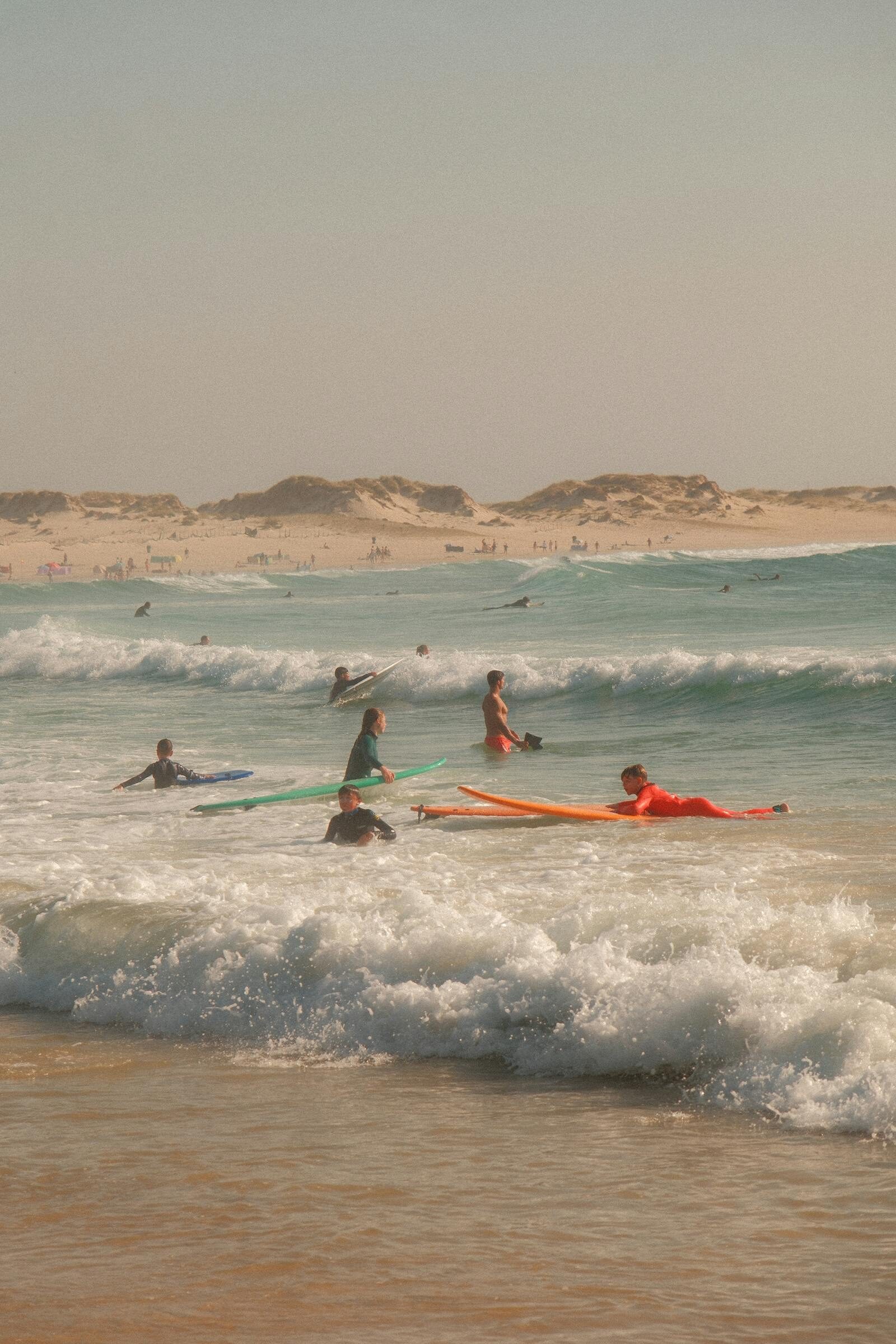
If we had to pick one season to recommend for the largest possible range of surfers, it would be autumn. September and October sit in a window where the water is still summer-warm (20-22°C through September, dipping to 18-20°C by mid-October), the first autumn swells start arriving (typically three-to-six-foot wind-swell and small ground-swell pulses by late September, building through October), and the crowds are thin — the summer family-holiday wave has gone home, and the winter surf-camp tour has not yet arrived.
A 2 mm shorty is the standard wetsuit through September; by mid-to-late October you’ll want a 2/2 or thin 3/2 for the cooler mornings, particularly if you’re paddling more than an hour. Boardshorts work for the warmest weeks in early September.
For intermediates who can handle chest-to-head-high but don’t want the crowds and cold of January, autumn is where you want to be. For travelling photographers and slow-trip surfers, October light is the best of the year — long golden mornings, soft afternoons.
The catch: consistency. Autumn swells are less reliable than winter. You might get a clean head-high week, or you might get five days of two-foot wind-swell. The probability of a great session is high; the certainty is lower than December.
When to Go for Your Level
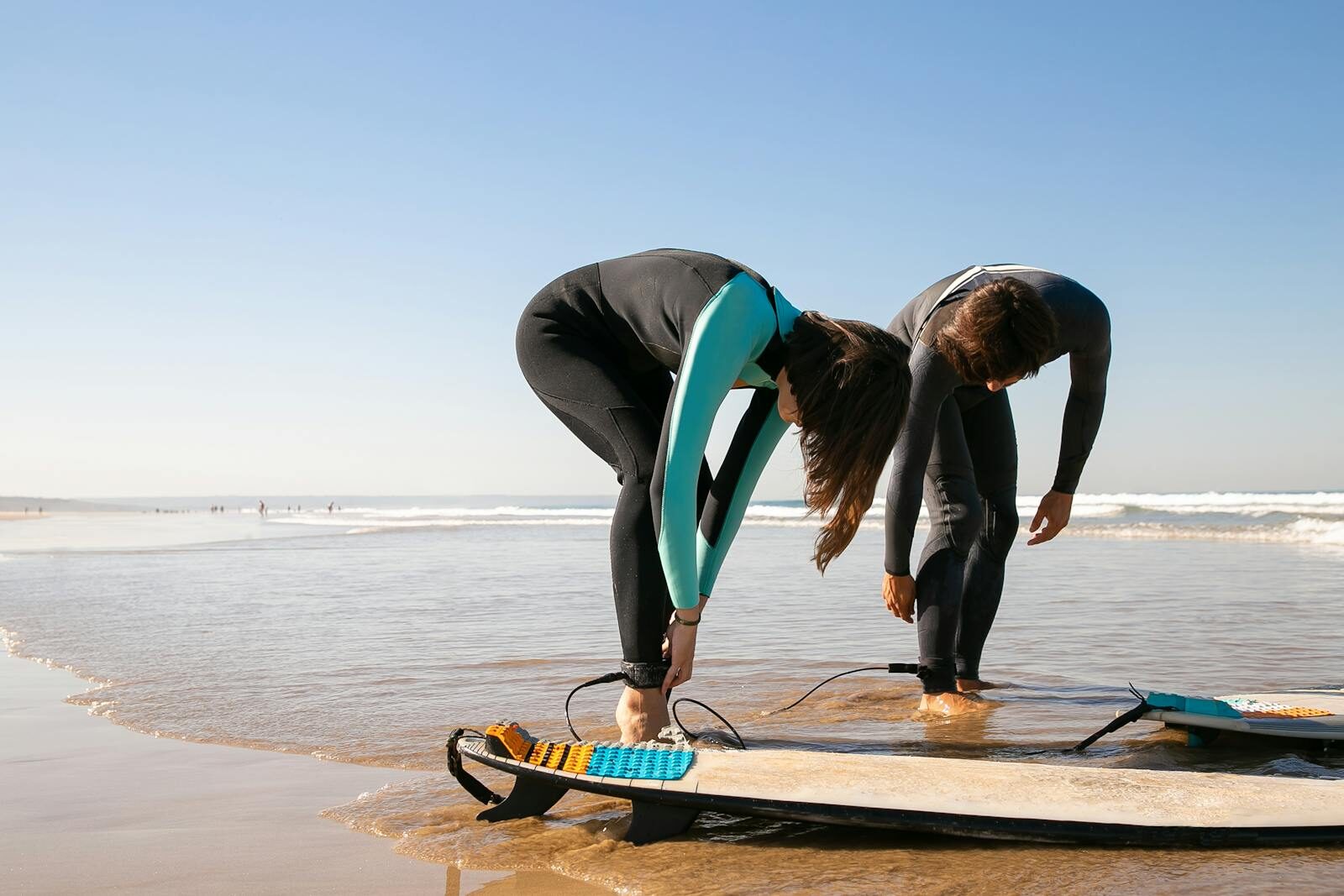
Match the season to honesty about where you are as a surfer, not aspiration.
Complete beginner / first surf trip: Summer (June-August). The waves are small, the water is warm, you don’t need a wetsuit thicker than a 2 mm, and the surf schools are running at full capacity. Trying to learn at Anchor Point in January is a recipe for getting hurt or quitting. Tamraght and the southern beach breaks in July are forgiving.
Improving beginner / early intermediate (popping up consistently, can paddle into a green wave but not turn on it yet): Late spring (April-May) or early autumn (September-early October). The waves are big enough to be interesting but rarely above head-high, the crowds are manageable, and there are plenty of mellow point waves like Imourane and Banana that don’t require advanced positioning.
Solid intermediate (turning on the wave, picking sections, ready to surf the points): Autumn (September-October) for warmth and uncrowded sessions; mid-winter (late January-March) if you’re willing to wear a 3/2, get up at sunrise, and share the lineup. November-December is also a strong window — water is still 18°C, the swells are firing, and the early-winter crowd hasn’t fully arrived.
Advanced (charging head-high+, looking for size and barrels): Deep winter (December-February). This is the season the breaks were built for. Plan for crowds; offset by surfing the less famous points or by going on weekdays. For a detailed breakdown of which break suits which level, see where to surf in Taghazout. For where to base yourself for surf access, Taghazout vs Tamraght compares the two villages, and the French-language seasonal guide at Taghazoutcamp goes deeper on swell windows for advanced surfers and on the long-range forecast tools their guides use.
The Daily Rhythm — Why Dawn Patrol Wins
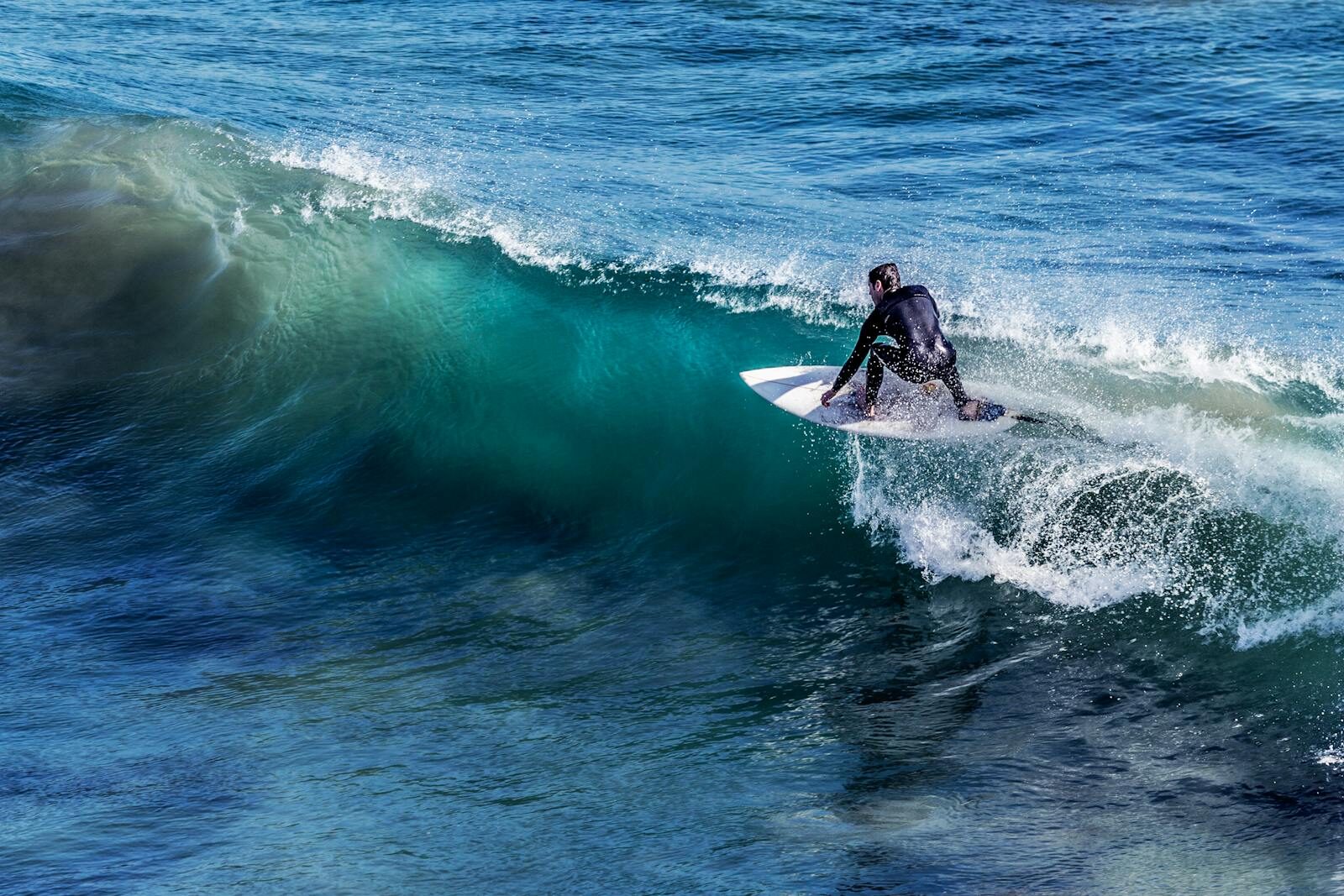
Whatever season you come in, the same daily pattern applies, and it’s important enough that we’ll dedicate a section to it.
Mornings on the Moroccan Atlantic coast are typically offshore — light easterly breezes blowing from the land toward the sea, which holds up the wave face and produces the clean, glassy conditions surfers want. By mid-morning the wind starts to swing onshore. By midday in summer, and by mid-afternoon in winter, the wind is onshore — coming off the sea — and the waves get bumpy, mushy, and harder to read.
Practical implication: the first session of the day is the best session of the day, almost without exception. Sunrise is the gold window. The peak of the swell, the cleanest face, the smallest crowd. Dawn patrol is not a Taghazout cliché; it is the operational reality of this coast.
A second window opens in some seasons in the early evening, an hour or two before sunset, when the onshore wind sometimes drops back and the waves clean up again. This is more reliable in autumn and spring than in midwinter or midsummer. Don’t count on it; treat it as a bonus session when it happens.
Afternoon sessions in summer, especially between 1pm and 4pm, are often unsurfably onshore — and exposed to the strongest sun. Pick your morning, accept your afternoon for a nap or a long lunch, and you’ll surf better.
What to Pack by Season
The shortlist, because it matters:
Winter (Dec-Feb):
- Wetsuit: 3/2 mm full suit. Don’t bring less.
- Board: something with a bit more volume than your home break would demand if you’re not used to cold water — the wetsuit slows your paddle.
- Sun protection: even in winter, the Atlantic sun is strong; SPF 30+ on the face and ears.
- Extras: a wetsuit changing mat or poncho — the beach parking lots are open to wind.
Spring (Apr-May) and Autumn (Sep-Oct):
- Wetsuit: 2 mm shorty or springsuit, plus a thin 3/2 for cooler mornings or longer sessions.
- Board: your normal quiver. The waves are forgiving enough that you can ride what you like.
- Sun protection: SPF 30+, reapplied after each session. The autumn sun in particular is deceptively strong.
Summer (Jun-Aug):
- Wetsuit: boardshorts/bikini. Maybe a 2 mm shorty for the earliest mornings or if you run cold.
- Board: softboard or higher-volume mid-length if you’re learning. The waves don’t reward shortboards in most summer conditions.
- Sun protection: SPF 50+, zinc on the face, hat for between sessions, more water than you think you need.
For where to stay across the seasons, our roundup of Taghazout’s best surf hostels and camps for 2026 covers options at every budget. For specific surf-camp listings, Taghazout Waves and We Surf Morocco both run year-round.
When the Lineup Gets Ugly
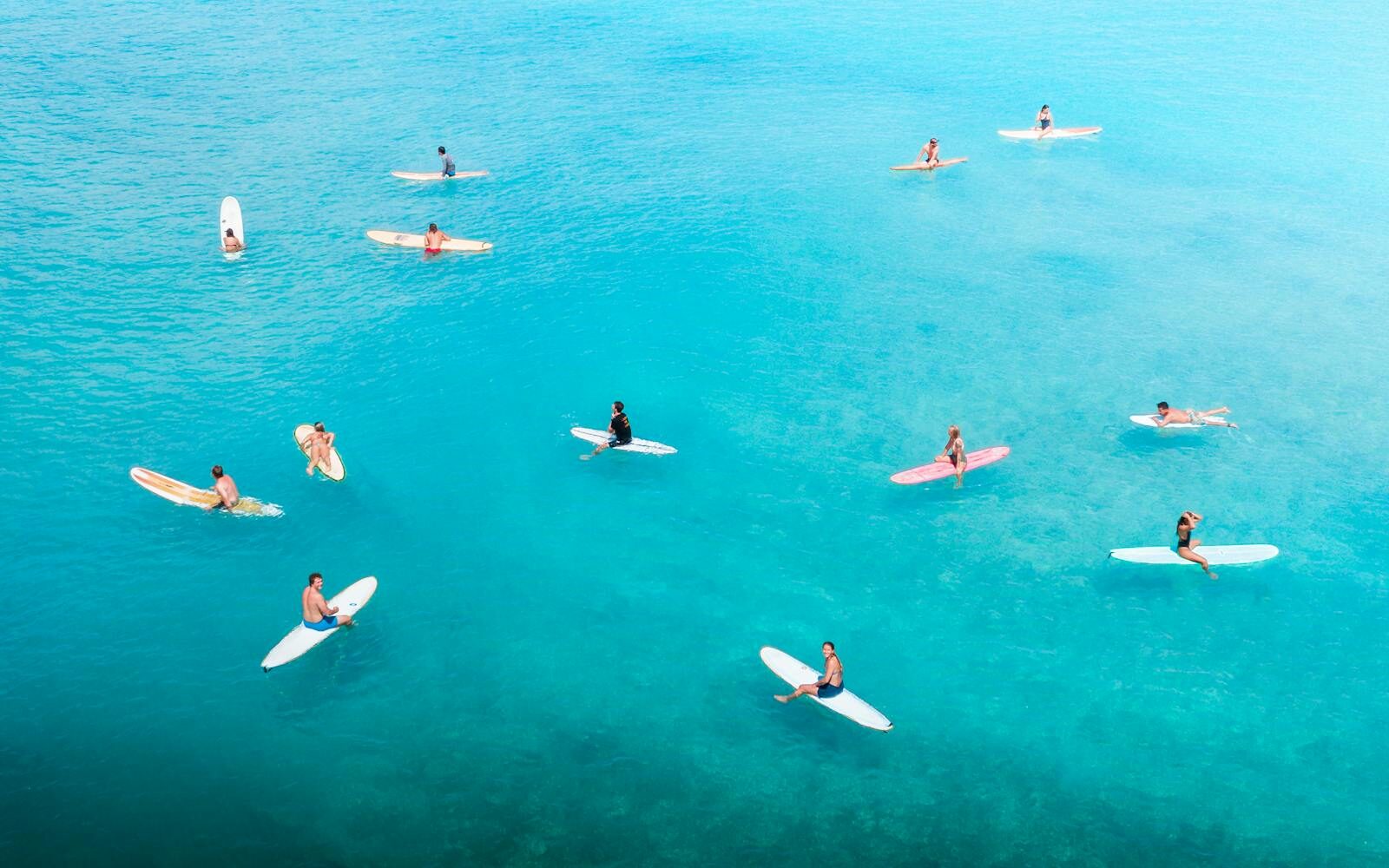
A season-specific warning, because no amount of clever timing helps if you arrive on the wrong weekend.
Mid-winter weekends, peak season. Late December through February, weekends bring an influx of European day-trippers from Agadir hotels plus the full surf-camp population. Anchor Point on a clean Saturday morning in January can have forty surfers on the peak and a long, frustrating wait for waves. Solutions: surf weekdays if you can; or surf the less famous points (Imourane, Boilers on the right swell, the southern beach breaks) where the crowd is thinner; or accept the wait and shake the kook out.
Easter / European school holidays. Two weeks of the year in spring when families with kids who surf descend on the coast. Crowds aren’t winter-level, but the camp prices and lineup density both jump. Build around them if you can.
For the broader question of where to base yourself relative to all of this, our Taghazout pillar guide walks through village vs. Tamraght vs. Agadir as options.
When to Skip a Session Entirely
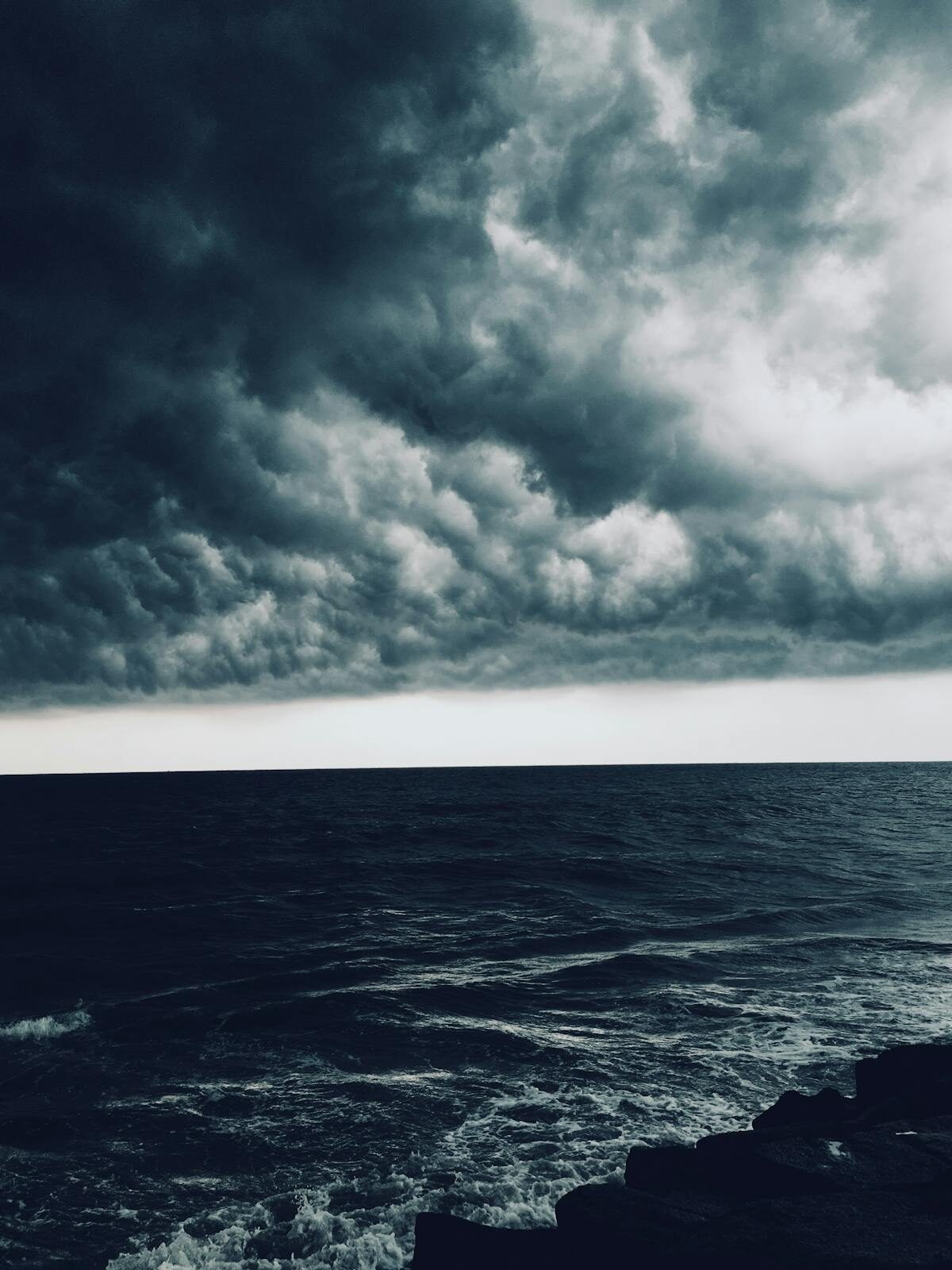
Three situations where the honest move is to leave the board in the rack:
Strong onshore wind on choppy water. You will get a workout; you will not get a good wave. Save your energy for the next morning’s offshore window.
A big winter swell when you’re not ready for it. “Big” here means anything overhead that’s breaking on reef or close to rocks. If you’ve been popping up at Tamraght in waist-high for a week, do not paddle out at Killer Point on a clean six-foot day. The lineup will respect you more if you watch, and you’ll be in one piece for the next session at a beach break.
The hour around sunset during Ramadan. When Ramadan falls during the surfable months, the hour before sunset is the iftar window — the breaking of the fast. Local surfers and shop staff are heading home for the meal. Out of respect for the village and out of practical concern for not being alone in the lineup at dusk, schedule around it. We touch on this in our overall getting-to-Taghazout transport piece.
The forecast says “10 ft @ 18 sec” and you’re an intermediate. Long-period winter swells from this size class close out the points and break far outside on reefs that are usually safe. This is the day to watch from the cliff at Anchor, learn what the wave looks like on size, and surf a sheltered beach break instead.
One Last Thing
Forecasts get you close. They don’t get you all the way. The Moroccan coast has microclimates — the wind can be cross-onshore at Banana while it’s clean offshore at Imourane fifteen minutes north, and a single tide change can transform a closeout into a peeling right-hander. The surfers who get the most out of a Taghazout trip in any season are the ones who arrive with a flexible plan, ask the locals at the camp or in the village, and stay willing to drive twenty minutes north or south when the forecast at one spot doesn’t match what they wanted.
Pick your season honestly for your level. Show up with the right wetsuit. Be in the water by sunrise. The rest, Taghazout sorts out itself.
Keep reading
 practical
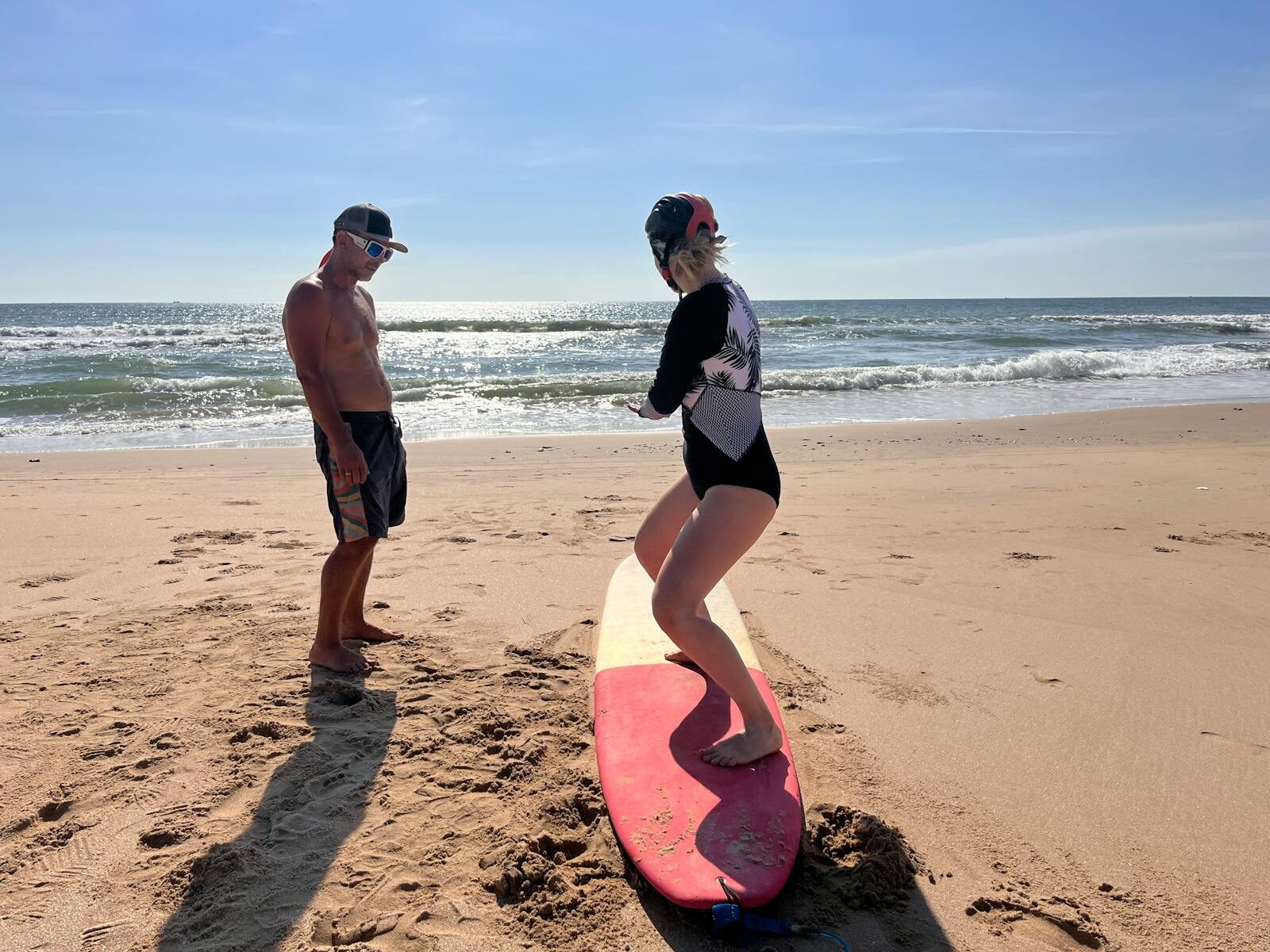
Surfing for Beginners in Morocco: Taghazout's Honest Reality 2026
A first-timer's honest guide to learning to surf in Morocco. The right breaks, the right week, the realistic costs, the surf-camps that actually teach beginners — without the brochure gloss.
 comparison
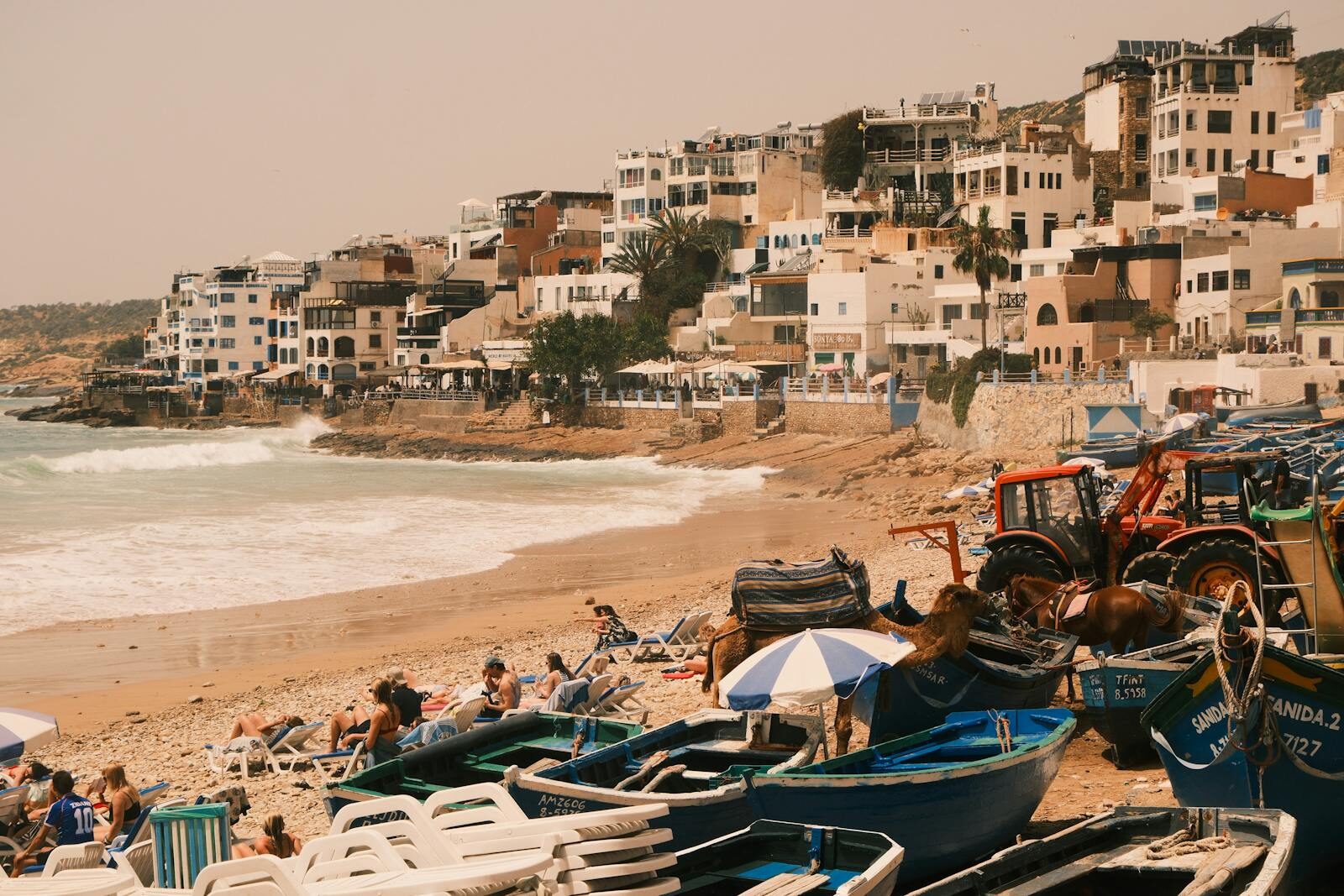
Taghazout vs Tamraght 2026: Where Should You Stay for Surfing?
An honest comparison of Taghazout village and Tamraght for a surf trip in 2026 — wave access, accommodation, food, vibe, cost, and getting around. Pick the right one.
 practical
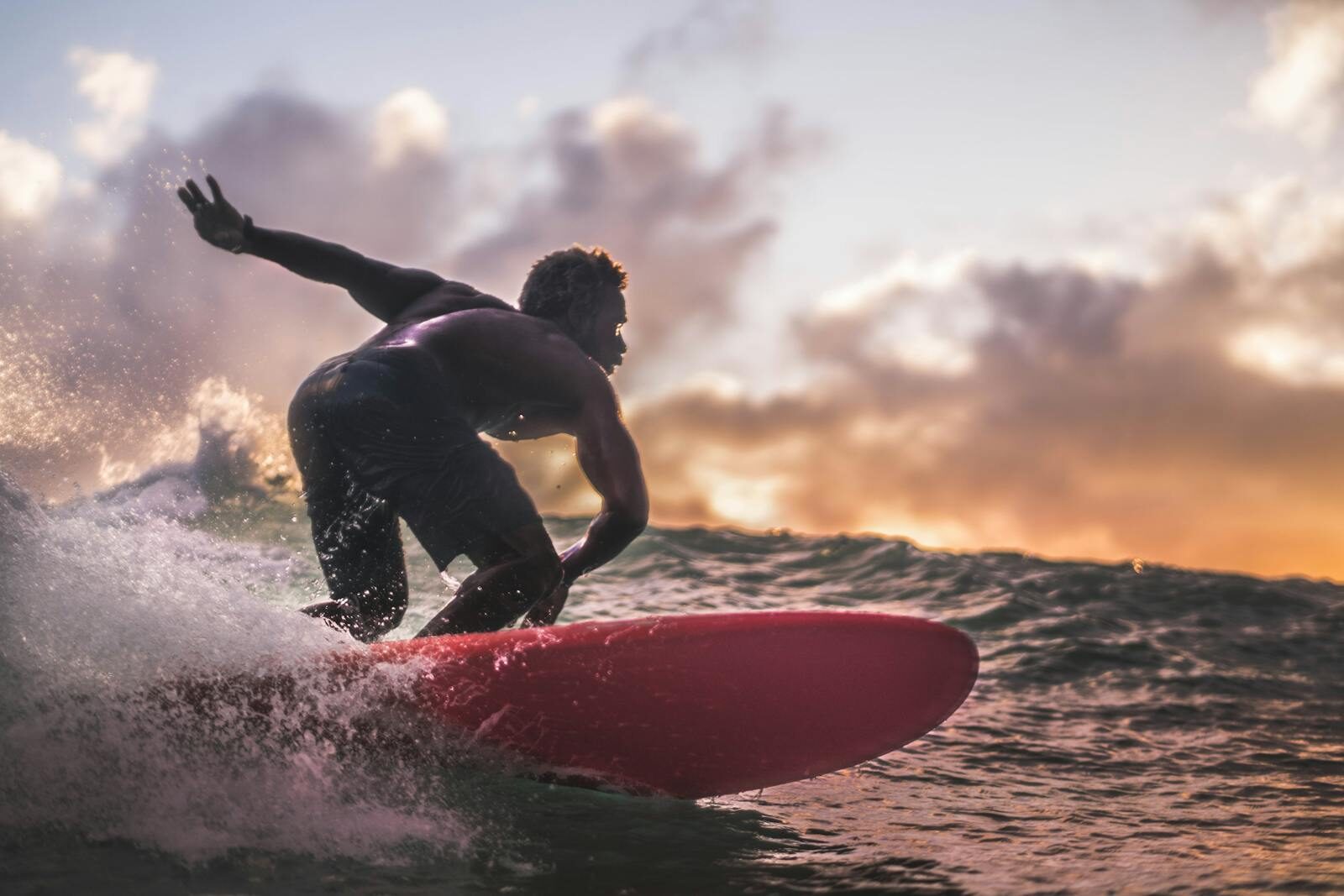
Where to Surf in Taghazout: Every Break Explained 2026
A working surfer's map of every named break between Anza and Imsouane — what each wave does, who it's for, when to skip it, and which board to bring. No hype.