Taghazout, Morocco: The Complete 2026 Guide for Surfers and Slow Travelers
A pillar guide to Taghazout in 2026 — the Atlantic fishing village that surfers found in the 80s, what's actually here now, where to stay, what to eat, and what it isn't.
What Taghazout Actually Is
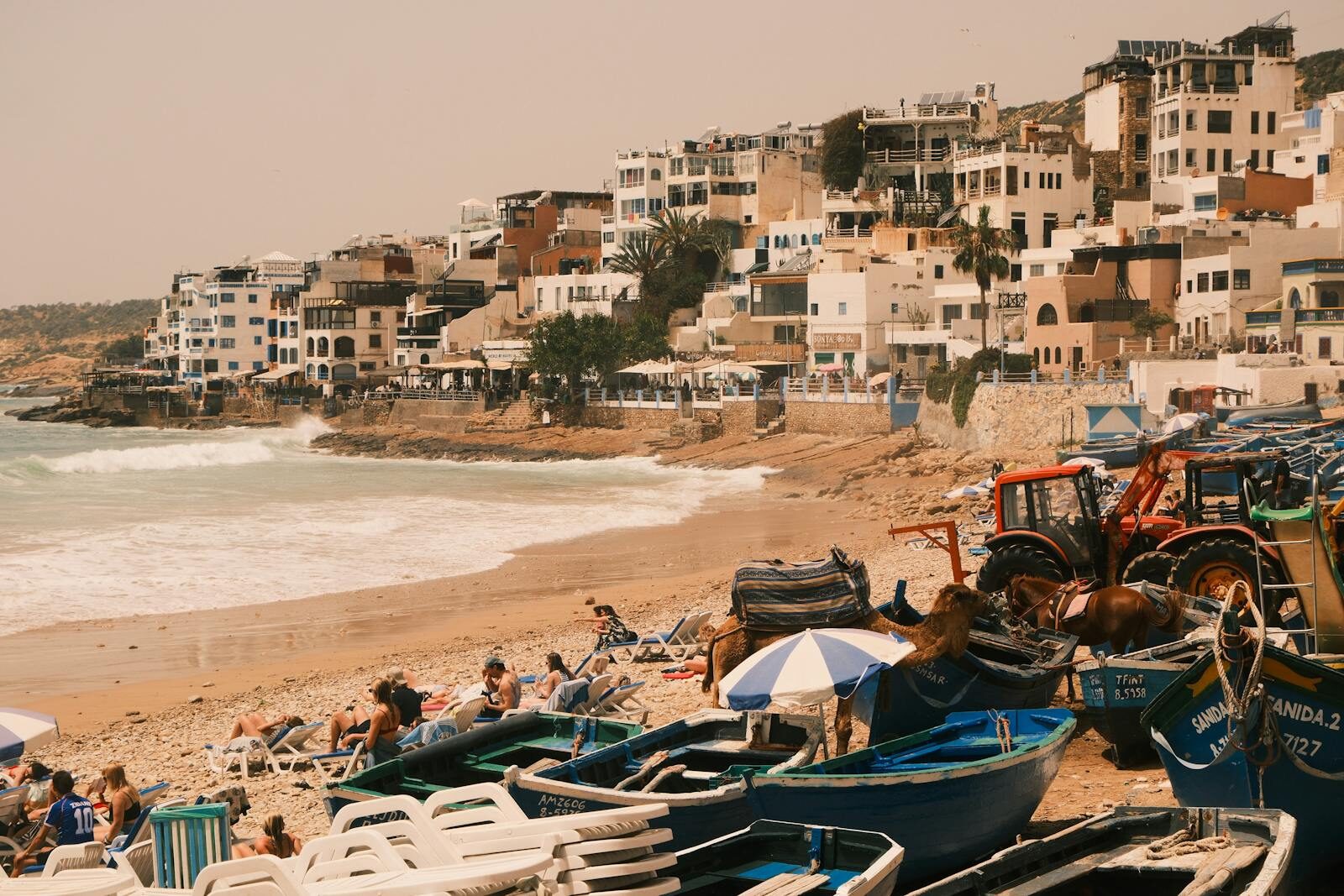
Taghazout is a small fishing village on the Atlantic coast of Morocco, nineteen kilometres north of Agadir. Whitewashed houses stacked against a low headland, a working harbour at one end, a long curved beach at the other, and behind it the dry brown hills of the Souss-Massa back country. The population is somewhere around five thousand — nobody is sure exactly, because the number that sleeps here in February doubles by October when the swell arrives. Until the late 1970s it was a place where families fished sardines and pressed argan. Then the surfers found it.
The first wave of foreigners — a handful of Australians and Californians, then French and British — came through in the late seventies and early eighties, looking at the points the way you look at a wave you didn’t expect to exist. They stayed in fishermen’s houses for the price of a meal. They left, came back, brought friends, brought boards. By the nineties Taghazout had a reputation in surf magazines. By the 2010s it had hostels, surf camps, smoothie bars, and the slow, ambivalent transformation of a working village into a tourism economy.
What it is in 2026 is two things in the same place. Taghazout the village — the old centre with the narrow streets and the fishing boats and the cafés where men in djellabas still drink tea and ignore the visitors — is one thing. Taghazout Bay — the resort development built since 2010 on the empty stretch of coast between Taghazout village and Tamraght — is something else. Taghazout Bay is luxury hotels, golf courses, manicured beach paths, gated residential. The village is not. People who confuse the two end up disappointed by both.
This guide is mostly about the village and the surf coast that flanks it. If you came looking for a five-star resort with a kids’ club, that’s Taghazout Bay; this is not where to find advice on that. If you came looking for the place that surfers and slow travellers actually mean when they say “Taghazout,” read on.
The Waves in One Paragraph
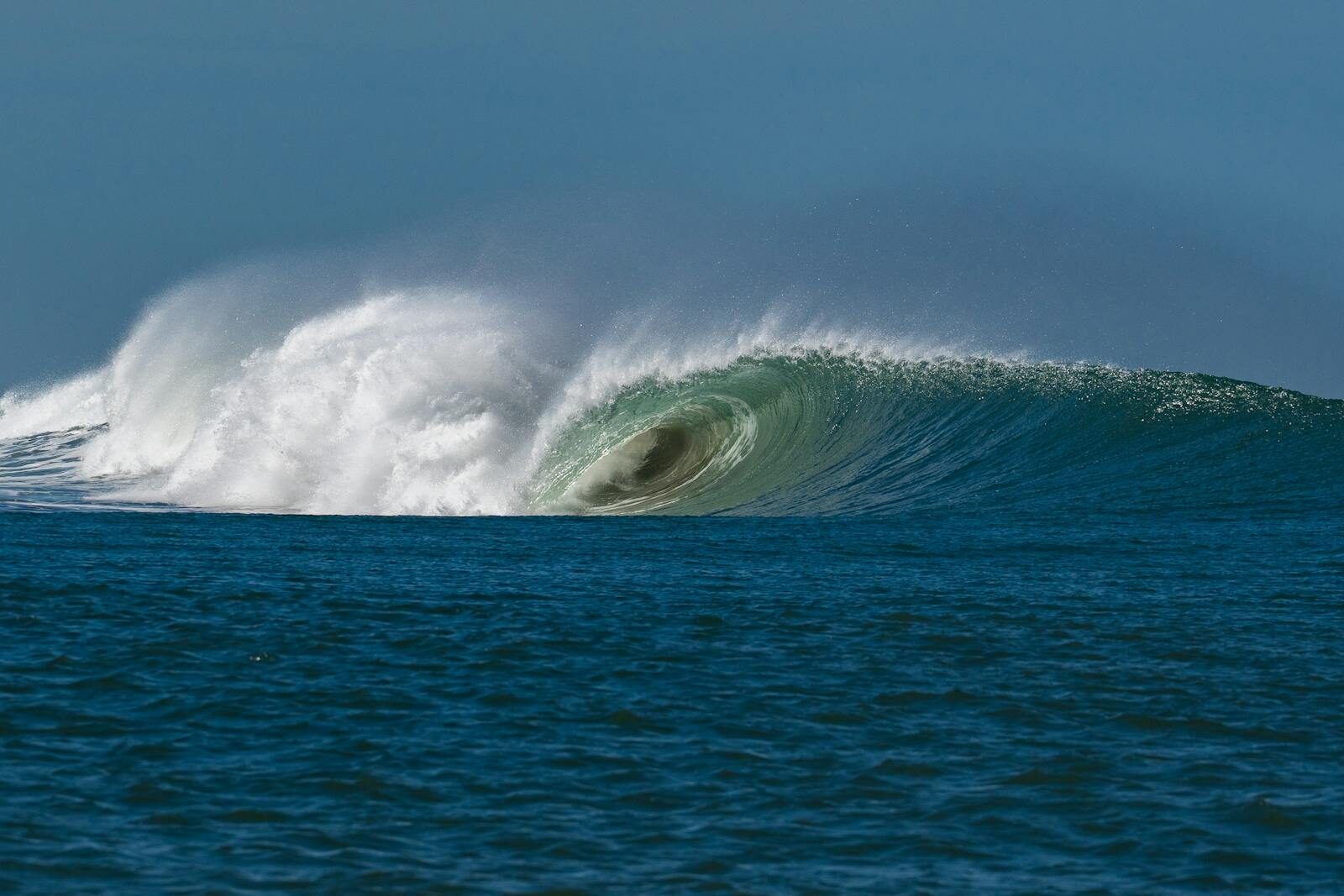
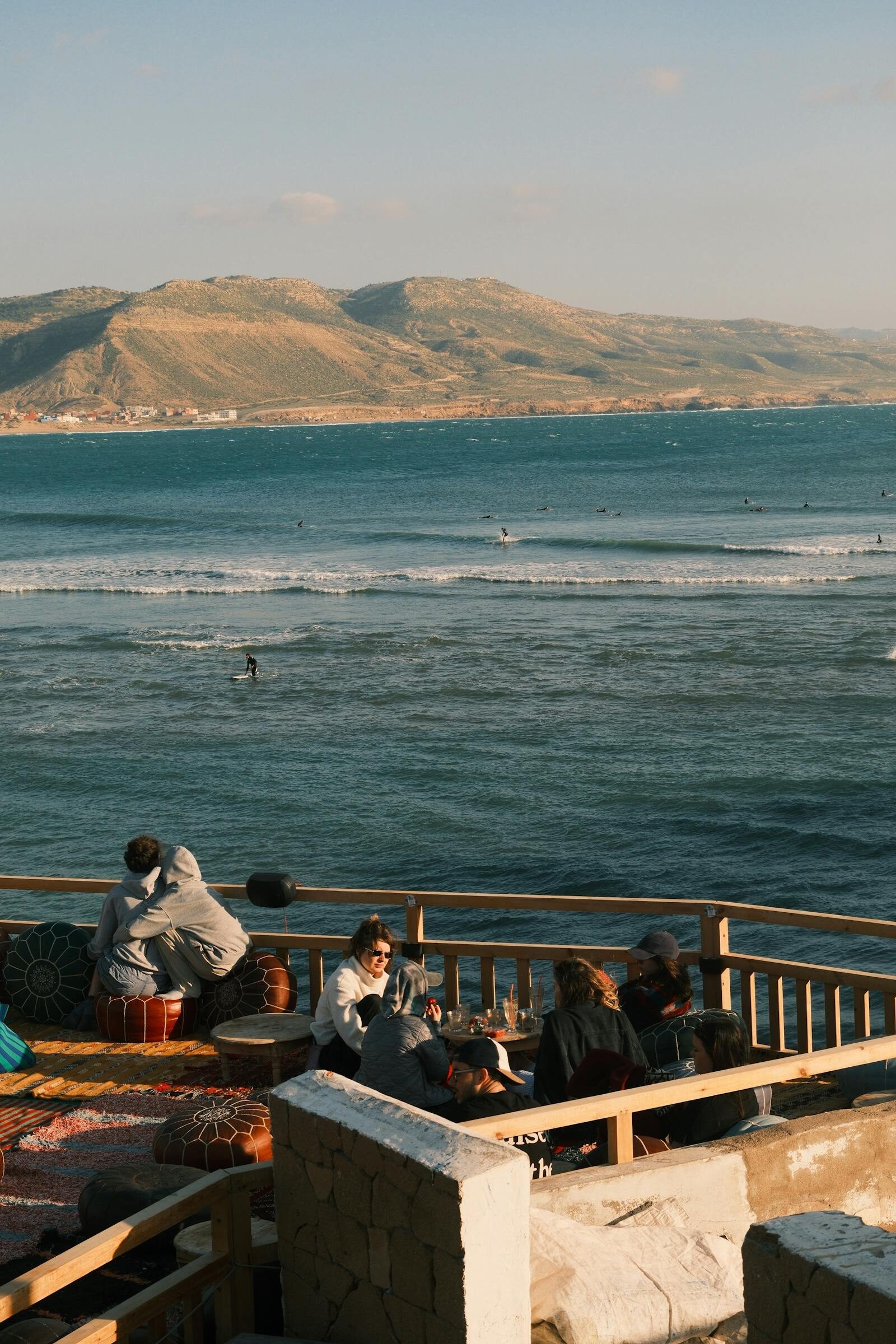
Taghazout’s waves are point breaks — long peeling right-handers off rocky headlands, the kind of wave you can ride for a full minute on a good day. The famous names are Anchor Point (also called Anchors), Killer Point, Hash Point, Mysteries, La Source, and Boilers; the lesser-known ones are arguably better for not being in the magazines. Prime season is October to March, when winter Atlantic swell wraps in from the northwest. Outside that window the points get smaller and the beachbreaks at Tamraght and Imourane fill in for beginners and longboarders. The water is cooler than people expect — a 3/2 wetsuit in winter, a spring suit in summer. For a wave-by-wave breakdown including which break suits which level on which swell, see where to surf in Taghazout, every break explained.
When to Go
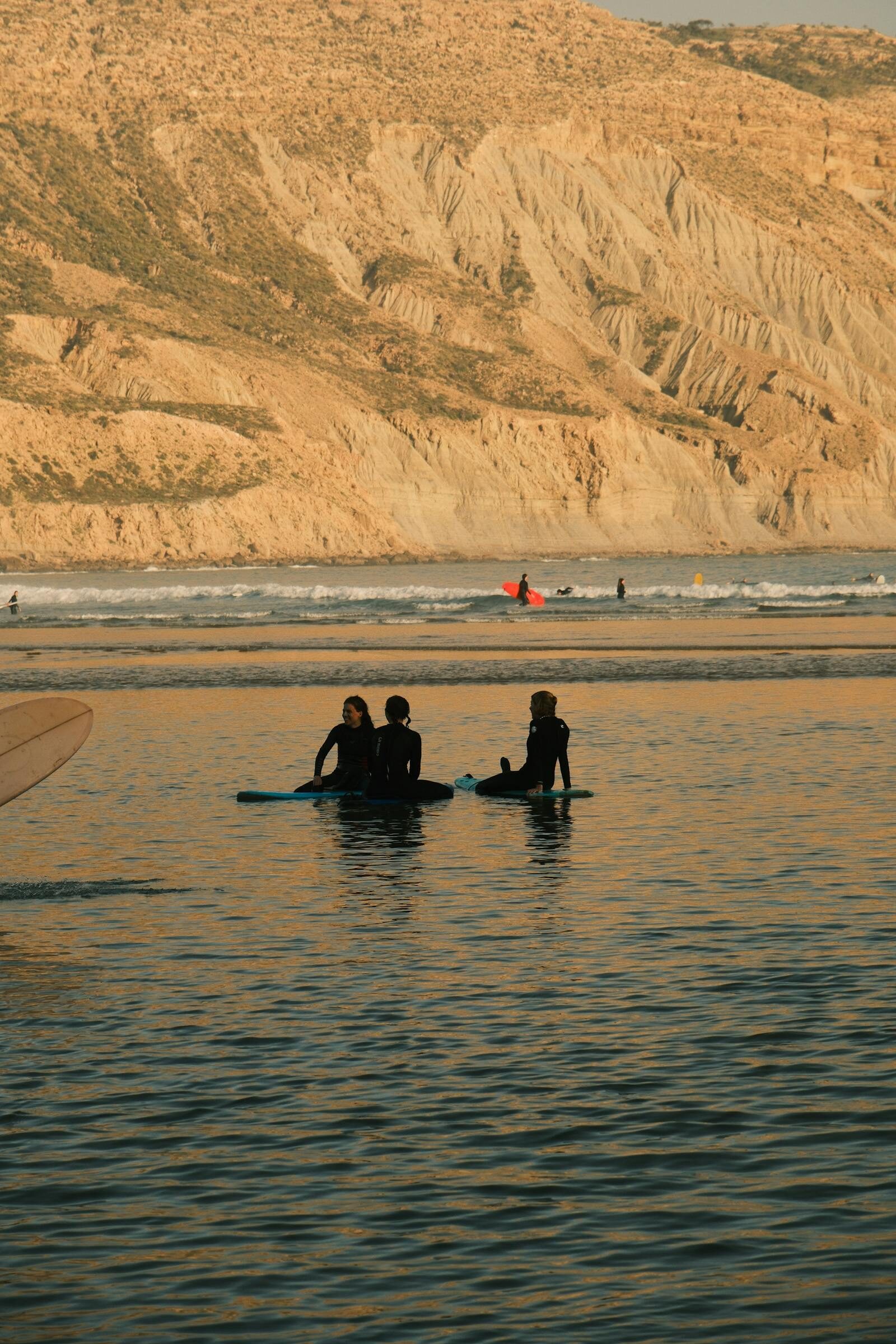
Quick version: serious surfers want November through February, when the points are at their most consistent and the crowds at the famous breaks build accordingly. March and October are shoulder months — still good waves, fewer people, more variable. April to September is the small-wave window — fine for beginners, fine for slow travel, less interesting if you came for Anchors at six foot. The summer also brings hotter inland temperatures and more local Moroccan visitors on weekends. For a month-by-month decision matrix — swell size, crowd density, water temperature, what to pack — see our piece on surfing Taghazout by season.
Weather across the year is mild. The Atlantic moderates everything: rarely below 14°C even at dawn in January, rarely above 30°C even in August. The wind is the variable nobody warns you about. From roughly April to September a northeasterly trade wind picks up by mid-morning and blows the points out by lunchtime — surfers go dawn patrol or wait for the evening glass-off. In winter the wind is gentler and more cooperative.
Where to Stay
Where you sleep in the Taghazout area decides what trip you have. There are four broad zones.
Taghazout village. The old centre, on foot from the harbour and from Hash Point and Anchor Point. This is where the surf hostels and the surf camps cluster — places like We Surf Morocco, Taghazout Waves Morocco Surf Camp, and Surf Berbere sit within five minutes of the lineup. Walls are whitewashed, lanes are narrow, the call to prayer wakes you at dawn whether or not you wanted to surf at dawn. This is the choice if you came to surf and you want the village experience.
The flanks of the village. A handful of guesthouses and self-catering apartments sit on the hillside above the centre or just north toward Imourane. Hashpoint Surfcamp is one of the more established options in this band. Quieter than the centre, a five-minute walk to the breaks, a touch more privacy.
Tamraght. The smaller village three kilometres south of Taghazout, with its own beach and its own beginner-friendly waves. Cheaper rents, longer to walk to Anchor Point but closer to Banana Point and to the airport. Many surf schools base here for exactly that reason. We get into the trade-offs at length in Taghazout vs Tamraght — where to stay for surfing.
Taghazout Bay. The luxury resort cluster between the two villages — Fairmont, Hyatt, Hilton, Radisson Blu, golf, conference, beach club. A different product entirely. Useful if you want a hotel-level experience and don’t mind that the village is a short taxi ride away. We don’t cover those resorts in depth; the editorial focus here is the village. For the resort-side comparison and the luxury Taghazout Bay perspective specifically, the independent Taghazoutcamp guide covers that cluster more thoroughly than we do.
For a fuller list of surf-specific accommodation across all four zones with honest notes on each, our roundup of the best surf hostels and camps in Taghazout for 2026 is the most complete index we maintain.
Beginner Reality Check
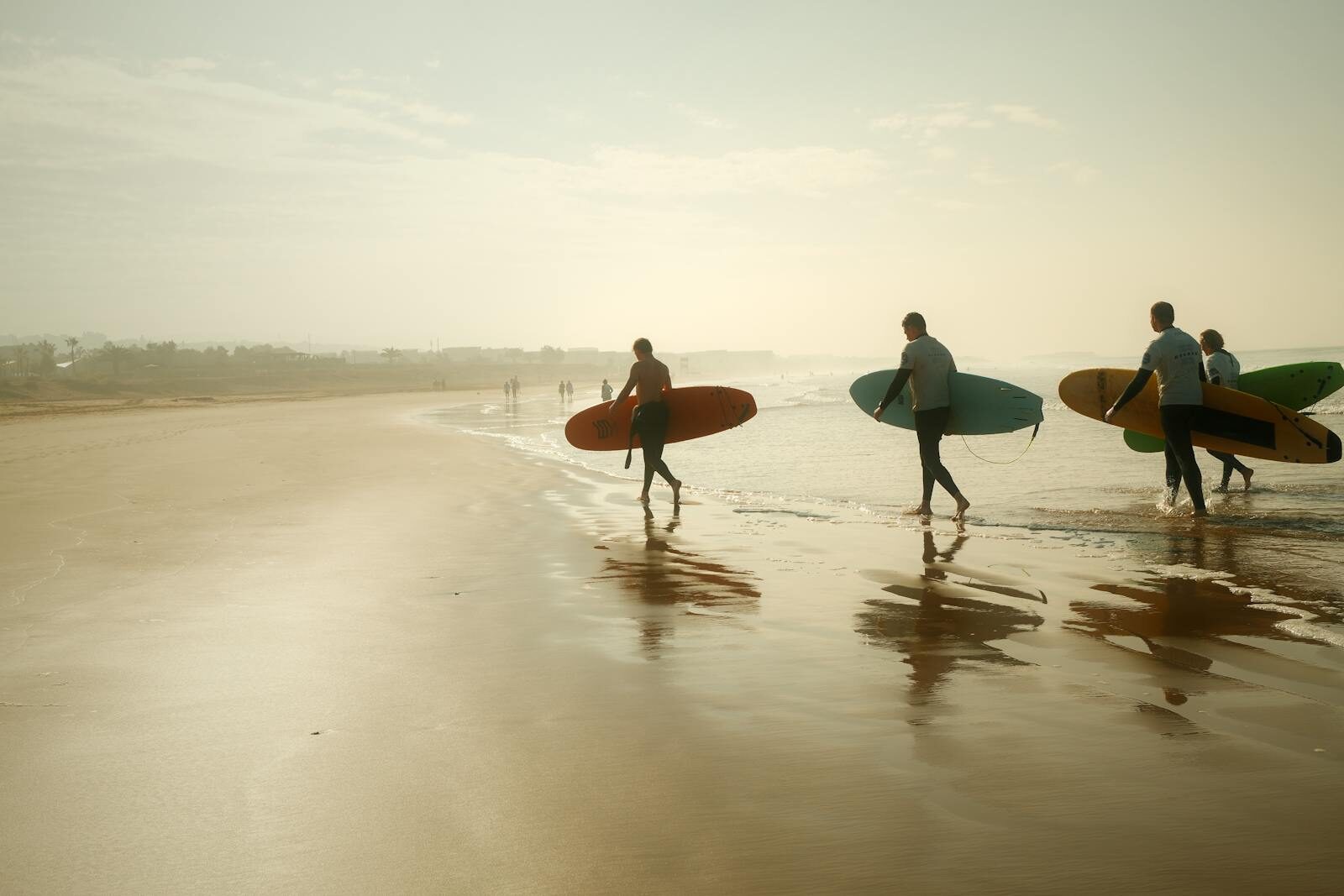
A short paragraph because honesty matters here. Taghazout’s famous breaks are not beginner waves. Anchor Point, Killer Point and Hash Point are powerful, rocky, and crowded with locals and travelling intermediates who have spent their winter learning to read the take-off. A first-week surfer in those lineups is a hazard to themselves and an annoyance to everyone else. The right places to actually learn are the sandy beachbreaks — Devil’s Rock, Tamraght beach, Banana, Crocro — and you should learn with one of the village’s surf schools, not by paddling out alone. We’ve written a much longer honest version of this conversation in surfing for beginners in Taghazout — the honest guide. Read it before you book.
What to Eat and Where
Taghazout’s food scene is the polite hybrid of two cuisines and one demographic. Half the cafés serve smoothie bowls, avocado toast, flat whites, and shakshuka written in English on a chalkboard — the surf-traveller staples that exist anywhere from Canggu to Ericeira. The other half serve tagine, harira soup, grilled sardines straight off the harbour, fresh bread, mint tea, and the Berber bread-and-argan breakfast called amlou. Both are legitimate, both are easy to find, neither is the village’s “real” food because both have been here long enough to be real now.
A few honest pointers. For grilled fish, walk down to the harbour and follow your nose to the small stalls where the fishermen sell what they landed that morning — whole sardines, sea bream, sometimes squid, charred over coals, eaten with bread and salt and a wedge of lemon. Expect to pay 50 to 80 dirhams for a plate. For tagine, the small family-run places on the inland side of the main road do this better and cheaper than the seafront restaurants — ask the staff at your surf camp where they actually eat. For coffee, the surf cafés are the place; a flat white costs around 25 dirhams, which is high by Moroccan standards and low by European ones. For smoothie bowls, you will not have trouble finding one; if anything the village has too many.
A general rule that holds across most Moroccan beach towns: the further inland you walk from the seafront, the more honest the prices get and the more local the food becomes. The most expensive coffee in Taghazout is on the corner with the best ocean view; the best harira is four streets back, in a café with no view at all.
Getting There
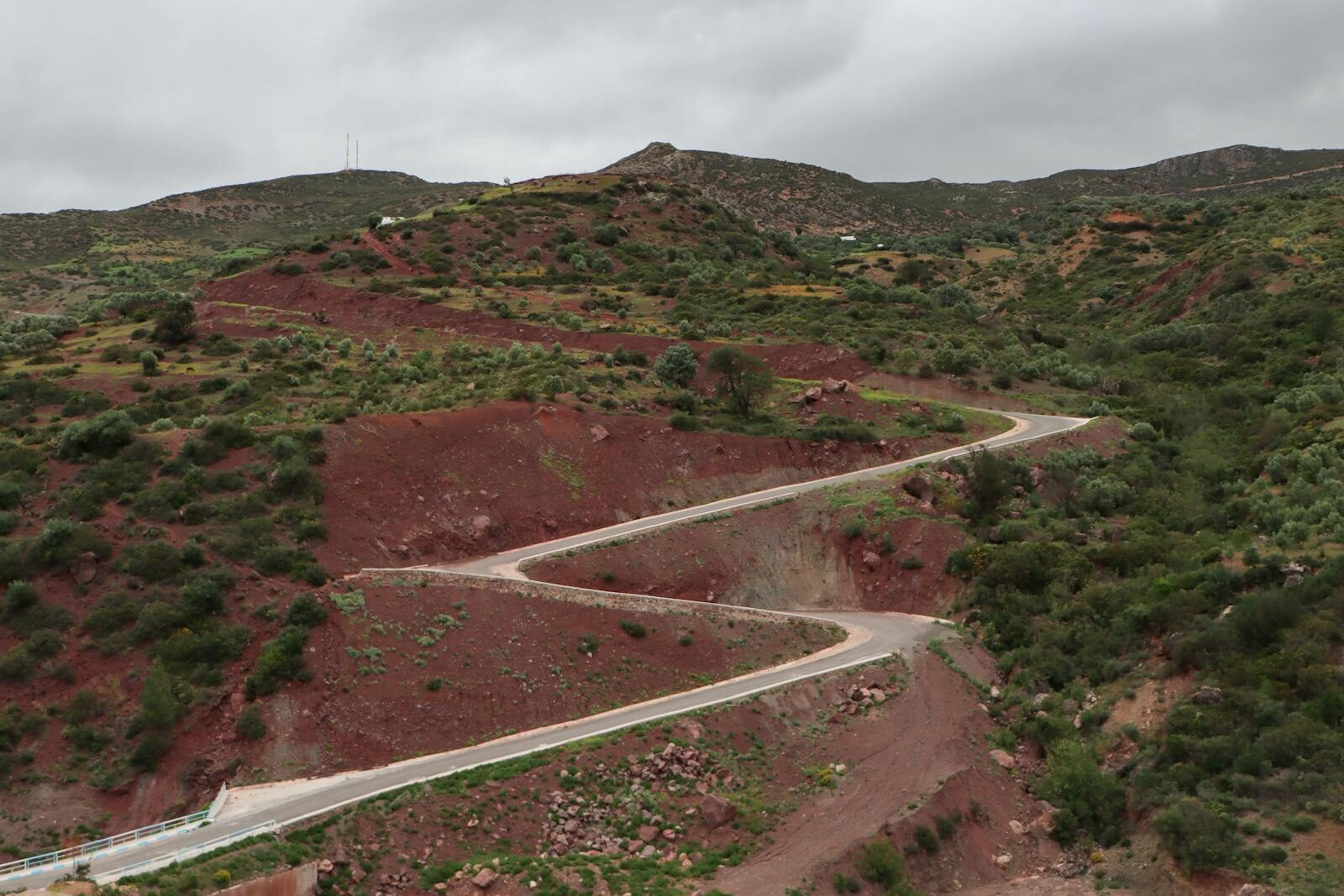
Taghazout is forty-five kilometres from Agadir’s Al Massira airport. There is no train (Morocco’s rail network ends in Marrakech, three hours north by road). The honest options are taxi, shuttle, or rental car.
Grand taxi is the cheap workhorse — a shared older Mercedes that runs on a fixed-route basis along the coast road. Expect to pay 20 to 30 dirhams per seat from the airport-area collection points; expect a wait until the car fills with six passengers. Petit taxi is the private option from the airport — around 250 to 350 dirhams to Taghazout depending on time of day and your negotiation. Pre-booked airport shuttle through your surf camp is usually 150 to 200 dirhams per person and is the easy choice if you’ve never done Morocco before. Rental car is worth considering only if you plan to explore Imsouane, the Atlas, or the south — within Taghazout itself a car is a parking problem, not an asset.
For step-by-step instructions on each option including pickup locations, fair prices, and the small tricks that save you money or time, see how to get from Agadir airport to Taghazout in 2026.
If you’re flying into Marrakech instead, plan on three to four hours by road south. If you’re already in Agadir city — staying along the corniche or near Souk El Had — Taghazout is a thirty-minute taxi at 150 to 200 dirhams, or the local bus number 12 from Place Salam for around 8 dirhams if you have patience and small change. The trade-offs of basing yourself in Agadir versus the surf coast are unpacked in Agadir vs Taghazout — where should you stay. The full coastal beach inventory, including the surf beaches around Anza and the main village beach at Taghazout, is mapped in our Agadir beaches guide.
What Taghazout Is NOT
A short honest section because the village has been mis-sold to people who arrive expecting things it isn’t.
It isn’t Bali. There are no infinity pools over rice paddies, no full-moon beach raves, no jungle. The hills are dry, the village is conservative, and at 9pm most of it is asleep.
It isn’t Lisbon. There is no third-wave coffee scene with seventeen single-origin roasters, no design hotels, no walkable old town with five centuries of preserved facade. The architecture is twentieth-century functional, the cafés are good but limited, the polished European city-break experience is not the offer.
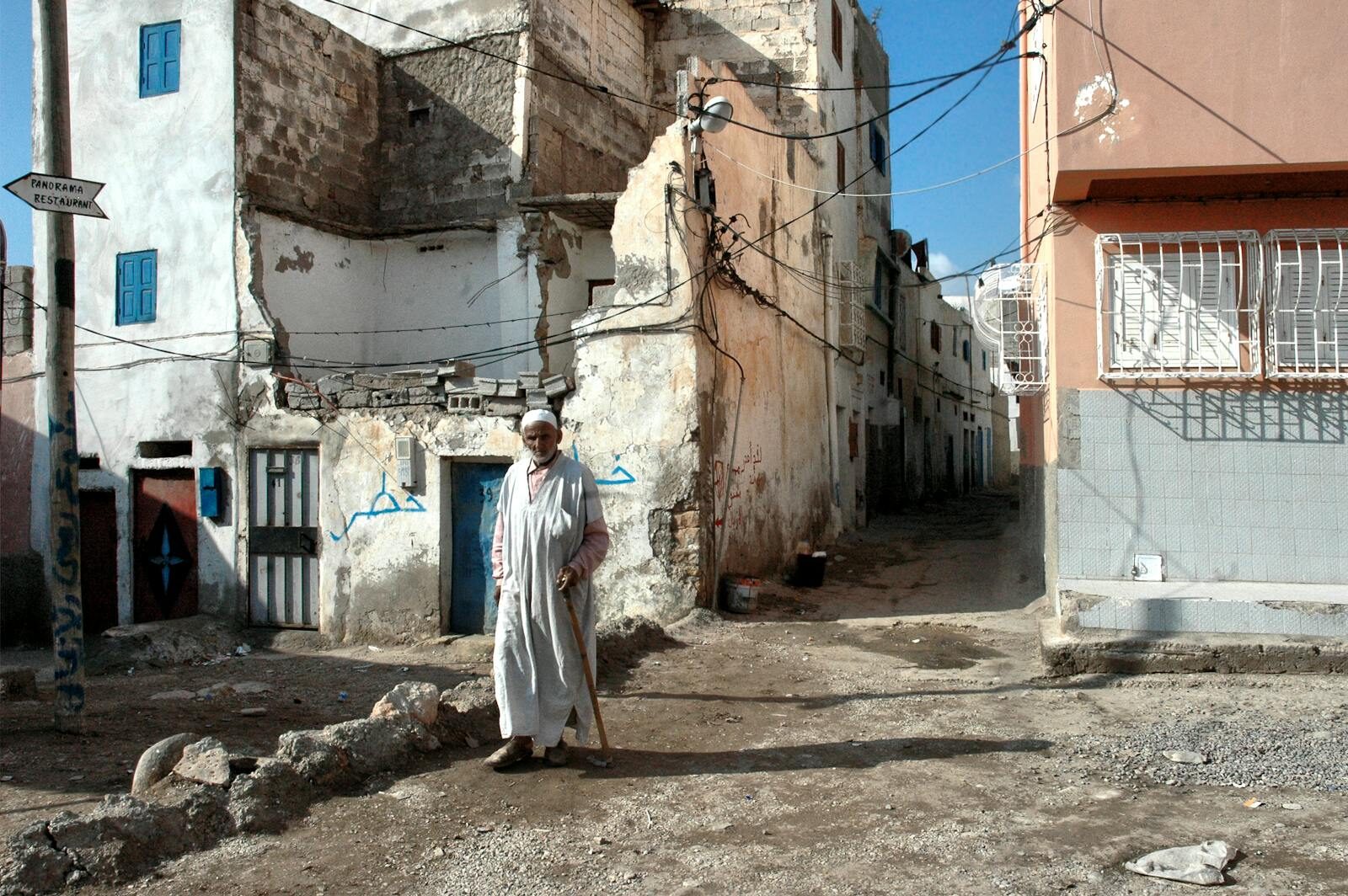
It isn’t a luxury resort. Taghazout the village is rough around the edges. The sidewalks are uneven, the wiring is exposed in places, the smell of fish from the harbour is real, and the cats — the cats are everywhere, and they are nobody’s specifically. Taghazout Bay, twenty minutes walk south, is the luxury cluster; the village isn’t pretending to be that.
It isn’t untouched. The Taghazout that the first generation of surfers found in the eighties — quiet fishing village, almost no foreign presence, two dirt roads — is not the Taghazout of 2026. Twenty surf camps, a hundred guesthouses, smoothie bars, yoga studios, an Atlantic-front airbnb economy, a real estate market warped by foreign money. The transformation is honest tourism gentrification: it brought jobs and infrastructure, and it priced some of the original families out of their own seafront. Both things are true. Acknowledging it is part of staying here honestly.
It isn’t the only village on this coast. Tamraght is a quieter, smaller version five minutes south. Imsouane, an hour north, is even quieter and has one of the world’s longer point breaks. Imourane, just up the road, is residential and almost untouristed. The Taghazout name carries everything, but the coast is a string of villages, and the further you walk from the famous one the closer you get to what the eighties surfers actually found.
A View From the Hillside
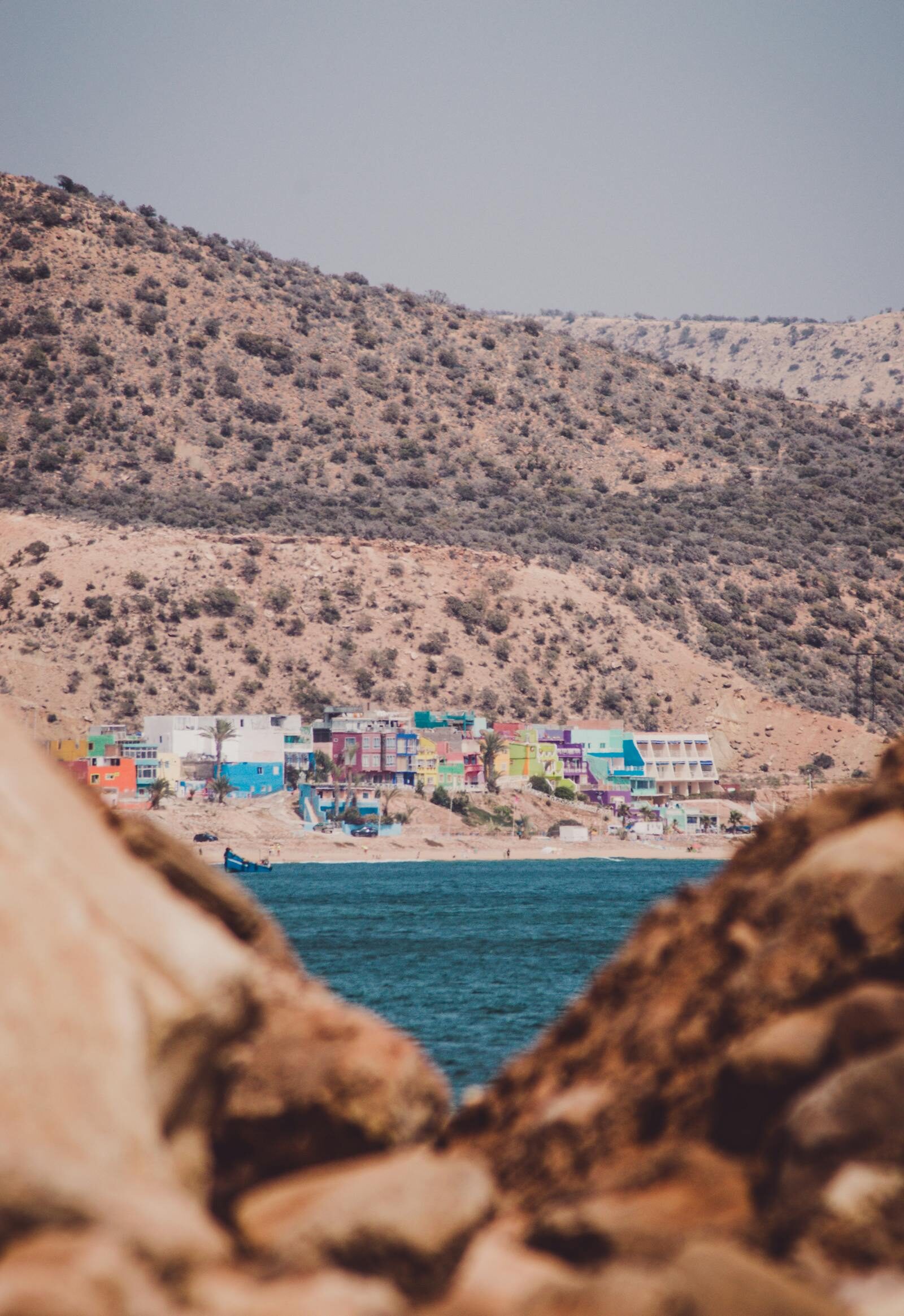
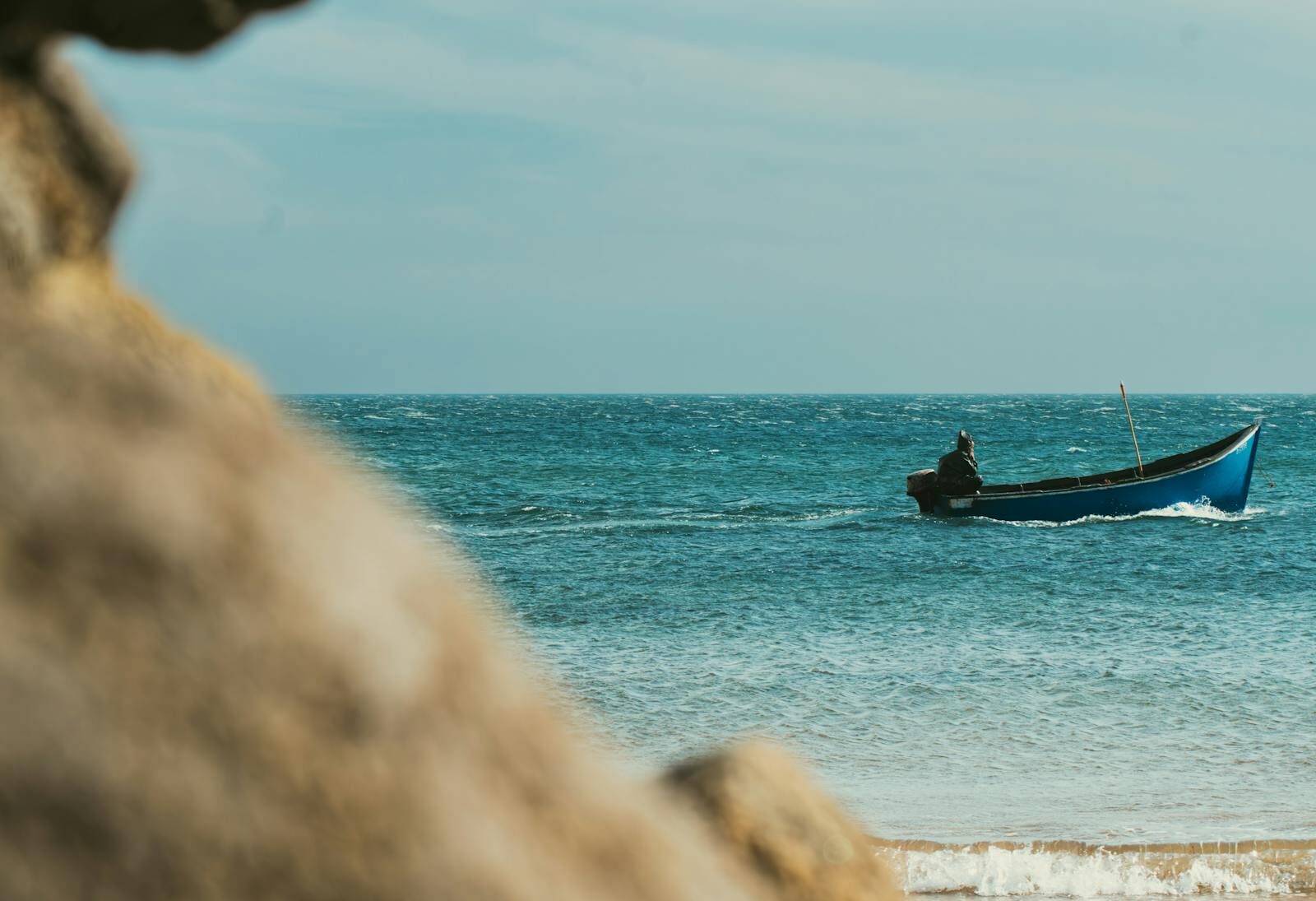
Climb the back streets to the small hill above the village in the late afternoon and you’ll see two Taghazouts in the same frame. The harbour, where blue-and-yellow wooden fishing boats are pulled up on the sand and men in oilskins are mending nets and unloading the day’s catch. The lineup, where forty surfers in black wetsuits are sitting on their boards a hundred metres offshore, waiting for the next set. The two scenes have nothing to do with each other and they happen in the same water on the same afternoon. The fishermen have been here for centuries. The surfers have been here for forty years. They share the bay the way neighbours who don’t speak the same language share a wall — politely, mostly, with the occasional irritation, and a private sense on each side that the other doesn’t quite get it.
That coexistence — working-village Morocco and travelling-surf-tribe Morocco occupying the same one square kilometre — is the thing nobody can quite explain to you before you go. It’s also the thing most worth coming for. The waves are excellent. The fish is fresh. The light at sunset turns the white walls of the village pink for forty minutes and the wind drops and the lineup quiets and you remember why people fell for this place in the first place.
Pick Honestly
Taghazout in 2026 is a working fishing village with a forty-year-old surf tourism layer on top of it, ten minutes from a luxury resort that pretends not to be next door, twenty minutes from the resort city of Agadir, and an entire world away from both. It does not work for everyone. It works extremely well for some people.
It works if you came to surf and you understand that the famous breaks are not your breaks yet. It works if you came to slow down and you’re willing to let a village set the pace rather than a hotel concierge. It works if you can hold two truths at once — that you are a visitor in an economy your presence is reshaping, and that being here respectfully is still better than not coming. It works if your idea of a good evening is grilled sardines on a paper plate, eaten with your hands, on a low wall above the harbour, while the call to maghreb prayer drifts down from the village and the last of the surfers are washing their boards in the freshwater tap.
It does not work if you wanted Bali, or Lisbon, or a resort. It does not work if you needed everything to be polished, or fluent in your language, or available at the hour you expected it. It does not work if you can’t sit with the slight discomfort of being in a place that hasn’t been entirely engineered for you.
Most of the people who fall for Taghazout fall for it slowly, and for the same reason: it stays itself. Pick honestly.
Keep reading
 practical
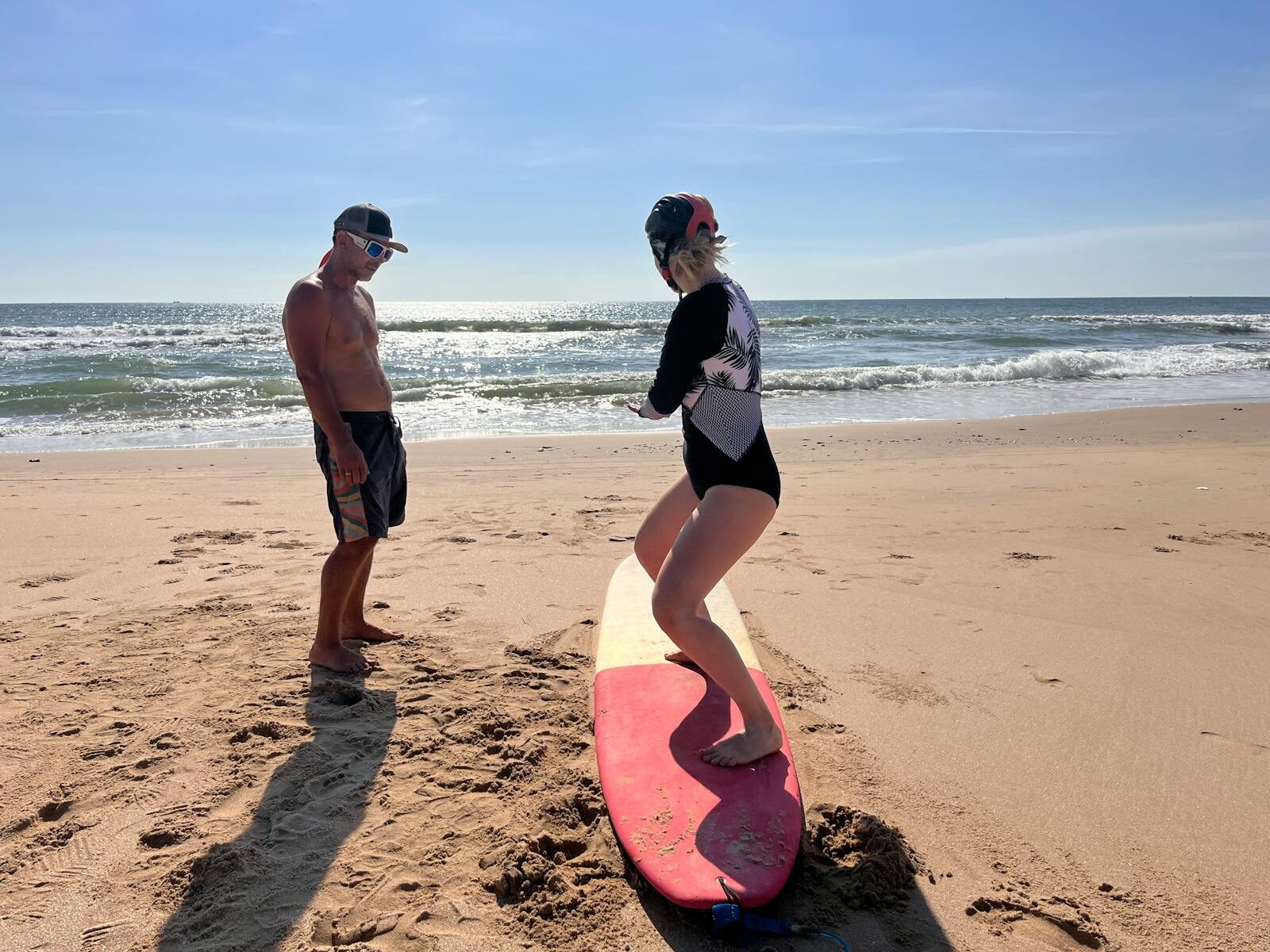
Surfing for Beginners in Morocco: Taghazout's Honest Reality 2026
A first-timer's honest guide to learning to surf in Morocco. The right breaks, the right week, the realistic costs, the surf-camps that actually teach beginners — without the brochure gloss.
 comparison
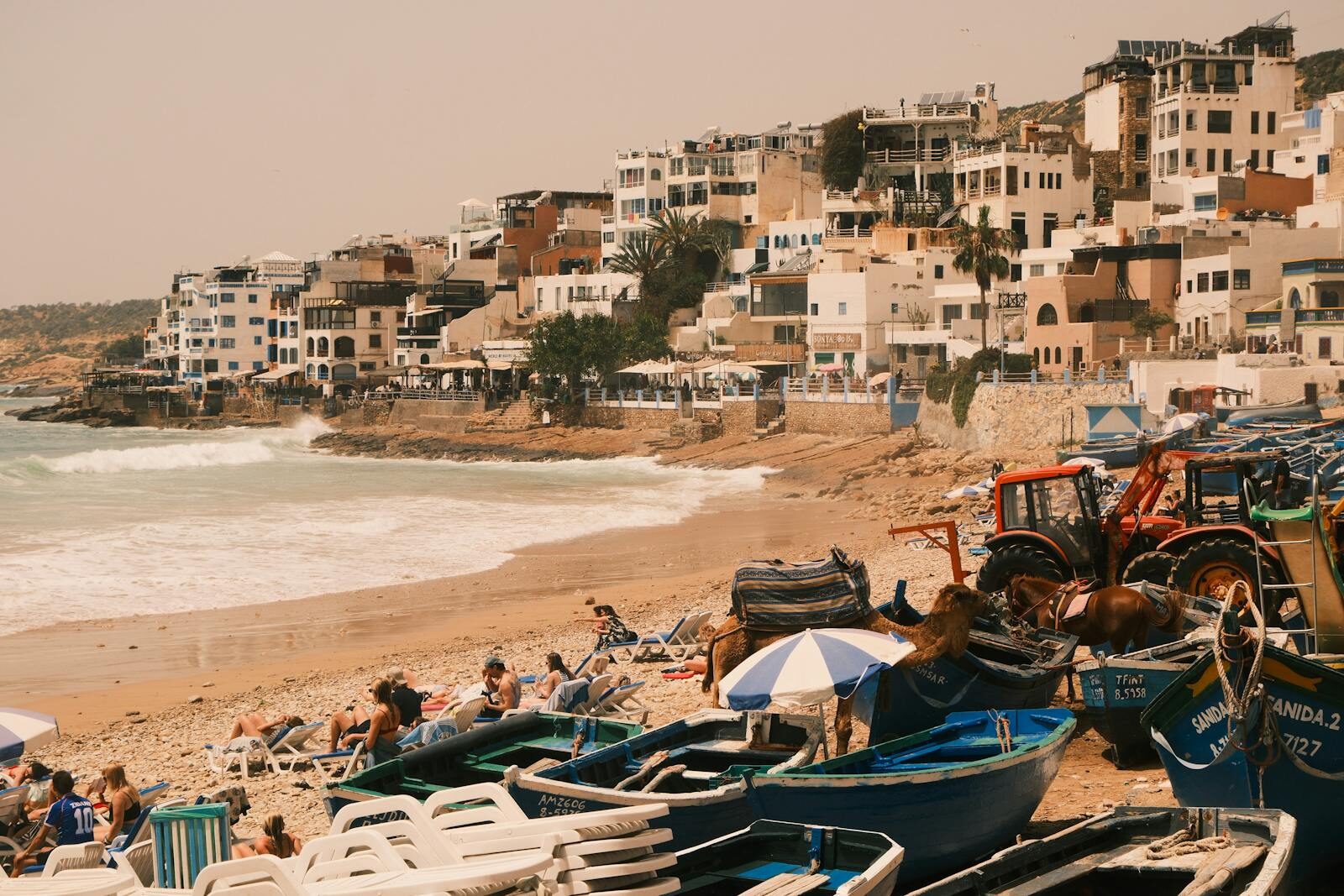
Taghazout vs Tamraght 2026: Where Should You Stay for Surfing?
An honest comparison of Taghazout village and Tamraght for a surf trip in 2026 — wave access, accommodation, food, vibe, cost, and getting around. Pick the right one.
 seasonal
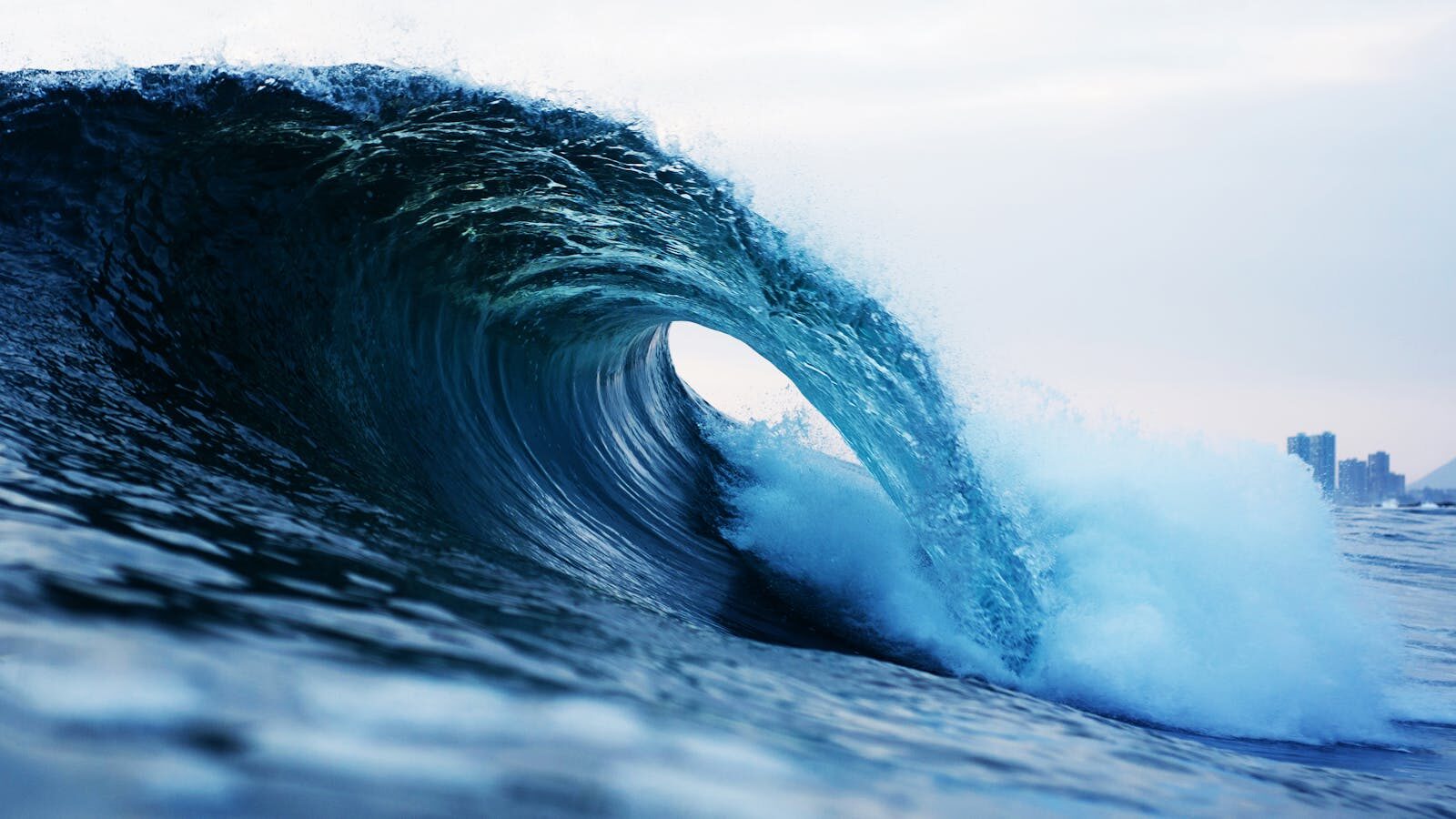
Surfing in Taghazout by Season: When to Go for Your Level 2026
When to surf Taghazout depends on your level. An honest seasonal guide — winter for advanced surfers, summer for beginners, and shoulder months for the rest of us. Water temps, wave size, wetsuit thickness.