Where to Surf in Taghazout: Every Break Explained 2026
A working surfer's map of every named break between Anza and Imsouane — what each wave does, who it's for, when to skip it, and which board to bring. No hype.
Taghazout’s Waves in One Paragraph
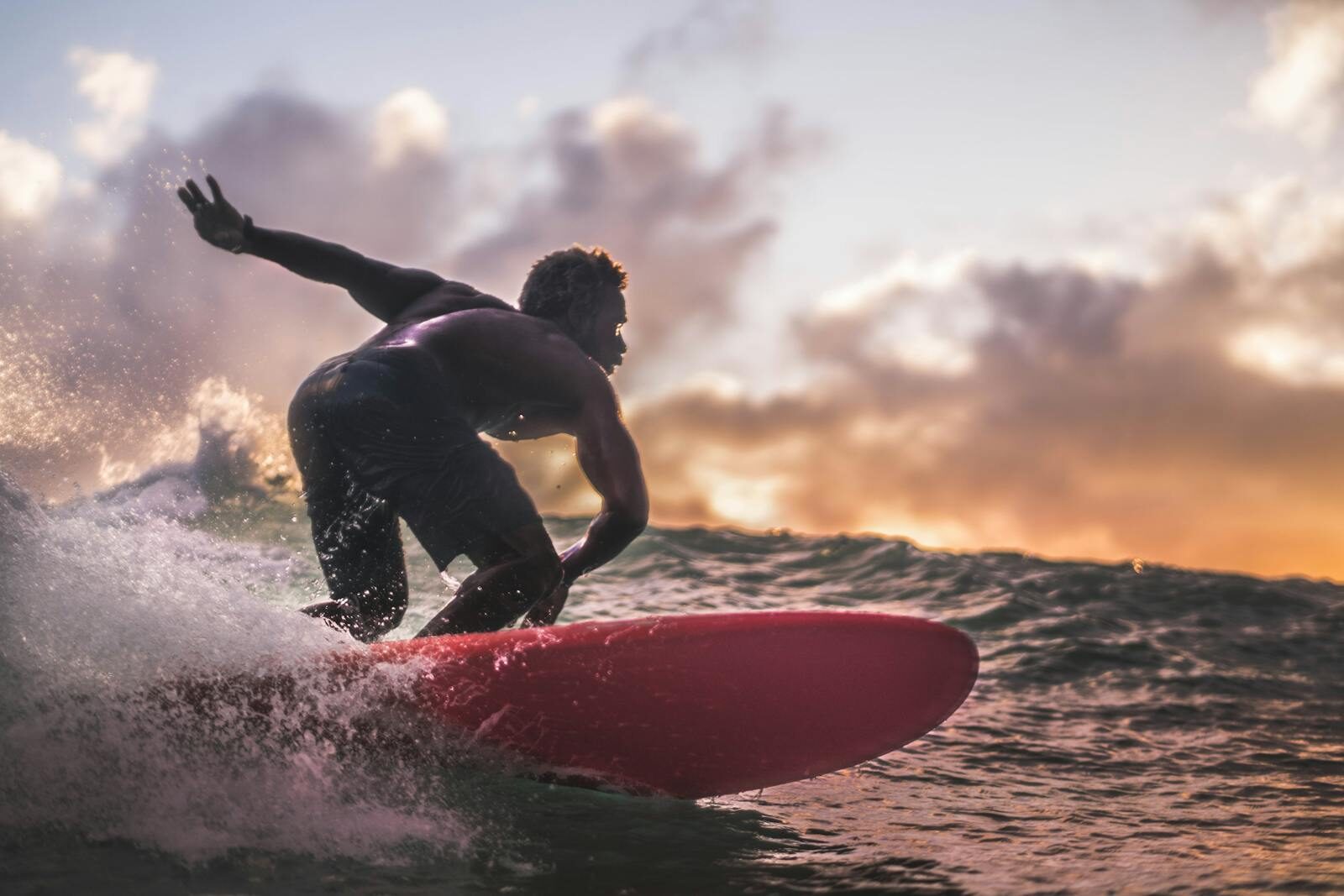
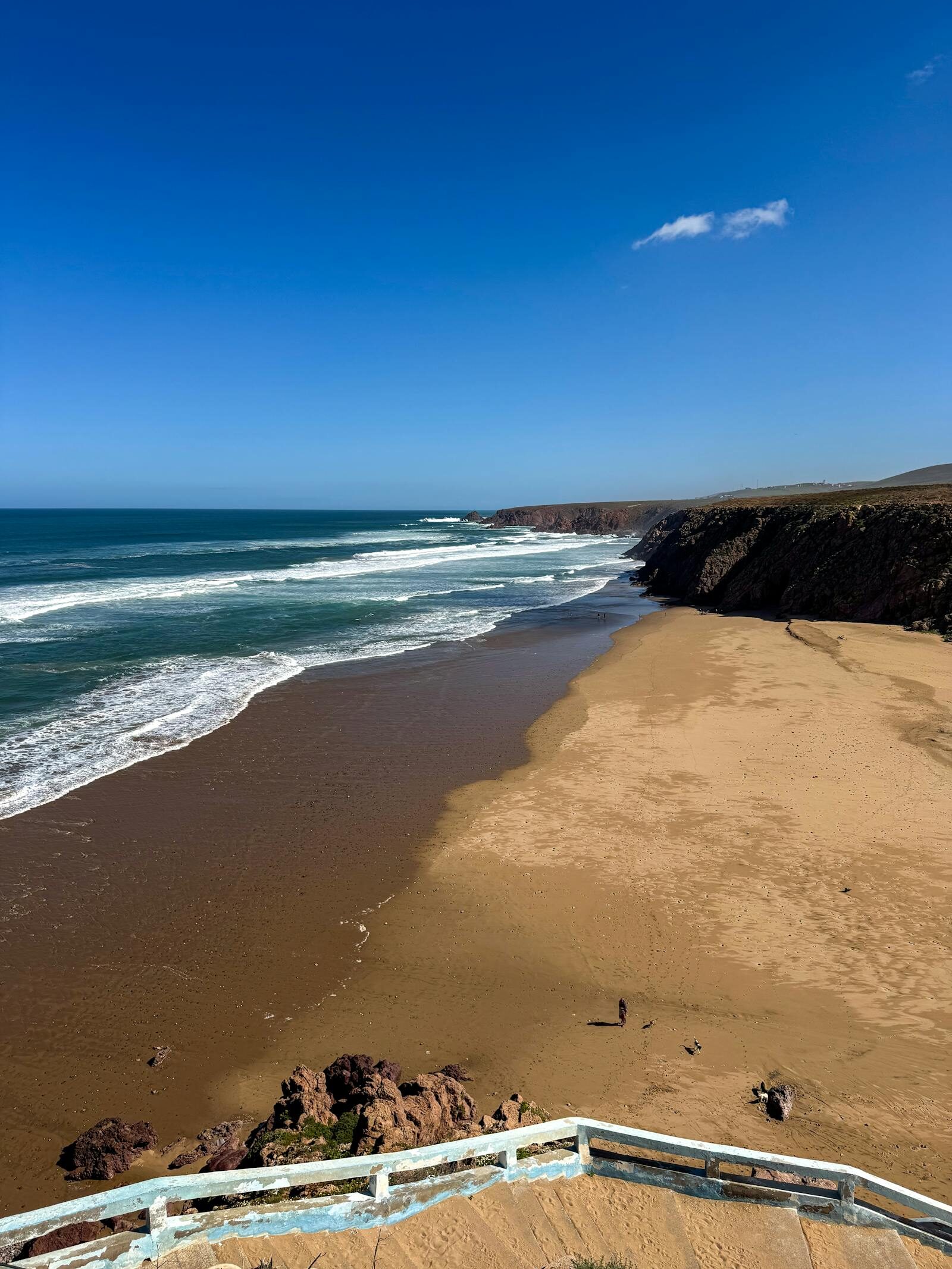
Taghazout sits on a ten-kilometre stretch of Atlantic coast north of Agadir where the shoreline kinks south-west and a chain of basalt headlands juts into deep ocean. The result is a strung-out necklace of right-hand point breaks — Anchor, Killer, Hash, La Source, Imourane — broken up by sandy beach breaks at Tamraght and Banana and a handful of reef setups for the heavier days. North-west groundswell from the Atlantic wraps around each headland, peels along the rock for two hundred to five hundred metres on the good ones, then runs out onto cobble or sand. Winds turn offshore most mornings from the north-east, glass off by mid-afternoon, and onshore again before evening. From October to April this is one of the most consistent stretches of coast on the planet for waist-to-double-overhead right-handers. The rest of the year, smaller and softer, it’s still ridable nearly every day. What follows is a working surfer’s tour, going north from Anza up to Imsouane, with the honest version of who each break is for. For our full pillar piece on the village itself — where to eat, where to stay, how to get around — see the Taghazout complete guide for surfers and slow travelers.
Anza
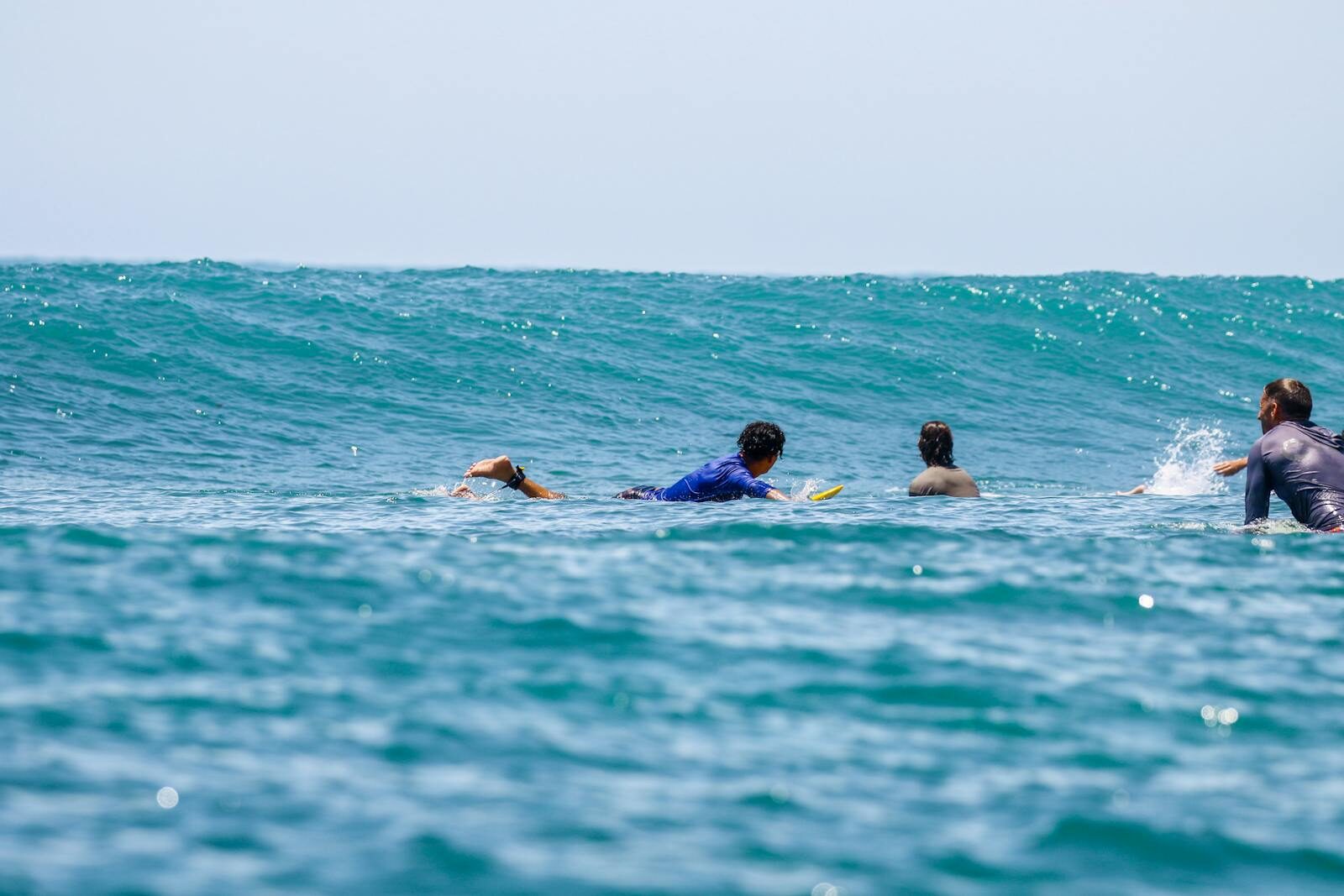
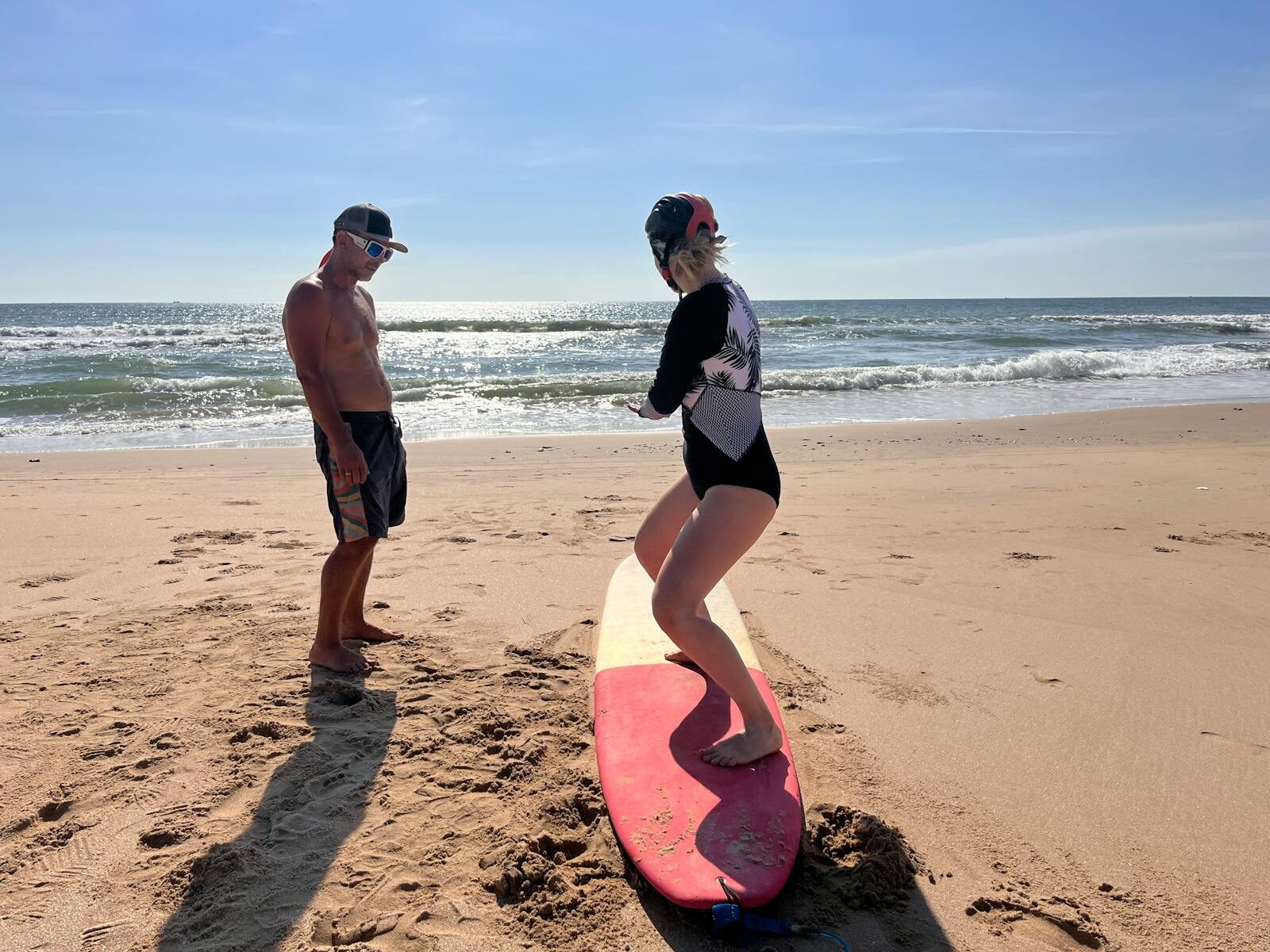
Anza isn’t really Taghazout — it’s a southern outlier, ten minutes back toward Agadir city limits — but every honest tour of the coast starts here, because it’s where most people learn to surf in Morocco. The wave is a beach break and a soft reef peeling off a volcanic shelf, friendly in the waist-to-chest range, punishing once it gets over head-high (the inside section closes out hard, and the rocks aren’t theoretical). North-west swell, any tide, north-east wind cleans it up. Soft-top, longboard, or a bigger funboard — anything with volume.
Crowd is mostly schools and beginners in the mornings, locals taking the dawn sessions. Vibe is friendly. There’s no localism worth mentioning here; people are too busy teaching to be territorial. What it’s NOT: a good wave on a big swell. Once Anchor is firing eight-foot, Anza is closed out and ugly. The point of Anza is the soft days. See our deeper notes in the beginner’s honest guide to surfing Taghazout, and the Anza Beach entry for directions.
Tamraght Beach (Devil’s Rock)
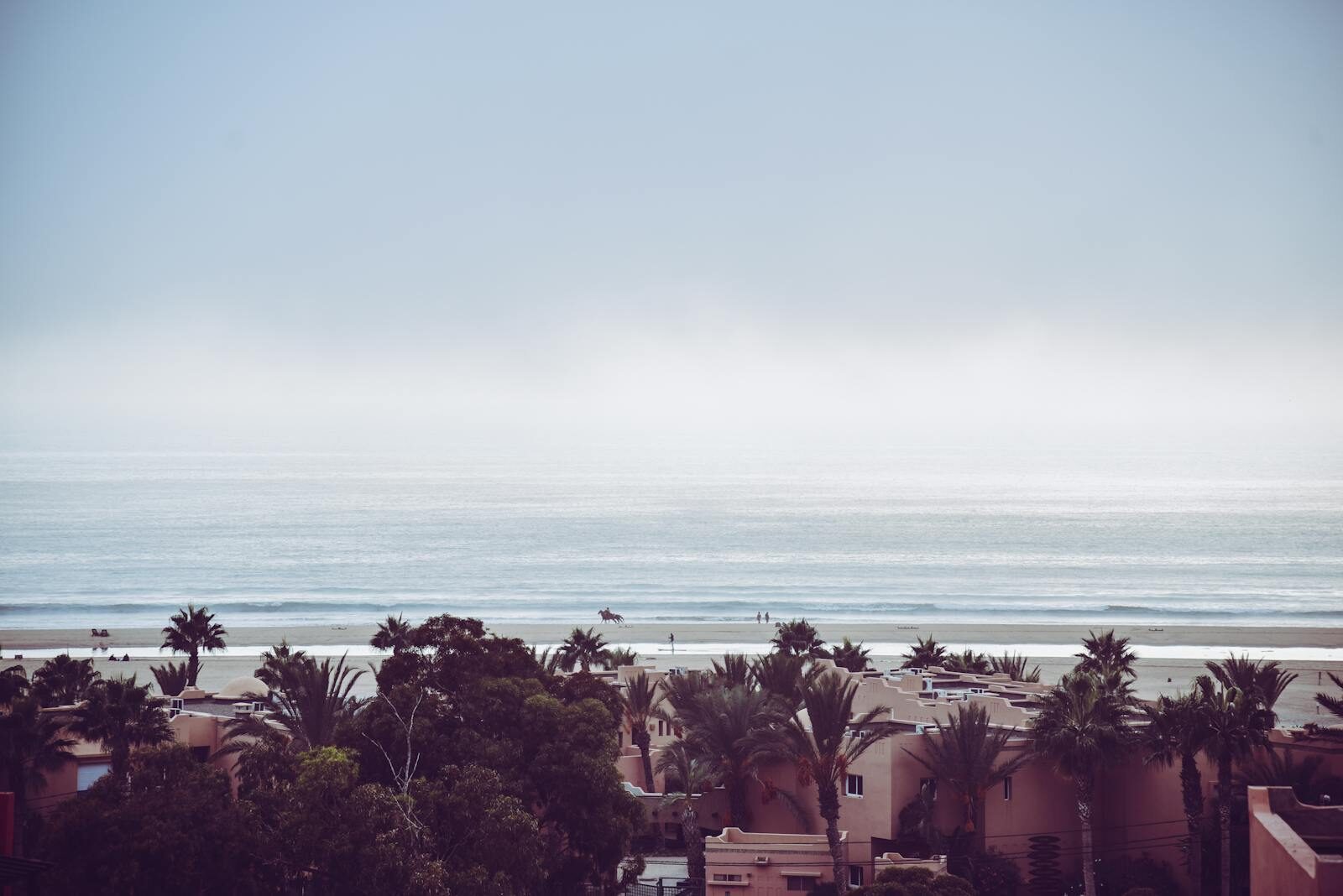
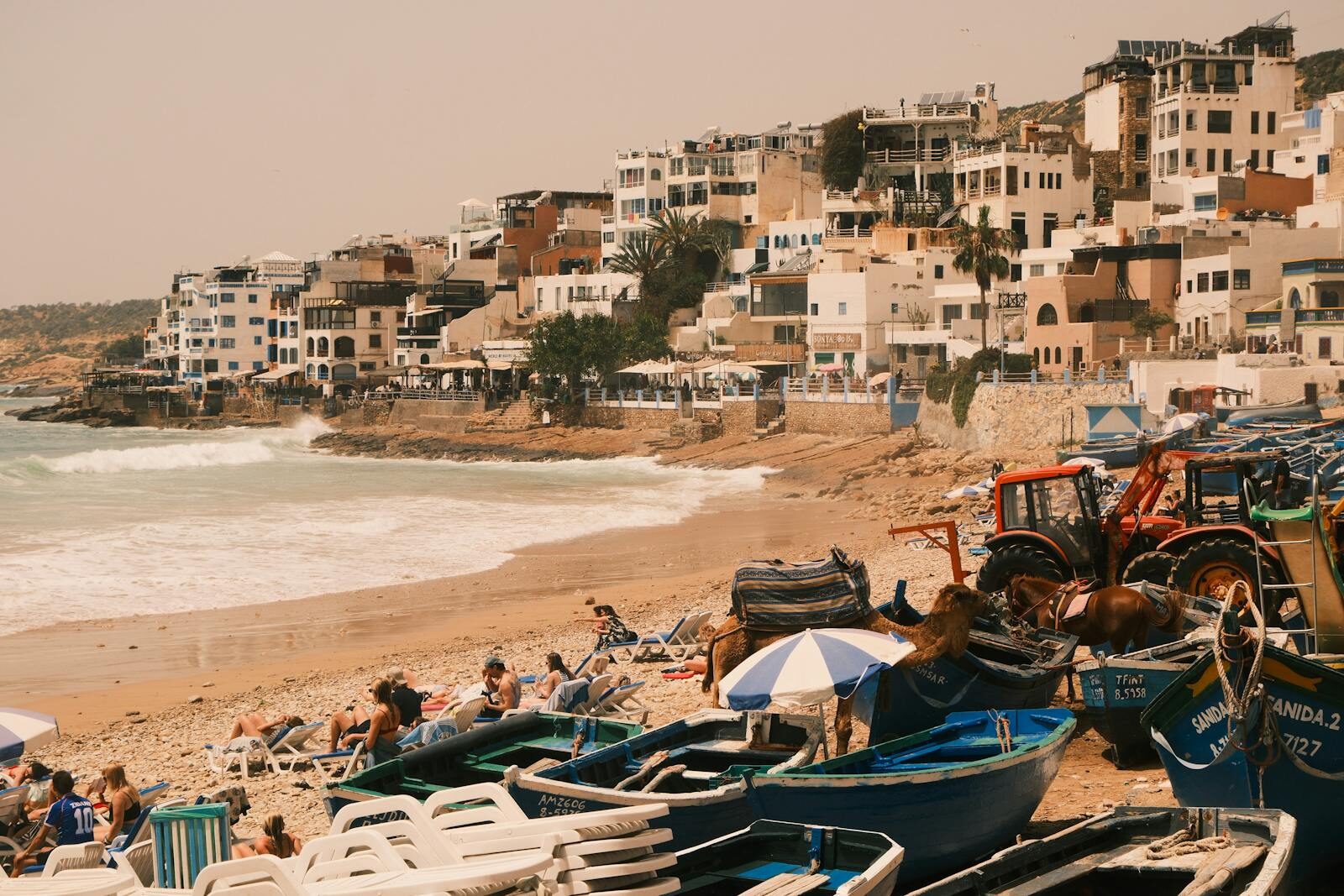
Drive five minutes north and you reach Tamraght, the village squeezed between two headlands with a wider beach in front of it and a reef-point setup at the southern end called Devil’s Rock. The main beach is sandy, gentler than anything in Taghazout village proper, and the most realistic spot for an early-intermediate to start linking turns away from the foam zone. It picks up smaller swell than the points (which need north-west wrap), so on flat days when Anchor is two-foot and dull, Tamraght can still be a fun three-foot. Any tide, though low tide pushes the bank closer to the rocks at the south end.
Devil’s Rock itself, on a clean swell, is a fast right peeling off the southern boulder cluster — short, makeable on a shortboard, busy when it’s on. It’s the bridge wave between Anza’s foam and Anchor’s pressure. For where to stay close to it, see our Taghazout versus Tamraght breakdown — Tamraght is the better base if Devil’s Rock is your spot.
Banana
Banana — also called Banana Point or Banana Beach — sits between Tamraght and Taghazout, named for the small banana plantation behind the dunes. It’s the softest of the point-break cluster: a long, mellow right peeling onto sand and cobble, head-high on a good day, knee-to-waist most days. Longboarders love it. Mid-length and funboard riders love it. Shortboarders ride it when nothing better is breaking because the wave just doesn’t have the punch for proper rail work.
North-west swell, low to mid tide, north-east wind. Crowd is foreign visitors and surf-camp groups doing their second or third week of lessons. Vibe is genuinely friendly — Banana is where you’ll see strangers cheering each other into waves. What it’s NOT: a wave for anyone chasing speed lines or hollow sections. The lip rarely throws. You glide. That’s the point.
Hash Point
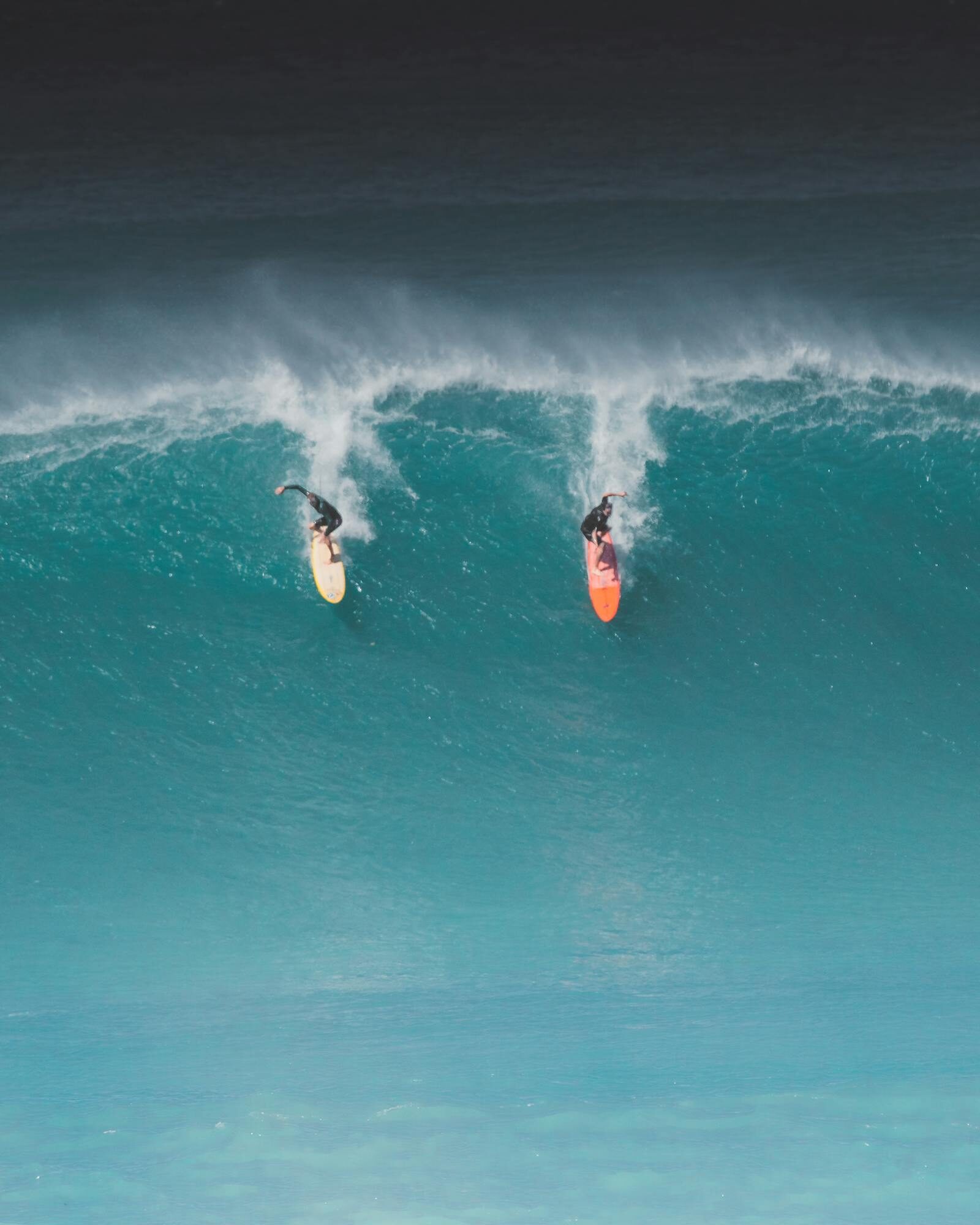
Hash Point is the wave that breaks directly in front of Taghazout village. You can watch it from the cafés on the seawall. That’s both its charm and its problem — it’s the most accessible point in the area, and on a swell it gets crowded fast. The wave itself is a workmanlike right peeling off the rocky headland for fifty to a hundred metres, head-high to slightly overhead, with a clean takeoff and a faster inside section that punishes hesitation.
North-west swell, mid to high tide, north-east wind. Shortboard if you can. The crowd is a mix of locals (who get priority and deserve it), surf-camp intermediates, and travelling regulars from Europe. Drop-ins happen. Don’t be the person doing them — sit deeper, wait your turn, and you’ll be fine. What it’s NOT: a quiet wave. If you want to be alone in the water, paddle to one of the points further north or get up before sunrise. The Hashpoint surf camp sits directly above it for travellers who want the wave-from-the-balcony version.
Anchor Point
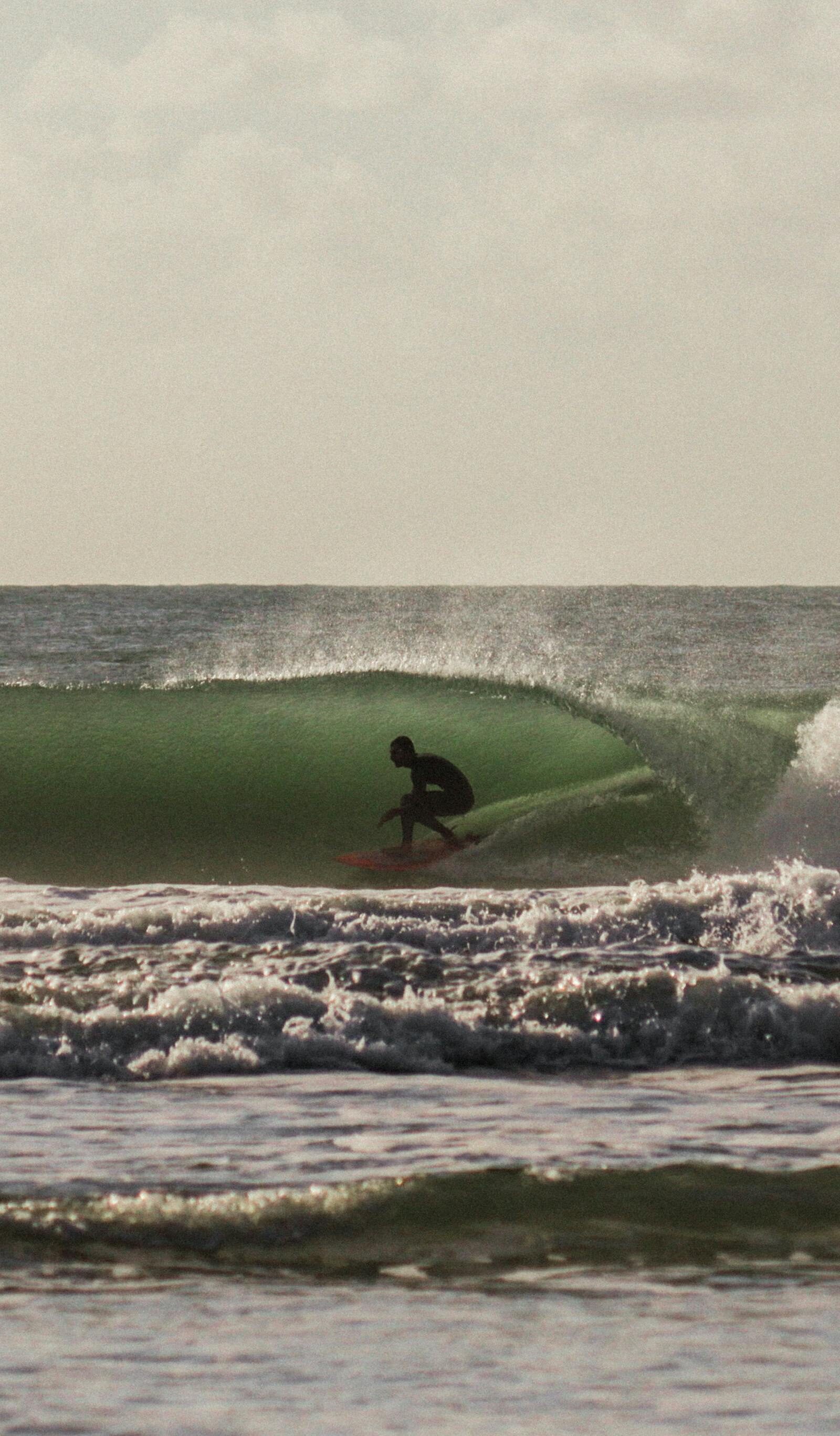
Anchor is the wave Taghazout is famous for. Five hundred metres of right-hand point peeling off the headland north of the village, fast, long, with multiple sections — the outside take-off, the racing wall, the bowl on the inside that throws if it’s overhead. On a clean six-foot north-west swell with a north-east wind, this is one of the better waves on the Atlantic seaboard, full stop. Jimmy Hendrix is rumoured to have hung out at the café above the point in the late 1960s; the wave was already a destination then.
Mid to high tide is the standard window — lower tide exposes the inside boil. North-west swell, anything from waist-high (slow and rolling) to triple-overhead on the big winter days (only the heavily-experienced go out). Shortboard most days; step-up for big swells; the entry-and-exit is over barnacled rock so booties are not optional in winter. Crowd is heavy on swell days — locals, travelling pros, surf-camp guides — but spreads out along the length of the wave so the lineup itself is wider than it looks. Vibe is mostly respectful. Localism exists but is gentle compared to most world-class points; sit your time, don’t drop in, and the regulars will leave you alone. For a deeper French-language spot guide and a per-wave breakdown that goes further than ours on the points specifically, see the Anchor Point breakdown at Taghazoutcamp.
What Anchor is NOT: a wave for the second-day intermediate. The takeoff is fast, the inside is shallow, and the paddle-out on a big day is humbling. Sit on the headland, watch a tide, then decide.
Killer Point
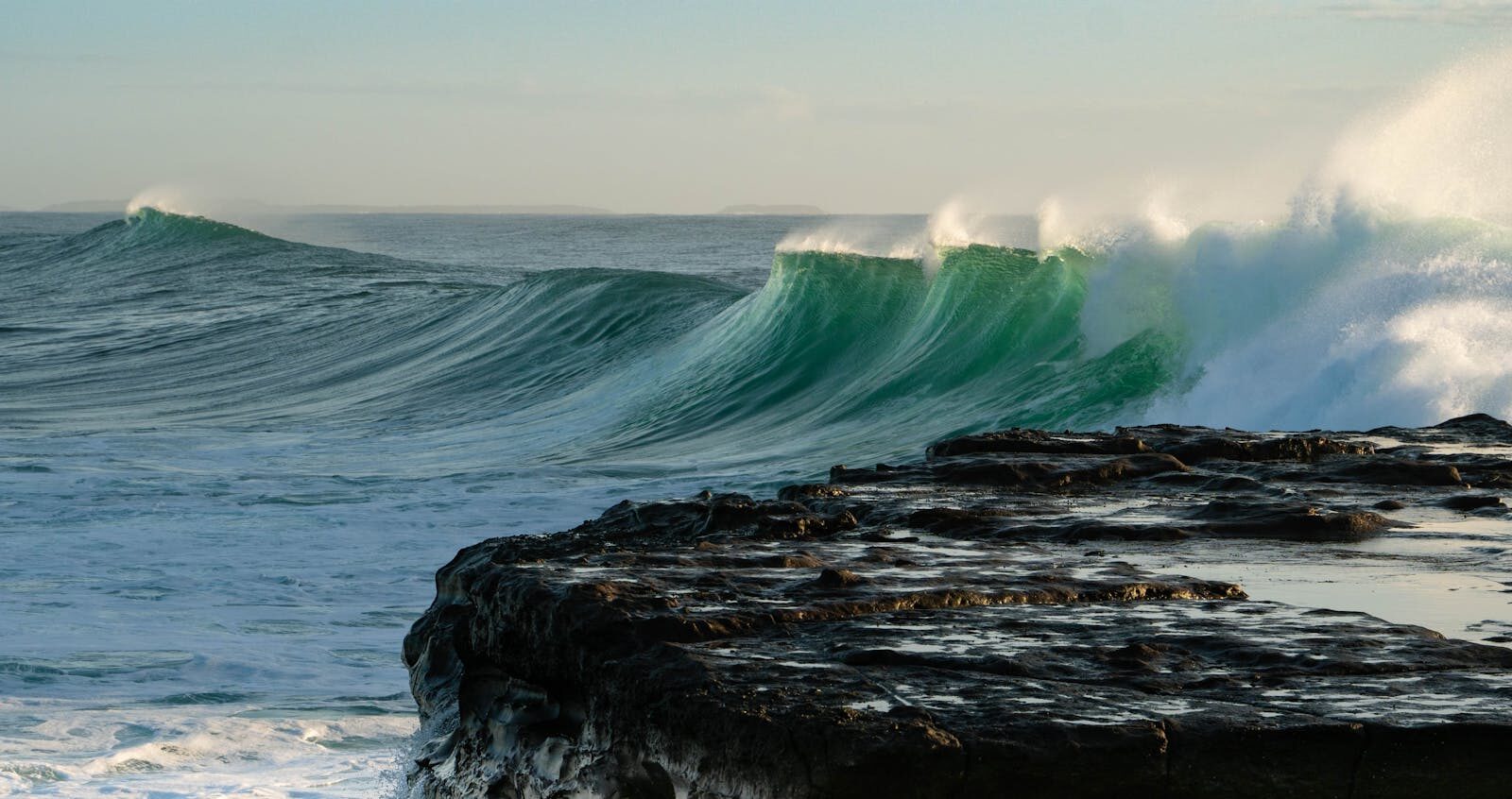
Killer is Anchor’s bigger, meaner cousin, fifteen minutes’ walk north along the cliff path or a short drive. Named after the killer whales sometimes seen offshore (not, despite what every travel blogger writes, after the wave’s tendency to break people). It’s a thick, powerful right peeling off a deeper, rockier headland — handles bigger swell than Anchor, holds its shape into the double-overhead range, and the takeoff zone is genuinely committing. You’re surfing over a deep reef shelf with rocks on the inside. Booties, leash, step-up.
North-west swell, mid to high tide, north-east wind. The wave needs size to work — under chest-high it’s a fat shoulder that doesn’t repay the paddle. Over head-high it gets seriously good. Crowd is thinner than Anchor because the walk filters out the casual visitor. The lineup that’s left is mostly people who know what they’re doing. What it’s NOT: a beginner wave under any circumstances. Not a wave you “give a go” on a small day with the hire shortboard. Pick a clean medium swell and bring something you trust.
La Source
Between Anchor and Killer sits La Source, a less-discussed right that breaks on a smaller rocky outcrop with a freshwater spring running into the sea from the cliff behind it (the source — that’s the name). On its day it’s a clean, makeable right of head-high size, sectioning over a shallow rock shelf with a short, punchy inside. It’s less consistent than its neighbours — needs the swell direction and tide to align — but when it’s on, it’s an alternative to a crowded Anchor with a wave that often rewards a more vertical approach. Shortboard, mid tide, north-west swell.
Crowd is light because the spot is fickle. Vibe is mellow. What it’s NOT: predictable. Don’t drive twenty minutes specifically for La Source; check it when you’re walking the cliff path between Anchor and Killer and surf it if it looks right.
Boilers
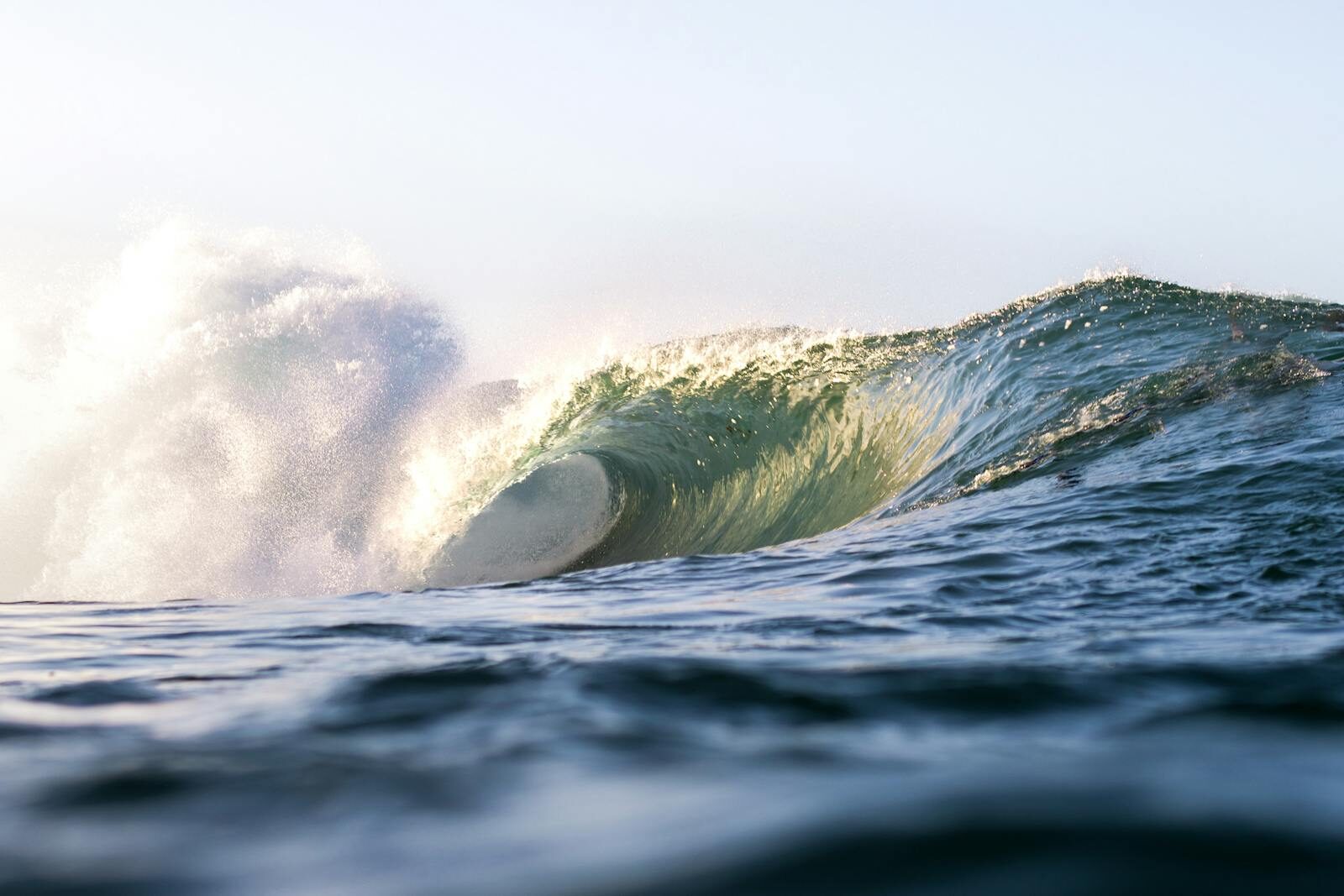
A fifteen-minute drive north of Taghazout village, Boilers is the heavy-water spot of the cluster — named for an old shipwreck whose boilers still rust on the rocks offshore. The wave breaks over a shallow reef in a horseshoe of rocks, holds size into the double-overhead-plus range, and on its day produces a thick, fast right with a real barrel section. It is not subtle. The takeoff is over reef. The exit is over reef. People get hurt here every winter.
North-west swell, mid tide, north-east wind. Step-up board, leash, booties, helmet for the seriously committed. Crowd is small and competent — you don’t paddle out at Boilers by accident. What it’s NOT: a wave to try on your fourth day in Morocco. Not a wave at all unless it’s overhead and you’re confident in heavy water. Watch it from the cliff first. If watching makes you nervous, that’s information. The wave isn’t going anywhere.
Imourane Point
Further north again, where the road bends inland through small Berber villages, Imourane Point sits at the end of a long sandy bay. It’s a softer, longer wave than Anchor or Killer — more of an open shoulder, friendlier on bigger boards, sectioning over a mix of sand and rock on the inside. Holds chest-to-overhead size cleanly. Less consistent than the village points because it needs the swell to wrap further. The crowd is smaller; the parking is rougher; the experience is closer to what Taghazout’s points were probably like in the 1980s. Funboard or longboard for the easy days, shortboard when it has shape. North-west swell, mid tide.
What it’s NOT: a wave with services. There are no cafés at Imourane. Bring water. Bring sunscreen. The walk back up to the road in soft sand with a board under your arm is a workout.
Imsouane
Forty-five minutes north of Taghazout, Imsouane has two waves: a long, slow, fat right at the Bay (one of the longest rideable waves in Morocco, two-to-three-minute rides on a good day, perfect for longboards and mid-lengths) and a punchier, shorter right at the Cathedral that’s been altered by a controversial harbour expansion in recent years. The Bay is the wave to come for — it’s the closest thing on this coast to a Malibu-style cruise, and it’s the most beginner-and-longboarder-friendly point in Morocco.
North-west swell, any tide for the Bay (high is best), light north-east wind. Soft-top, longboard, mid-length. Crowd is heavy in winter — the wave’s reputation has spread — and the lineup is patient with beginners up to a point. The harbour expansion has shortened the Bay’s reliable section, and the wave isn’t quite what it was five years ago, but it’s still a long, magic ride on the right day. What it’s NOT: a shortboarder’s wave. Trying to do rail work on Imsouane Bay is a category error.
Which Break for Which Level
A rough hierarchy, smallest-and-softest to biggest-and-meanest:
- Total beginner, week one: Anza or the inside section at Tamraght.
- Late beginner / early intermediate: Tamraght main beach, Banana on a small day, Imsouane Bay if you can make the drive.
- Solid intermediate: Banana, Devil’s Rock at Tamraght, Hash Point when it’s not crowded, Imourane on a small clean swell.
- Advanced intermediate / advanced: Anchor Point on most swells, Hash on a clean six-foot, La Source when it lines up.
- Confident advanced only: Killer Point on size, Anchor on a serious winter swell.
- Heavy-water specialists: Boilers, Killer on a giant day.
A note on this ladder: it’s not a queue. You don’t have to “graduate” from Tamraght to Anchor. Plenty of competent shortboarders happily spend a whole trip at Banana or Imourane because that’s where they have the best sessions. Going to the biggest wave you can technically catch is rarely the way to have the most fun.
Picking the right break for the day also depends on the swell direction, tide, and wind — see our season-by-season Taghazout surf guide for the monthly version of that calculation.
Things You Should Know Before You Paddle Out
Localism is mostly mellow. Compared to Hossegor on a competition day or Pipeline any day, Taghazout’s local scene is welcoming. There are a handful of regulars at every point who’ll claim priority on the best waves, and they’re right to. Sit wider than them, wait your turn, don’t drop in, smile, and you’ll have a fine trip. Aggression is rare. Verbal warnings happen and are usually fair.
Rip currents are real. Most of the points have a rip running along the rocks that you actually want to use to paddle out — it’s the fast way to the lineup. The problem is identifying the rip if you don’t know it. Watch other surfers paddle out before you do. If everyone’s using the same channel, that’s the channel. If you can’t see it, ask. People will tell you.
Water temperature. Atlantic, not Mediterranean. Winter sits around 17–19°C — a 3/2 wetsuit is standard, a 4/3 if you feel the cold. Summer climbs to 20–22°C; some locals surf in boardshorts, most visitors wear a 2mm shorty. Booties are useful at any point break over rock, especially Anchor and Killer.
Reef and rock. Most of the named points break over rock to some degree. Cuts on feet and hands are the most common surf injury here. Cheap surf booties from any of the village shops fix the foot problem; gloves are overkill.
Camps and rentals. If you’re not bringing your own boards, the camps cover hire well — see our roundup of the best surf hostels and camps in Taghazout, with Surf Berbere and We Surf Morocco as two of the more dialled-in operations. Most camps include daily transport to whichever point is working, which is genuinely useful — without a car, getting from the village to Boilers or Imsouane is logistically annoying.
Etiquette quick list. Don’t drop in. Don’t snake. Don’t paddle for the wave the guy already up and riding is on. Apologise quickly if you make a mistake; most lineup beef is about the apology, not the mistake. The local guys remember names; show up twice and they’ll know you.
One Honest Closer
Taghazout has more named waves in a ten-kilometre stretch than most surf coasts have in fifty. You will not surf all of them on one trip. Pick the two or three that match your level, your board, and the conditions of the week, and ride them properly. Anchor doesn’t get better by paddling out at it before you’re ready; Anza doesn’t get worse by being your spot for ten days running. The best version of a Taghazout trip is finding a wave you click with and milking it.
And then, on your last morning, before the flight: paddle out at whichever break the village is talking about, sit deep, let the locals have the set waves, take the next one cleanly, and go home with that one in your head. That’s the picture you’ll keep. For everything else — the village, the food, the long sand walks — the Taghazout complete guide and the local’s guide to Agadir beaches cover the rest of what’s worth doing between sessions.
Keep reading
 practical
Surfing for Beginners in Morocco: Taghazout's Honest Reality 2026
A first-timer's honest guide to learning to surf in Morocco. The right breaks, the right week, the realistic costs, the surf-camps that actually teach beginners — without the brochure gloss.
 comparison
Taghazout vs Tamraght 2026: Where Should You Stay for Surfing?
An honest comparison of Taghazout village and Tamraght for a surf trip in 2026 — wave access, accommodation, food, vibe, cost, and getting around. Pick the right one.
 seasonal
Surfing in Taghazout by Season: When to Go for Your Level 2026
When to surf Taghazout depends on your level. An honest seasonal guide — winter for advanced surfers, summer for beginners, and shoulder months for the rest of us. Water temps, wave size, wetsuit thickness.