Agadir vs Taghazout 2026: Where Should You Stay?
Agadir vs Taghazout 2026: compare city beaches, surf camps, nightlife, and neighbourhoods. Pick your ideal Moroccan coast trip by traveller type, season, and budget.
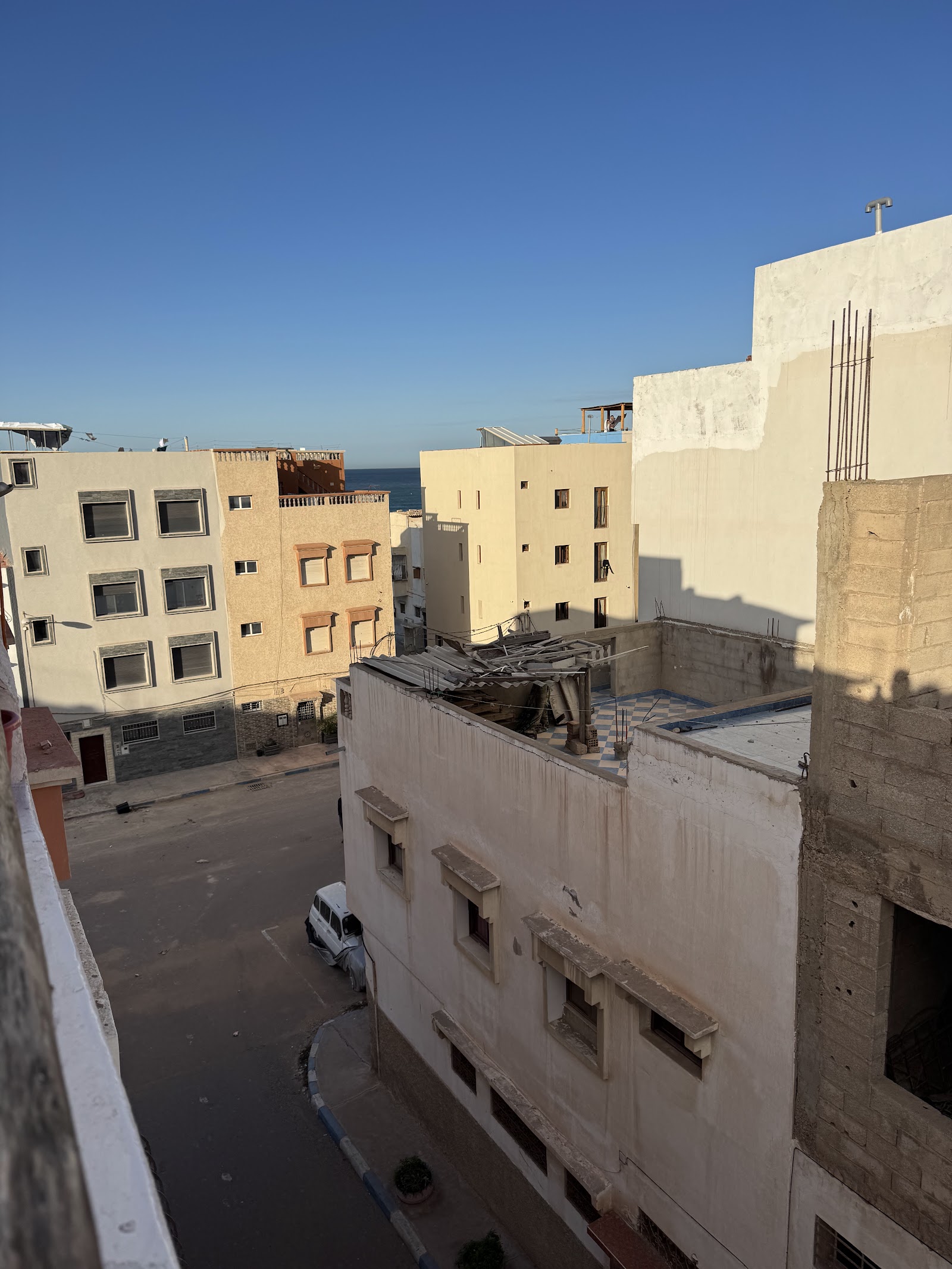
Two coastal towns, 90 kilometres apart, offer starkly different versions of Morocco. Agadir—90,000 residents, package-tour infrastructure, a rebuilt medina, and the longest urban beach in the country—feels like a proper city with sand attached. Taghazout, by contrast, is a fishing village (population under 2,000) that’s become a global backpacker pilgrimage site, famous for consistent waves and a community of nomads who never quite leave. Neither is obviously “better”; they solve different problems. The choice hinges on what you’re actually after: whether you want restaurants, nightlife, and reliable transport, or whether you came to catch waves and slow down. Winter (November to March) fills both places; summer (June to August) empties Taghazout but keeps Agadir reasonably busy. Budget matters too. Agadir’s Corniche hotels can run 800+ MAD nightly; Taghazout’s hostels sit at 120–200 MAD. This guide cuts through the marketing and helps you decide, neighbourhood by neighbourhood, by actual traveller type.
Agadir or Taghazout 2026: Which suits your trip?
The honest first question: are you a city person or a village person? Agadir rewards you if you want reliable infrastructure, choice, and the company of ordinary Moroccan life. There’s a functioning medina (rebuilt after the 1960 earthquake), a souk that’s genuinely less tourist-trapped than Marrakech, a marina with working fishing boats, and restaurants where locals eat dinner—not just tourists. The Corniche runs eight kilometres along the beach, backed by a manicured promenade where Moroccan families actually spend their evenings. Public transport works. ATMs are everywhere. If you’re nervous about Morocco as a first visit, Agadir feels manageable; you can walk into a café at random and order lunch without rehearsing French first.
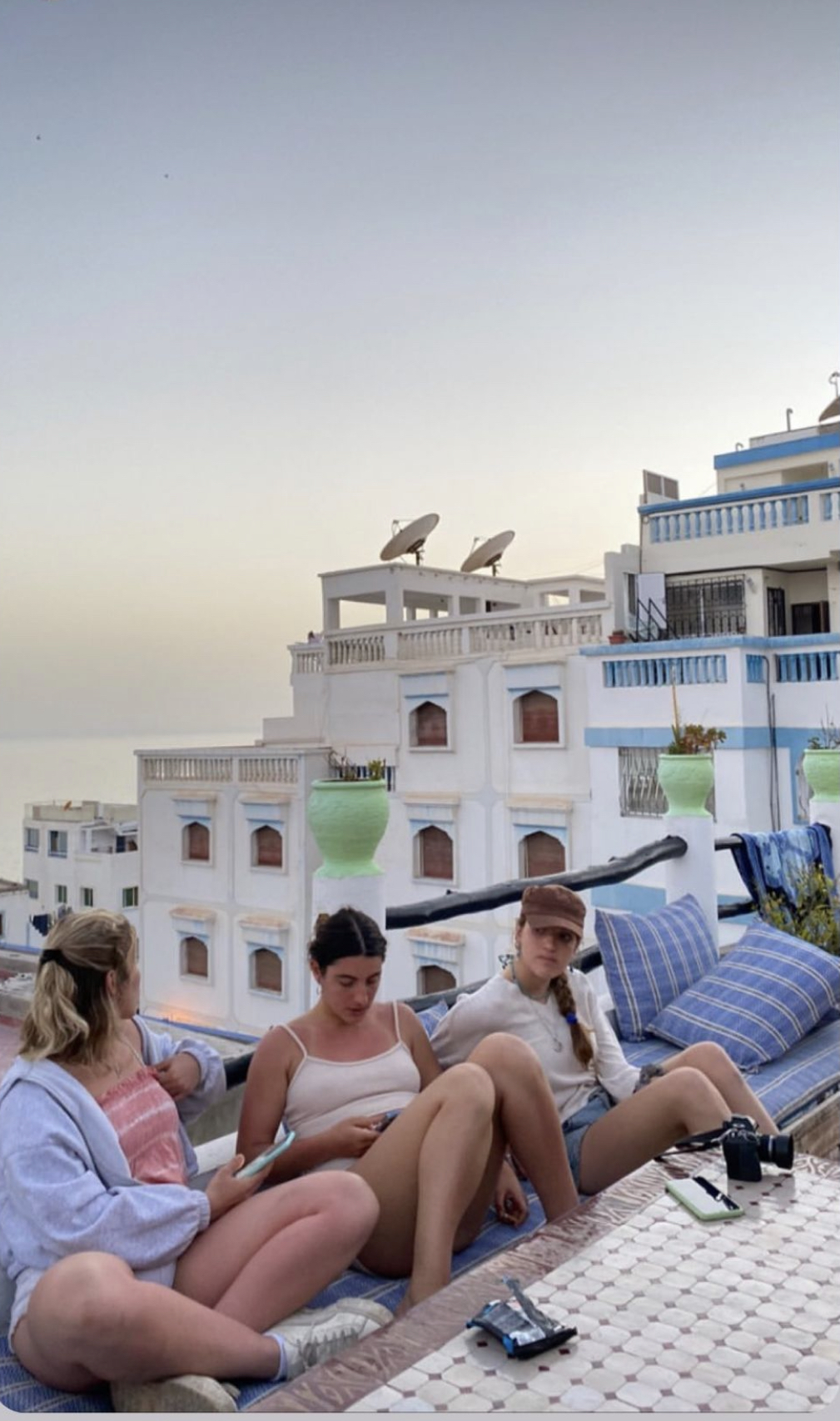
Taghazout—even granting its genuine charm—is a place where you eat with the same forty people every night, where every third conversation is about swell forecasts or visa runs to Spain, and where “nightlife” means drinking mint tea on a rooftop while someone plays guitar. That’s liberating if it’s what you want. It’s claustrophobic if it isn’t. There are no proper shops; the one cash machine is temperamental; if you want to book a last-minute flight, you’re driving 90 kilometres to Agadir’s airport anyway. The beach is stunning but rocky and narrow compared to Agadir’s long sandy strand. Taghazout exists for surfers, digital nomads, and people explicitly seeking solitude or community. If you’re none of those things, Agadir will feel less like a compromise.
The seasonal split matters acutely. From November through March, Taghazout’s hostels book months ahead and hum with activity; Agadir’s beach is warm enough to swim comfortably and the Corniche is relaxed. Spring and autumn (April–May, September–October) work for both, though Taghazout starts emptying by May. Summer (June–August) is honestly dead in Taghazout unless you’re hunting smaller waves and prefer human solitude; Agadir stays busy, the water is warm, and the pace is lazy rather than empty. Winter in Agadir means 15–17°C water, occasional rain, and Atlantic wind—fine for a hoodie, harsh if you’re after tropical beach lounging.
Taghazout vs Agadir for surfing: where the waves actually are
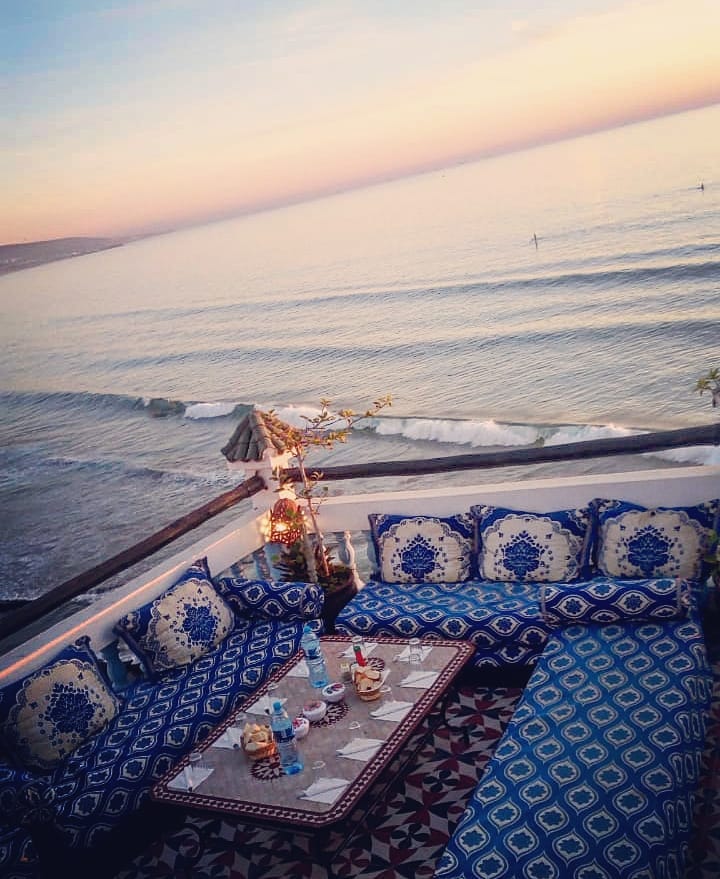
Taghazout and its satellite villages (Tamraght, Anza) host five legitimate breaks within 10 kilometres: Taghazout beach itself (mushy, forgiving, beginner-friendly), Anchor Point (fast, hollow, intermediate), Killer Point (powerful, hollow, experienced riders), Imi Ouaddar (exposed, swell-dependent), and Hash Point (sharp, rocky entry, best on the bigger days). The water stays around 14–16°C in winter and 18–20°C in summer—a 3mm wetsuit year-round, thicker in winter if you’re sensitive. The swell window is Atlantic-facing, meaning consistent ground swells arrive autumn through spring. Summer brings smaller, windier conditions; spring and autumn are premium windows.
Agadir’s Anza neighbourhood sits only 15 kilometres from these breaks and works equally well for surfers. Jurassic Surf House Anza puts you on the doorstep of the Anza beach break (gentler than Taghazout’s main point, better for learning) with Ayoub’s downstairs surf school removing all friction. The practical advantage: you’re in a city, so if you want to bail on waves and eat a proper dinner or book a last-minute onward journey, the option exists immediately rather than after a 90-kilometre taxi ride. Soul Surf House and Tidmi Wave in Anza serve the same function—you get the breaks without the village isolation.
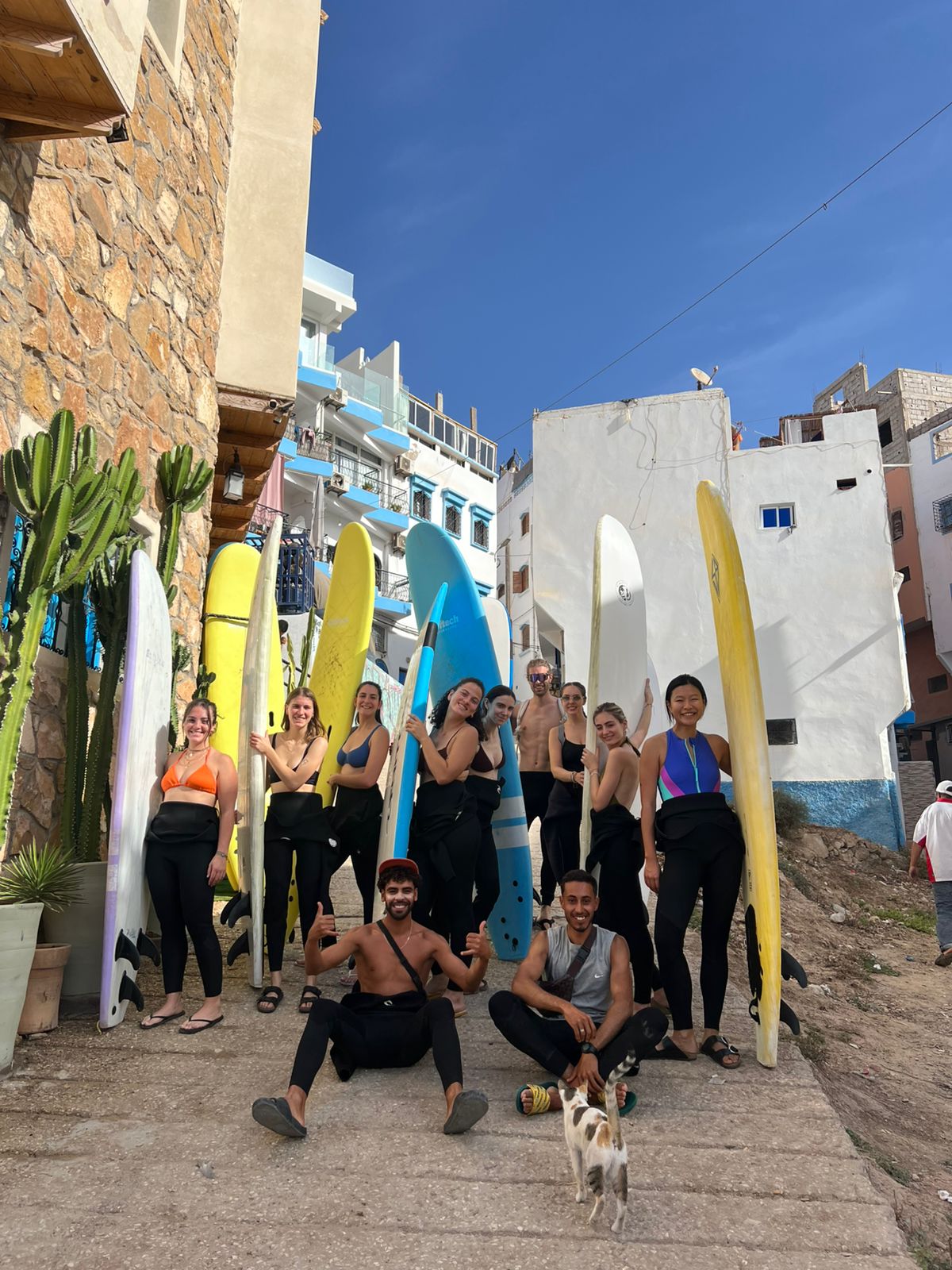
The camps themselves matter. Surf Camp Taghazout (five-star, 159 reviews) and Taghazout Surfers – Surf School (five-star, 290 reviews) run tight operations with instructors specifically trained to turn nervous beginners into wave-riders within days. Both emphasize beginner groups, which means you’re not drowning alongside someone on week three of their holiday. Maroc Surf Camp in Tamraght takes a yoga-and-community angle; Taghazout Waves – Morocco Surf Camp offers structured beginner-to-intermediate progression. We Surf Morocco and Hashpoint cater to slightly more experienced surfers seeking community over hand-holding. The quality variance across these is genuine but narrow—most run by people who actually surf and genuinely want beginners to succeed, not just capture a deposit.
Agadir’s advantage here is flexibility. If the swell is poor in Taghazout, you’re stuck; from Agadir, you can hunt Morocco’s other breaks (Imsouane, 90 kilometres south, is excellent and less crowded) or simply skip a day. Taghazout’s advantage is immersion—you’re surrounded by surfers constantly, the community reinforces the learning, and you’ll absorb technique through proximity even when you’re not in the water.
Agadir vs Taghazout nightlife & restaurants: where to actually eat
Agadir’s restaurant scene is genuinely diverse. The Corniche has tourist places (fish tagine, couscous, average), but the medina and the neighbourhood around the port hold proper dining. Seafood restaurants near the marina serve lunch catches—hammour, sea bass, local sardines grilled simply—for 80–120 MAD per person with wine. The medina has a functioning souk where you can eat pastilla, merguez sandwiches, and harira from stalls for 10–20 MAD. The French expat community has driven a few decent restaurants (couscous, French bistro fare, salads) that cater to people who aren’t Moroccan-food-fatigued yet. Nightlife exists—bars on the Corniche, a few clubs that come alive after midnight, the sort of thing any city offers. Nothing is thrilling, but nothing is a trap either.
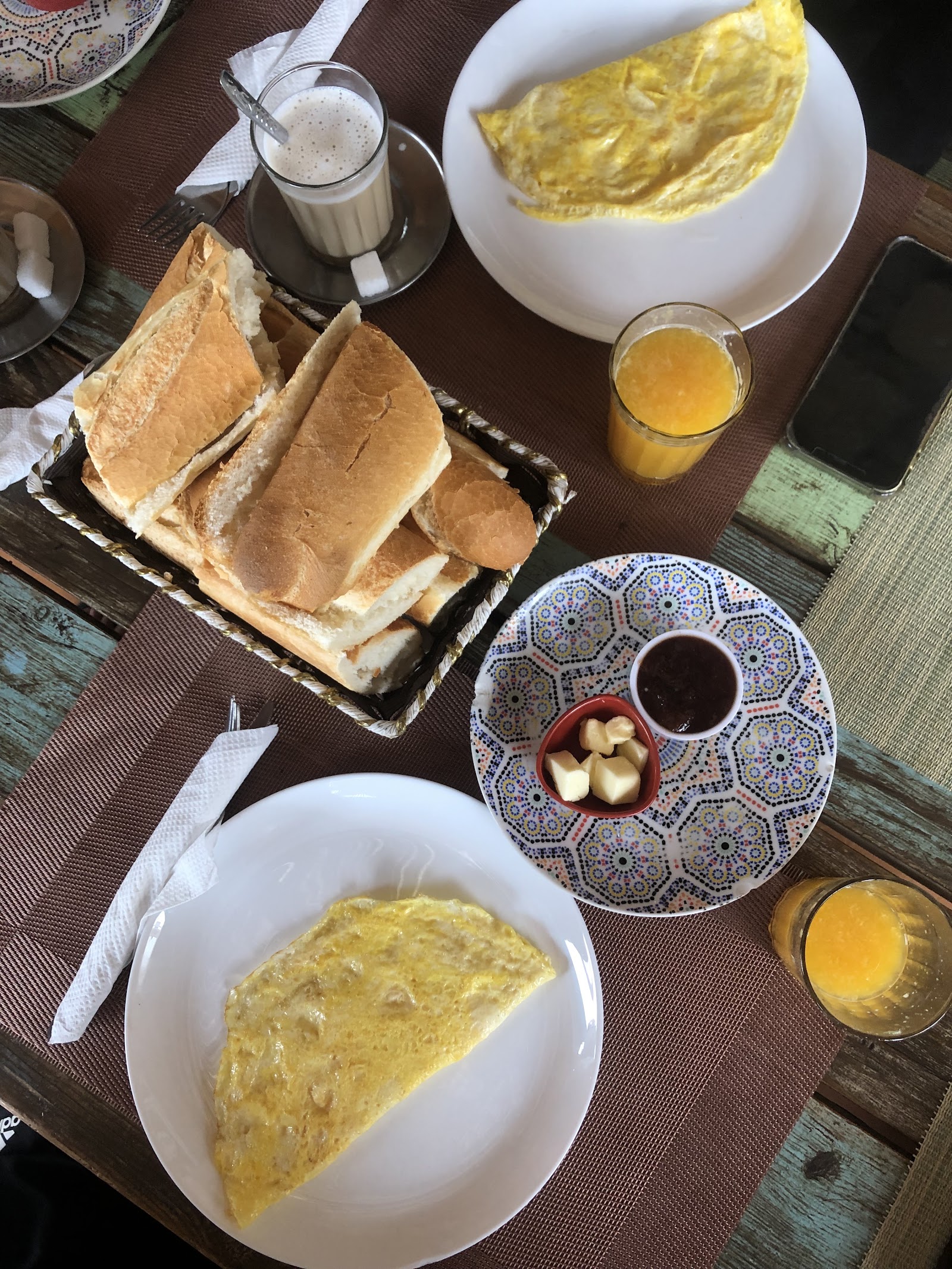
Taghazout’s food scene is almost entirely within six surf camps and a handful of cafés. The camps generally do communal dinners (tagine, couscous, salads, pasta) that are decent and cheap once you factor in the company. Handful of cafés serve coffee and omelettes. One or two restaurants open seasonally for tourists. The upside: you’re not hunting for dinner, you’re eating with your temporary housemates, it becomes social. The downside: you eat what’s cooked, when it’s cooked, alongside the same people nightly. If you’re introverted or if the week’s guests don’t mesh, that gets wearing fast. There are no proper bars—alcohol is available in hostels and camps, but “nightlife” means rooftops and tea, not social drinking culture.
The honest read: if you’re food-motivated or value spontaneous dining variety, Agadir wins decisively. If you’re happy eating one good dinner nightly with strangers and calling that sufficient, Taghazout’s model works. If you’re in between—you want decent food and occasional variety but don’t need fine dining—Agadir still offers more without being exhausting.
Agadir vs Taghazout for families: beaches, safety, logistics
Agadir’s beach is eight kilometres of golden sand, mellow enough for toddlers to paddleboat in, with lifeguards stationed regularly and families (Moroccan, European, Gulf Arab) visibly relaxed. The Corniche has ice cream shops, toy sellers, and the vibe of a working public promenade—safe, busy, unremarkable in the best sense. The medina is walkable, the souk is genuinely interesting rather than aggressive, and restaurants will accommodate requests for plain grilled chicken if your kids won’t eat spice. Public transport (buses, shared taxis) is cheap and functional. Hotels range from family-oriented resorts (400–600 MAD nightly, rooms and pools) to mid-range guesthouses (200–350 MAD) where families stay comfortably. Healthcare is reliable; English is spoken in tourist areas. For a family’s first Moroccan trip, Agadir works.
Taghazout is genuinely beautiful, but it’s not designed for families with young children. The beach is rocky and narrow, the swell can be strong, and it’s not set up for toddler paddling. Accommodation is mostly hostels or surf camps, which don’t prioritize privacy or quiet. Restaurants are communal experiences—fine for adults, less fine if your kids need their own pace. There’s no obvious medical infrastructure; the pharmacist is fine for minor things, serious issues mean a drive to Agadir. Schools exist (some expat families live here) but aren’t obvious to travellers. If you have teenagers interested in surfing or backpacking, it works. If you have young children or want family autonomy, Agadir is simpler.
Anza vs Tamraght vs Taghazout: where to stay in the village cluster
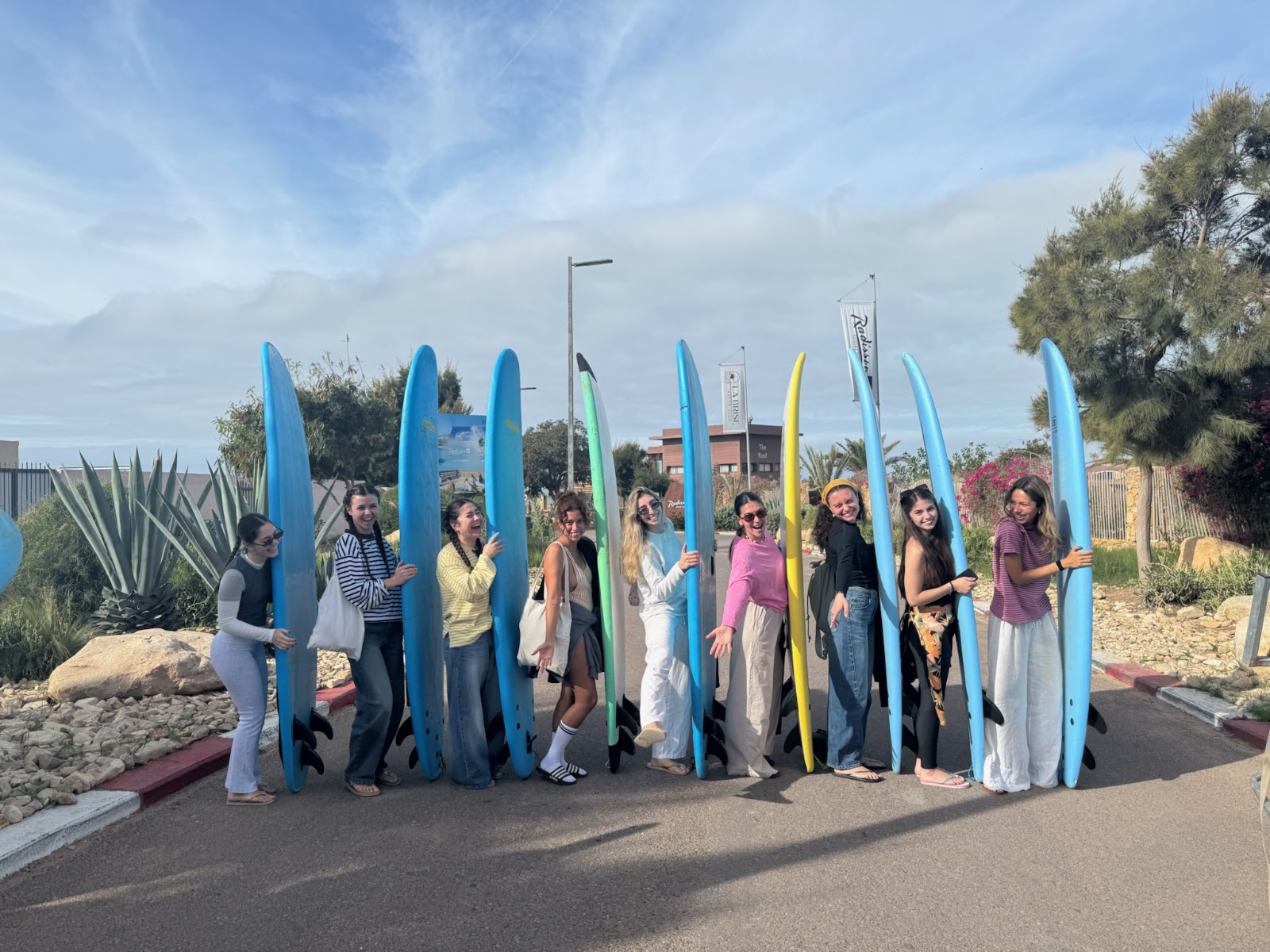
This matters because the three villages sit adjacent but offer distinct experiences. Taghazout proper is the tourist epicentre—small enough to walk end-to-end in 15 minutes, tight clusters of cafés and hostels, and where most tourists spend time. It’s convenient but intense; you can’t avoid other tourists, and the village can feel saturated by winter peaks. Tamraght, two kilometres south, is quieter—still a cluster of hostels and camps, but less concentrated and more Moroccan families mixed in. The beach is nearby; the pace is noticeably slower. Anza, five kilometres north toward Agadir, is genuinely residential—actual Moroccan neighbourhood with ordinary shops, less tourism infrastructure, and the feeling of living adjacent to the action rather than inside it.
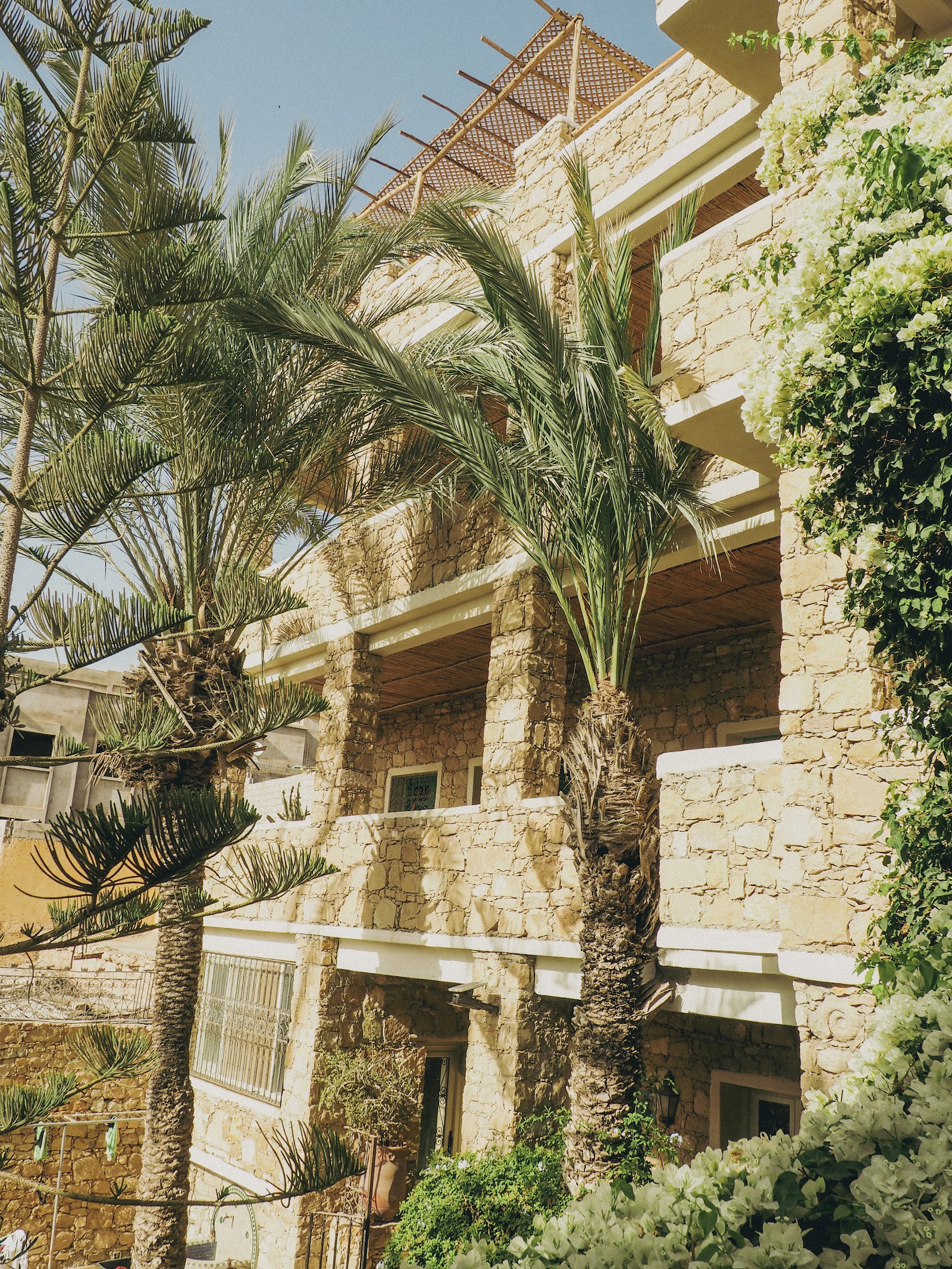
Jurassic Surf House Anza sits in Anza proper, walking distance to a local beach break (Anza Beach) rather than the famous points. That’s an advantage if you want beginner-friendly waves and less crowding; it’s a disadvantage if you’re experienced and chasing hollow tubes. The neighbourhood is quieter; you’re not falling asleep to backpacker conversations. Tidmi Wave and Soul Surf House also anchor Anza, same quietness, same local-living feel.
Taghazout Waves – Morocco Surf Camp, Freebirds Hostel, and Maroc Surf Camp cluster in Tamraght—the compromise zone. You’re close to the main breaks, you’re in a working village (not a pure tourist node), and there’s enough infrastructure that things don’t feel impossible if something breaks. We Surf Morocco, Hashpoint Surfcamp, and Surf Coast Morocco – Surf & Yoga House sit directly in Taghazout village—maximum convenience, maximum tourism, maximum noise.
For first-timers: Anza feels less overwhelming. For experienced surfers hunting social depth and the best breaks: Taghazout proper or upper Tamraght. For compromise: lower Tamraght. None is objectively wrong; the choice is tone-matching.
Agadir Corniche vs Taghazout beach: the actual beach experience
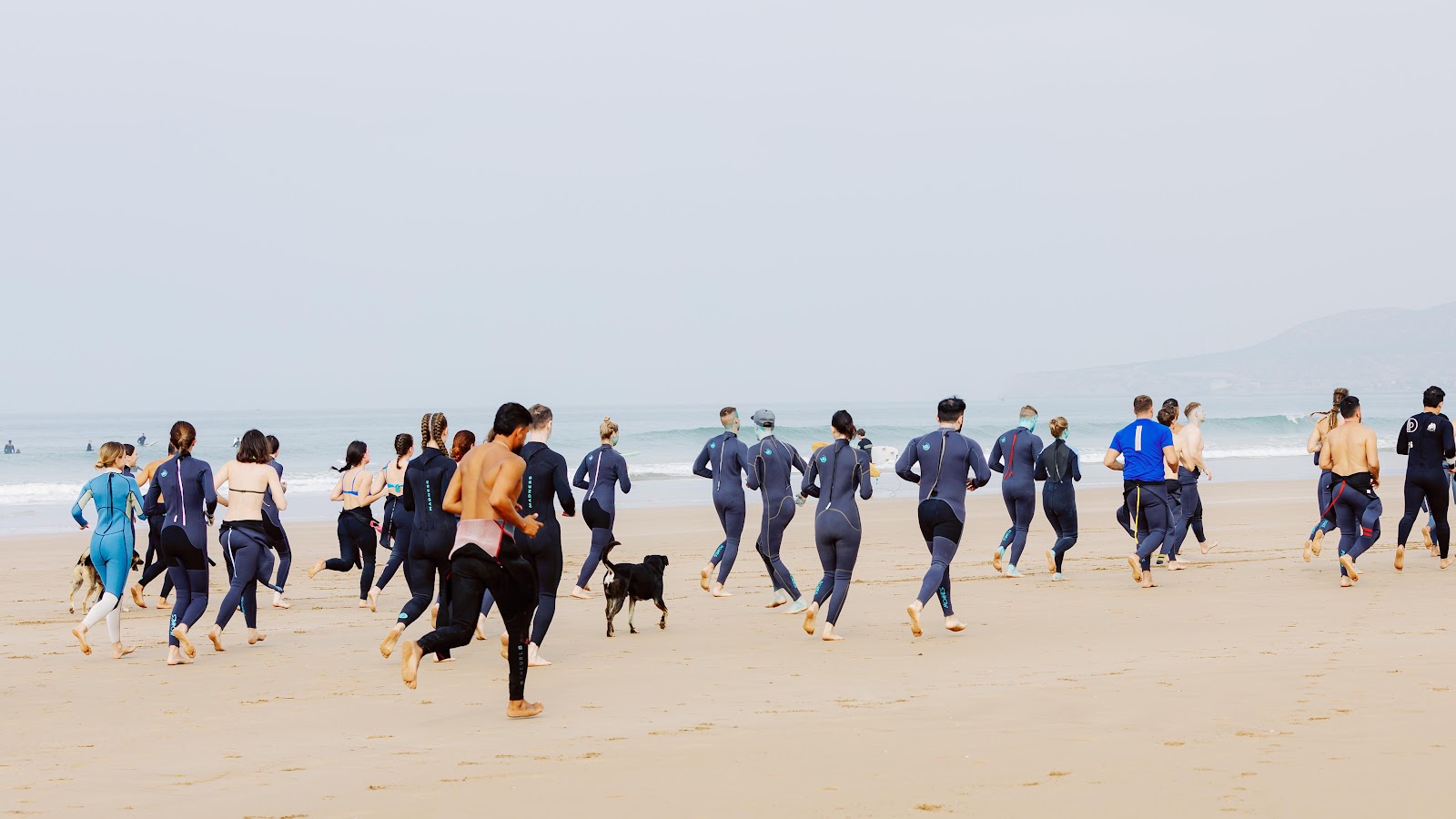
Agadir’s beach is 8 kilometres of uninterrupted sand, supervised by lifeguards seasonally, populated by Moroccan families on weekends and quiet on weekdays. The water is cold (15–17°C in winter, 18–22°C in summer), the sand is fine and clean, and you can rent loungers and parasols for 40–60 MAD daily. The Corniche promenade runs parallel—restaurants, cafés, shops—so you can beach-to-dinner-to-evening-walk without logistical friction. It feels like a European seaside town. The downside: the beach is crowded near the Corniche hotels (especially weekends), and the waves are usually mushy unless Atlantic swell is running hard.
Taghazout’s beach is rocky and narrow, fronted by dramatic cliff formations, genuinely photogenic. The water is the same temperature, but the rocky entry and shorebreak can be rough. It’s not a lounge-and-read beach; it’s a surfer’s beach or a dramatic-backdrop beach. The surrounding cafés serve coffee and do beer, but there’s no sense of “beach resort”—it’s more alpine-village-with-ocean-view. Summer crowds of tourists pack the visible stretch; winter, it’s beautifully empty. Swimming for pleasure is possible but not the main draw.
If you want a proper beach day—swim, read, lunch at a café, wander shops—Agadir is vastly superior. If you want dramatic scenery and are there to surf or hike the cliffs, Taghazout delivers better. Families with young children should pick Agadir; the beach and the infrastructure around it are designed for that. Surfers or photographers should pick Taghazout.
Agadir vs Imsouane day trip: a third option worth considering

Imsouane sits 90 kilometres south of Agadir—a half-day excursion if you’re based in the city. The bay here is genuinely stunning: a crescent of sand backed by dunes, protected from direct swell by the geography, and home to the famous Imsouane Point Break (long, forgiving, excellent for intermediate surfers trying to build distance). The village is smaller than Taghazout, quieter, with fewer hostels and a more genuinely local feel. Fishermen still work the beach; tourists are present but not dominant.
From Agadir, a shared taxi costs around 60–80 MAD and takes 90 minutes; you can do a day trip (morning beach, lunch, afternoon waves, back by evening) or overnight at one of three or four modest hostels. The advantage: you get the village-and-waves experience without committing to Taghazout isolation, and you’re returning to city infrastructure nightly. The disadvantage: the point break has a specific swell direction (southwest to south swells in autumn–spring), and on small or misaligned swell days, it doesn’t fire. Taghazout’s multiple breaks mean you’ll find something working most days; Imsouane is less forgiving.
For a split trip (e.g., three nights Agadir, then exploring south), Imsouane breaks the pattern nicely. For a first Moroccan trip where you want beaches, villages, and something to do without committing fully to the backpacker circuit, Imsouane from Agadir base works well.
Weather, seasons, and when to actually visit
November to March is peak season in both places. Winter swells arrive (August–March is honestly the window), water is cold, air is cool, and European tourists flood in. This is when Taghazout’s hostels book months ahead and the vibe is fully international. Agadir is busy but manageable; the beach is still swimmable if you’re not cold-averse, and the pace is relaxed. Prices are highest these months.
April to May and September to October are genuinely ideal: water warming (18–20°C), swell still present spring/autumn, tourists fewer, prices lower, and the Mediterranean warmth hits without summer heat. Taghazout is noticeably quieter; you’ll actually have hostel availability. Agadir is lovely—warm, not crowded, still has infrastructure. If you can travel these months, do.
June to August is summer. Agadir is warm (24–26°C water, 28–32°C air) and stays busy with European holiday-makers. Taghazout empties dramatically—swell dies, nomads leave for Europe or cooler climates, and it feels genuinely sleepy. The village becomes more Moroccan, less backpacker, and surprisingly affordable. Water is warmest these months (20–22°C), but you probably won’t need a wetsuit. Nighttime crowds vanish. If you hate tourist density and don’t need swell, summer in Taghazout is actually peaceful. For Agadir, summer is peak beach season and genuinely pleasant if you want heat.
Budget reality: November–March is 30–40% more expensive than May–October. A hostel bed in Taghazout costs 150–180 MAD shoulder season, 120–140 MAD low season, 200+ MAD winter. Agadir’s mid-range hotels run 250–350 MAD year-round, up to 500+ MAD in winter at Corniche locations. Flights are cheaper off-season; hostels and transport are cheaper off-season. The trade-off is weather and company, not pure value.
First-time Morocco visitor: Agadir or Taghazout?
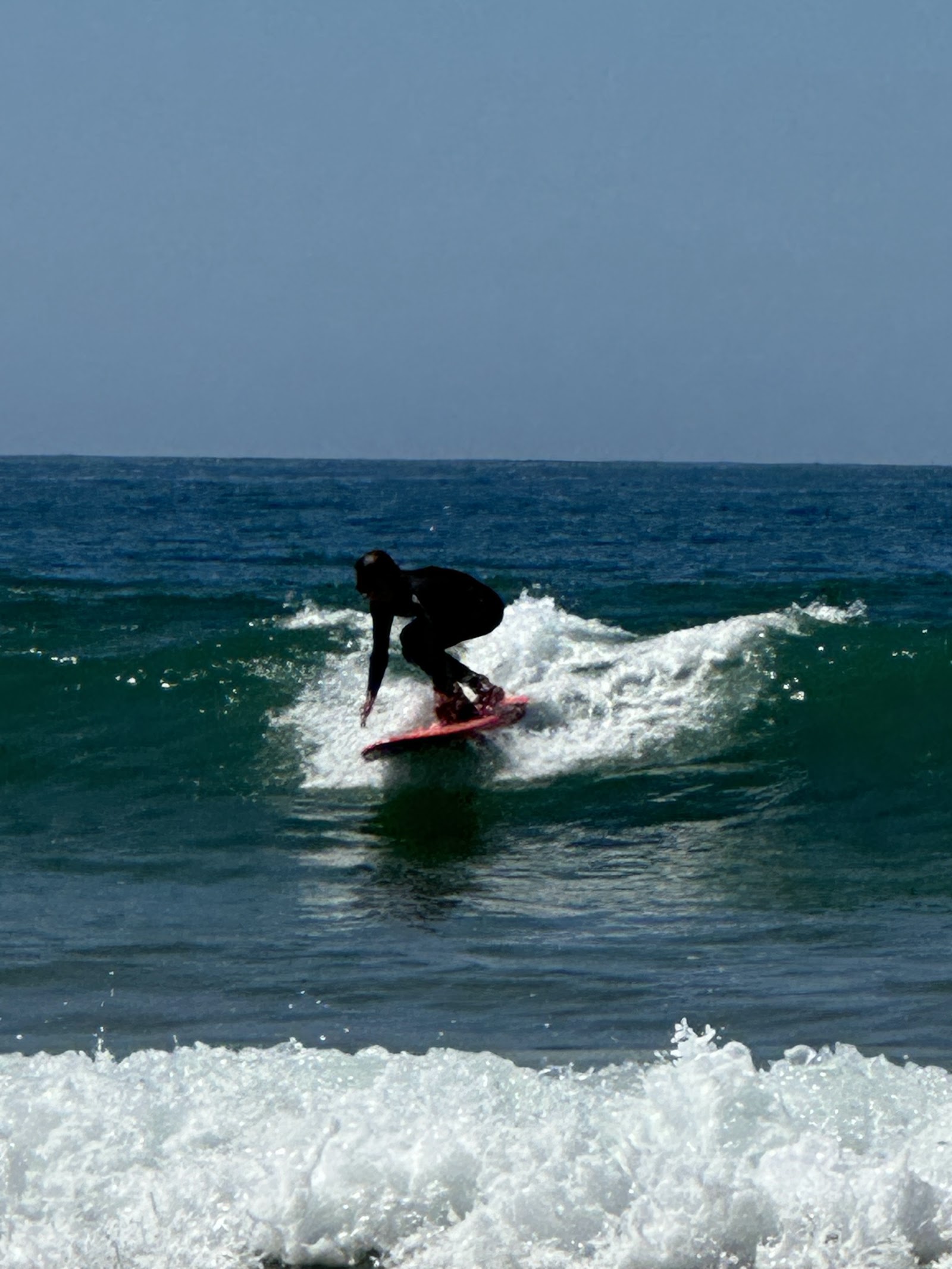
If you’ve never been to Morocco and this is your sole trip: pick Agadir, spend 3–4 nights exploring the medina, the souk, the Corniche, eating dinner somewhere random, understanding how the country functions at ground level. Then—if you’re drawn to it—take a shared taxi to Taghazout for 2–3 nights, experience the hostel circuit, and return to Agadir for your final night before flying out. This arc gives you both textures: Morocco as a functioning place, and Morocco as a village community. You won’t regret it.
If you’re specifically a surfer or you’ve been to Morocco before and you just want deep relaxation: jump straight to Taghazout. You’ll absorb enough context anyway.
If you’re nervous about Morocco, have limited time, or are travelling with family: stay in Agadir entirely. It’s that reliable.
How to choose between Agadir and Taghazout for your 2026 trip
-
Name your priority in one word: Surfing? City? Solitude? Nightlife? Food? Beaches? This single word eliminates 80% of the decision. Surfers and solitude-seekers prefer Taghazout; city-comfort and family-focused travellers prefer Agadir; food-focused travellers should base in Agadir and day-trip.
-
Check the swell forecast for your specific travel dates. Atlantic swell runs roughly August–March with autumn (September–November) and spring (February–April) being premium. Use Magic Seaweed or Swellforecast at least two weeks before booking. If swell is small (under 0.5 metres), Taghazout’s beginner breaks still work; Imsouane works only on southwest swells. If you’re experienced, small swell is pointless; choose Agadir and explore the city instead.
-
Book accommodation first, logistics second. Taghazout’s best hostels (Surf Camp Taghazout, Taghazout Surfers – Surf School, We Surf Morocco, Hashpoint Surfcamp) book months ahead in winter. If they’re full, staying in Anza (Jurassic Surf House Anza, Soul Surf House, Tidmi Wave) and commuting to breaks works but adds 30 minutes daily. Agadir always has availability; picking a hostel or hotel is low-friction.
-
Build a rough itinerary: Three nights Agadir + two nights Taghazout gives both textures without commitment fatigue. Five nights Agadir works for city-comfort and day-tripping surfers. Two weeks Taghazout-area (splitting between Anza, Tamraght, Taghazout proper) works for serious learners or remote workers wanting community.
-
Research one hostel carefully rather than trying to choose between three. Read the most recent reviews (not the oldest highest-rated ones). Check for specific things you care about: WiFi reliability, noise, cleanliness standards, food quality, instructor experience. Email the place directly with your exact needs; fast, honest replies suggest good management.
-
Land in Agadir (the international airport), spend a night if you’re jet-lagged, then head to Taghazout via shared taxi (90 kilometres, 90 minutes, 80–100 MAD per person). This arc is the path most travellers take and works practically. Reverse it only if you’re flying direct to Taghazout via Marrakech (which is inefficient) or if you’ve pre-booked a Taghazout hostel and want maximum beach time immediately.
FAQ
Which is actually better, Agadir or Taghazout?
Neither. Agadir is better if you want reliable infrastructure, diverse food, real nightlife, and ordinary Moroccan city experience. Taghazout is better if you want waves, solitude, and temporary community. Most travellers should visit both: Agadir as base, Taghazout as the escape. Don’t make it either/or.
Will I be bored if I pick Taghazout and the swell is small?
Somewhat, if you’re a surfer chasing waves specifically. If you’re okay with yoga, hiking, reading, and rooftop conversations, no. Taghazout in summer (small swell, fewer tourists) is genuinely peaceful if isolation doesn’t frighten you. Agadir never bores; there’s always market-wandering or beach-lounging to do.
Is Taghazout actually cheaper than Agadir?
Hostels in Taghazout (120–200 MAD per night shoulder season) are cheaper than mid-range Agadir hotels (250–350 MAD). But surf camp meals, internal transport, and activities add up; you’re not saving money by moving slower, just spending it differently. Agadir’s food is genuinely cheaper if you eat like locals (souk meals, fish-stall lunch). Taghazout’s built-in social meals shift the equation.
Can I learn to surf faster at Jurassic Surf House Anza or at Surf Camp Taghazout?
Both run quality beginner instruction with patient teachers. Jurassic is smaller and more personal; Surf Camp runs larger groups. Neither is objectively faster. You’ll progress faster if you’re comfortable—less nervous around other learners. Pick by hostel vibe, not instruction speed.
Is Taghazout safe for solo women?
Yes, essentially. It’s a traveller’s town; the vibe is respectful. Standard precautions apply (don’t wander alone late at night, use registered taxis). Agadir is equally safe and offers more autonomy (shops, cafés, places to be alone if needed). Neither destination has reputation for crime against tourists.
How do I get from Agadir to Taghazout?
Shared taxi from Agadir’s taxi rank (near the souk, roughly 90 MAD per person, 90 minutes) is standard. It leaves when full (usually 4–5 people), stops once for tea/bathroom, drops you in Taghazout village. Private taxi costs 300–400 MAD. Rental car works if you want autonomy but isn’t necessary; taxis are reliable. Don’t fly; it’s not worth the hassle for 90 kilometres.
Should I book a hostel or a hotel in Taghazout?
Hostels (Surf Camp Taghazout, We Surf Morocco, Hashpoint Surfcamp) include community, meals, instruction, and logistics—they’re worth the booking friction. Hotels don’t exist in Taghazout proper (only guesthouses, really). Agadir has actual hotels (comfort, privacy, autonomy) and hostels (community, cheaper, instruction-optional).
Agadir and Taghazout solve different problems for different travellers. The honest choice is: visit both, or commit fully to the vibe you’re actually seeking. Pretending you want village life when you’re a hotel person wastes money and patience. Pretending you want city infrastructure when you crave solitude wastes both. Do one well instead of half-heartedly trying both.
Keep reading
 experience
Best Hammam in Agadir 2026: Traditional vs Spa Guide
Find the best hammam in Agadir 2026—traditional Berber rituals or luxury spa treatments. Prices, etiquette, and where locals actually go.
practical
How to Get from Marrakech to Agadir in 2026: Transport Guide
Direct buses, private transfers and the A7 highway: how to travel from Marrakech to Agadir in 2026 without the tourist markup.
experience
Is Agadir Worth Visiting in 2026? An Honest Take
Is Agadir worth visiting in 2026? An honest take on sun, safety, and whether it deserves your holiday over Marrakech or Taghazout.